
GALLICAN, CHANT. — In the broad sense, the term G. C. extends to all forms of monodic liturgical music of the Western Church that do not belong to the Roman Church, namely, chant in use in Gaul, Spain, Ireland, and Milan, especially in contrast to Gregorian chant. In the strict sense, the expression G. C. refers to the chant of the Churches beyond the Alps, especially those between the Rhine and the Pyrenees. In a third, little-used sense, G. C. might denote that established in the seventeenth and eighteenth centuries in France as a result of political and religious Gallicanism, which brought with it liturgical innovations.
The circumstances relating to G. C. in the second sense are rather vague, whereas the ancient Gallican liturgy is better known. In fact, no complete manuscripts of G. C. exist, as there are instead hundreds for Gregorian chant. The melodies called Gallican, in their present form, exist only in Gregorian or Ambrosian codices, in which they were introduced together with rites and prayer formulas of Gallican origin. They are recognized by their often prolix structure, and through deductions and comparisons between the purely Roman sources and the authentic Gallican liturgical books, namely the Antiphonaries of Fleury, Marseille, Tours, and Lyon, the Missale Francorum, and perhaps also the Lesionaria of Luxeuil and the Omilaria of Alcuin. The least doubtful pieces of G. C. would be the “Pange
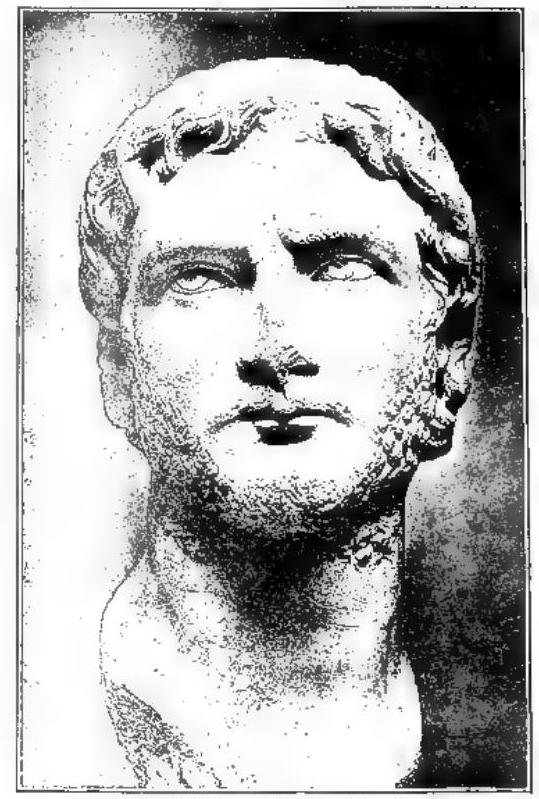
A fatal blow was dealt to c. g. at the time when King Pipino and his son Carlomagno desired the return of Gaul to the Roman liturgy, that is, the liturgy reformed by Gregorio Magno; once the liturgy disappeared, the chant that accompanied it also disappeared. The only Church that
perhaps can claim to preserve some memory of this chant is that of Lyon; but in the De correplicere antiphonarii one cannot determine precisely what has remained from the ancient usage and what may instead have been introduced independently, also through the Roman practice taught by masters of the great Carolingian schools such as, for example, Alcuino and Amalario. The Church of Aix-en-Provence, in which the liturgy and c. g. remained honored even after Carlomagno, no longer maintains any claim to a liturgy of its own. The other centers in which the musical art was cultivated together with the other disciplines, and from which some contribution to the obscure question of c. g. may be expected, were Autun, Vienna, Arles, Narbonne, Toulouse and, farther north, Tours, Poitiers, Orléans. The diffusion of the monks of Cluny and, with them, of the pure Roman liturgy dealt the final blow to what might have remained of the fruitful source of Gallican liturgical music.