
GERDONE. - The earliest notices about C. are found in St. Irenaeus. C., who came to Rome under Hyginus, is said to have taught that the God preached by the Law and the Prophets was not the Father of Jesus; the former would be knowable, the latter not, the first just, the second good (Adv. haer., I, 27, 1).
This text is suspect because it attributes to C. precisely the principal doctrines of Marcion, and it is unlikely that Marcion was a mere plagiarist. Perhaps Irenaeus’ source made a false synchronism between the list of bishops of Rome and the appearance of individual heretics, as, for example, in the Chronicon of Michael the Syrian (ed. I. B. Chabot, I, Paris 1900; p. 178 ff.), where, due to a confusion of the chronicler, the doctrines of the Gnostic Marcus (Eusebius, Hist. eccl., IV, 11, 5) are attributed to C. In Irenaeus (op. cit., III, 4, 3) it is read that C. would have spread his ideas clandestinely in Rome and, after having confessed, would have been convicted again and excluded from the Christian community. Epiphanius (Panar., 41, 1; ed. K. Holl, 190, 11) and Philastrius (Haer., 44) know that C. had come from Syria to Rome (source: Hippolytus?). Epiphanius attributes to C. Docetic doctrines, and the pseudo-Tertullian (Adv. omnes haeres., 6) even the New Testament canon of Marcion.
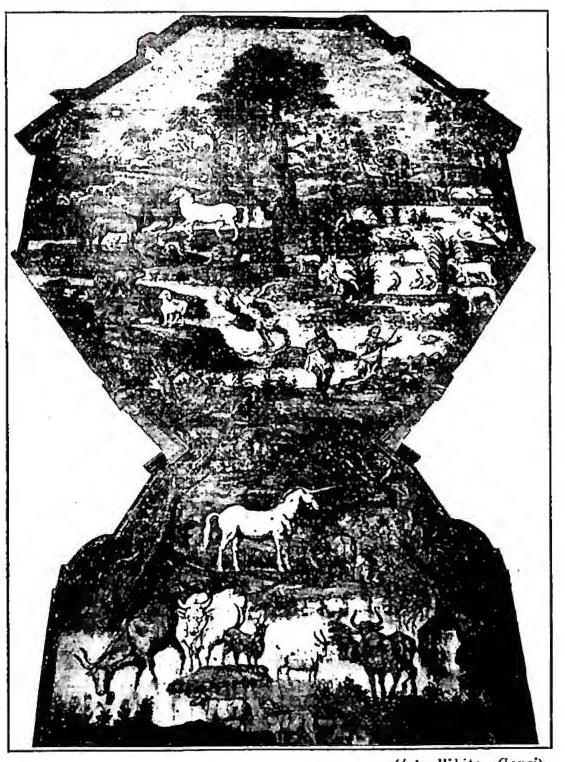
Ceramics – The Expulsion of Adam and Eve from the Earthly Paradise. Painted majolica tile from the church of S. Michele in Anacapri. By Leonardo Chiaiese (1761) after a design by Solimena – Capri.
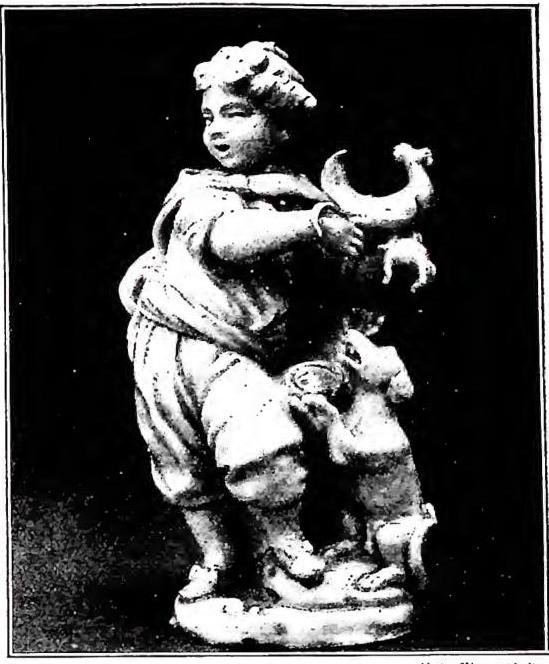
Ceramics – Little Peasant with Hen and Dog. White porcelain (mid-18th century) – Venice.
Of interest is the statement of Agapius (Mahbug) in the Universal History (PO 7, 511): C. said that several divinities gathered and created the world, and denied the resurrection. This notice attributes to C. the cosmological and anthropological ideas that in tradition (cf. especially Eznik) are given as Marcion’s; an assertion perhaps not incorrect, since speculative ideas on the role of Hyle in creation seem to point to a mentality different from his other ideas.