
He is called a brother of the Lord and wrote a single epistle that is included among the Catholic Epistles; it is asserted that... may have been published by someone else under his name, although, little by little, with the passage of time, it gained authority (De vir. ill., 2: PL 23, 609). After the 4th century, agreement on its canonicity is morally unanimous.
The Greek language is relatively elegant. There are, however, traces of Semitisms. Perhaps G. himself made use of a secretary-editor who was well versed in Greek.
Pietro De Ambroggi
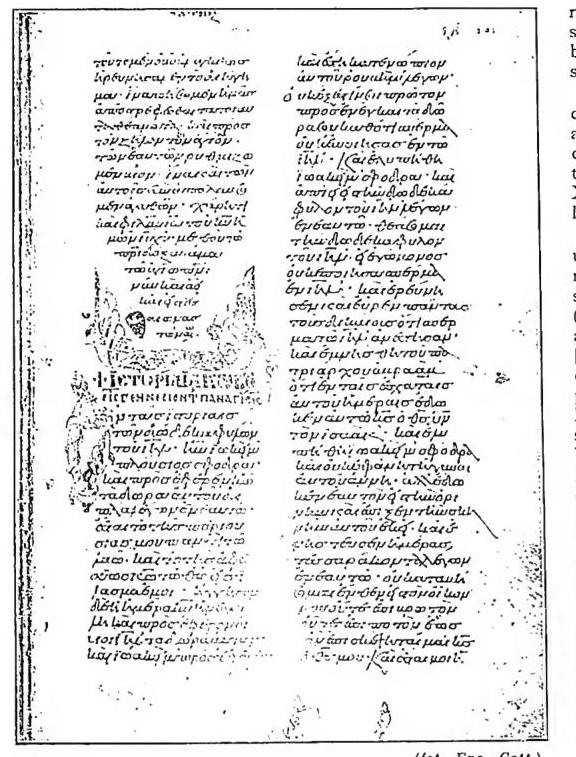
IV. PROTO-GOSPEL OF G
Apocryphal work belonging to the series of Infancy Gospels.1. Subject
It is divided into 3 parts. The first (chaps. I-16) recounts the birth of the Virgin Mary to the aged parents Joachim (q.v.) and Anna (q.v.), her presentation in the Temple, where she remained from the age of 3 to 12, her betrothal to the carpenter Joseph, already father of 4 children, the Annunciation, the visit to Elizabeth, Joseph’s perplexity, resolved before the tribunal by the ordeal of the bitter waters, which he successfully passed.The second part (chaps. 17-21) describes the wondrous circumstances that attended the birth of the Saviour: at that moment all life seemed suspended; an incredulous midwife, Salome, who wished to verify the Virginity in childbirth, was punished and then healed by the Newborn. The account of the coming and departure of the Magi is in accord with Mt. 2.
The third part (chaps. 22-24, an appendix of a different nature) speaks of the massacre of the Innocents: on that occasion the Virgin is said to have hidden the child in a manger, while Elizabeth found refuge with the infant John in a crevice miraculously opened.