
GROU, APOSTOLIC VICAR OF. — The mission is situated in the southwestern part of the Canadian Great North. Its evangelization began through hunters who, by speaking of God to the natives and marrying Indian women, taught them and their children the prayers and principal truths of the faith. After 1818, the territory was visited by several secular priests, and in 1841 the Oblates of Mary Immaculate arrived. The zeal of these missionaries succeeded in bringing several tribes to the Catholic faith. New stations were founded along the great river road leading to the Arctic Ocean, and numerous temporary chapels were built.
On 8 April 1862, Pius IX detached the regions of Athabasca and Mackenzie from the Diocese of St. Boniface de la Rivière Rouge (now Manitoba) to erect them into an apostolic vicariate entrusted to the Oblates of Mary Immaculate. On 30 July 1901, it was divided into the vicariates of Athabasca and Mackenzie. On 15 March 1927, part of the territory of Athabasca was united with Mackenzie, and the regions of the Slave Lakes and Yukon were erected into the vicariate of G.
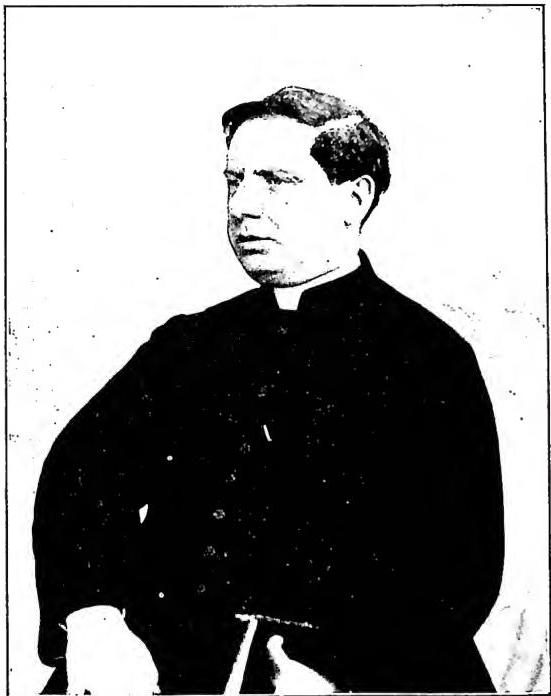
This locality originated from the St. Bernard station (15 June 1882), where Indians and Métis gathered and took their name from the apostolic vicar, Msgr. É. Grouard, while he was still alive. He was a great benefactor of civilization. Born on 2 February 1840 at Brulon, he became a priest on 4 May 1862 and, together with Fr. E. Petitot, set out for western Canada. On 21 November 1863, he became an Oblate of Mary Immaculate, and the following year he began his ministry, which he later recounted in *Souvenirs de mes soixante ans d'apostolat dans l'Atabaska-Mackenzie* (Lyon 1923). On 18 October 1890, he was promoted to apostolic vicar of Athabasca-Mackenzie. He died on 7 March 1931.
The mission of G. has an area of 224,596 sq. km (equal to that of England and Scotland combined). The territory consists of a vast plain broken only by a few hills and the Saw-ridge mountain range; it is covered by large forests and prairies cultivated with oats, barley, fodder, potatoes, and legumes, which reach full maturity despite the harsh climate. The thermometer drops to 40 or 50 degrees below zero: winter is long and severe, and watercourses remain frozen until early May. Summer is limited to the months of July and August. Communication routes are fairly well developed. Sledges are still in use in the mission stations of Vermilion and Wabasca; in other areas, they are replaced by horse-drawn carriages and automobiles. The population is 60,000, mostly white of English and French origin; the indigenous people number a few thousand and have very primitive customs. From the 1949 annual report, the following statistical data are available: Catholics 20,714, of whom 18,760 of the Latin rite and 1,954 of the Greek rite; schismatics 2,262; Jews 28; Protestants 29,580; atheists 1,137. There are 8 secular priests, 57 Oblates of Mary Immaculate, and 4 Redemptorists; 25 lay brothers; 208 sisters; 21 catechists; 100 teachers. There are 25 quasi-parishes, 24 primary stations, and 118 secondary stations. Schools: 31 elementary with 2,372 pupils; 30 middle with 682 pupils; 15 higher with 254 pupils. Hospitals: 5 with 173 beds; pharmacies: 6 with 7,226 consultations per year; orphanages: 4 with 236 children. Three periodicals are printed there, with a total circulation of about one thousand. There are also several charitable and Catholic Action associations.
GROU, JEAN-NICOLAS. — Jesuit, spiritual director, b. 24 Nov. 1731 at Calais, d. 13 Dec. 1803 at Lulworth in England. He entered the Society in 1746 and initially devoted himself to literary work, publishing translations of Plato’s *Republic*, *Laws*, and *Dialogues*. After the suppression of the Jesuits in France, Grou, at the invitation of Archbishop de Beaumont, moved to Paris.