
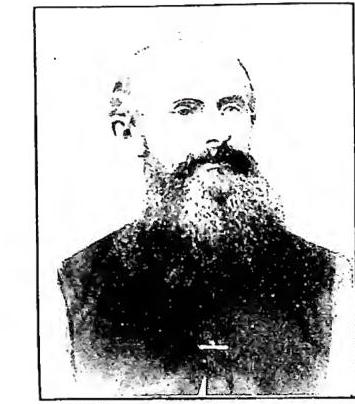
HENGSHENBERG, ERNST WILHELM. — Principal representative of “orthodox” (positiv, positiv-gläubig) Protestant theology and exegesis in the 19th century, born at Fröndenberg (Ruhr) on 20 October 1802 to a Reformed pastor, died in Berlin on 28 May 1869. After serving as a tutor in Basel (1823 ff.), where he moved from rationalism to Pietism, he became a private lecturer at the University of Berlin in the philosophical faculty (1824), then in the theological faculty as associate professor in 1826, and as full professor in 1828. He soon became famous and influential as founder and editor of the journal Evangelische Kirchenzeitung (1827–69). Around 1840 he initiated a strict positiv-gläubig Lutheranism. He opposed all forms of rationalism (among others, the theology of Schleiermacher and the Hegelian school) and the unbelief of his time, engaging in many heated controversies.
His “positive” approach to Old Testament exegesis was shared by his disciple K. F. Keil (q.v.) and others. His “orthodox-conservative” school is today represented by Wilhelm and Hans Möller and agrees with Catholic theology except on the controversial issues of the “Reformation.”
His principal publications, issued in Berlin, include: Christologie des Alten Test. (a study of messianic prophecies, 3 vols., Berlin 1829–35; 2nd ed. 1854–57); Beiträge zur Einleitung ins Alte Test. (3 vols., 1831–39, in which he was the first to challenge the documentary theory of the Pentateuch advanced by W. M. L. de Wette); Die Bücher Moses und Aegypten (ibid. 1841); Die Geschichte Bileam’s und seine Weissagungen (ibid. 1842); Commentar über die Psalmen (4 vols., ibid. 1842–47; 2nd ed., ibid. 1849–52), his best commentary; Die Offenbarung des hl. Johannes erläutert (2 vols., ibid. 1849–51; 2nd ed. ibid. 1861 ff.), with arbitrary applications to universal history (the millennium begins with the conversion of the Germans; Gog and Magog are the revolutionaries of 1848); Das Hohelied Salomonis ausgelegt (ibid. 1853); Das Evangelium des hl. Johannes erläutert (3 vols., ibid. 1861–63; 2nd ed. ibid. 1867–71); Die Weissagungen des Propheten Ezechiel (2 vols., ibid. 1867 ff.). Published posthumously were his lecture courses: Geschichte des Reiches Gottes unter dem alten Bunde (2 vols., ibid. 1869–71); Das Buch Hiob erläutert (2 vols., ibid. 1870–75); Vorlesungen über die Leidensgeschichte (ibid. 1875).