
IN EUROPE. – Thus was established the custom of a secular theatre; and representational art was withdrawn from ecclesiastical responsibilities, freeing the liturgy from too many superstructures; and the summit of dramaturgy was secured for the new literature. Its importance was only just beginning, when the great crisis of the 16th and 17th centuries made itself felt: the discovery of America overturned from its foundations the old order of Europe; nations were swept away by the dizzying prospect of world dominion, peoples either detached themselves from Rome, the mother of nations, or rallied to her side only to usurp her; battered, plundered, torn apart, and overrun, Italy perhaps barely sufficed to allow her to survive. The theatre, especially in the Atlantic nations, became a far vaster place than the modest appearance of that enclosed space around a stage which juts out into the midst of the audience and is exposed to the elements—such as in England, or in Spain the *corral*. People from every quarter and of every condition flocked there, and words of immense destiny were spoken there, destined for bolder voyages than those of discovery upon the oceans. But it was this that contrasted this national theatre with the ecclesiastical theatre of the Middle Ages, as if spurred by a polemical spirit, as if eager for immanentist and secularist affirmations in opposition to a religious dramaturgy. The process of integration by which the laity, throughout the history of the new Christian centuries, had moved to seek its own freedom and dignity by striving for concreteness and perfection of life not against, but within the Catholic fold, was not broken now that peoples—first and foremost those most firmly gathered under the banners of national monarchies—participated in the common endeavour with the immense weight of unified life. This was the life of the people in the Baroque age, within a religious and national conception; and the theatre was the place where this unitary rediscovery was celebrated, where bold words were heard, where the cold calculation of reason was rendered plausible by a visionary enthusiasm, where the creative image of poetry summoned around itself untouched forces of feeling, will, and social life; it was, in the tumultuous ascent of the multitude to take conscious form as a people, now an occasion, now a mirror.
Of the five major nations of Europe, three—England, Spain, and lastly, no less than the others, France—between the 16th and 17th centuries founded and proposed a memorable example; but the choral debate of their dramaturgy revolved around immense themes, with a profound meditation, theologically grounded, on religious and moral values. Germany, overwhelmed by the wars of religion, remained almost alien to the theatre—not, certainly, to the sacred debate, fiercely examined and arrogantly contested, concerning the dignity and freedom of religious belief. Italy alone saw culture positioned in a state of flank support, where it developed without converging: nor could we consider this separatism—which partisan historiography traces back to indifference in religious matters, to moral decay, and to the dimming, even among the people, of the great religious concerns that had once led the works of beauty back to the work of faith—wholly foreign to a fundamental concern for reform, to the intention of saving the sacred patrimony from the attacks of profanity, and to a cautious, though not sceptical, distinction between the sacred and the profane; and the Church proved equally diligent in repressing the excesses of immorality in the Commedia dell’Arte as in removing from religious festivities many survivals of the medieval sacred popular theatre.
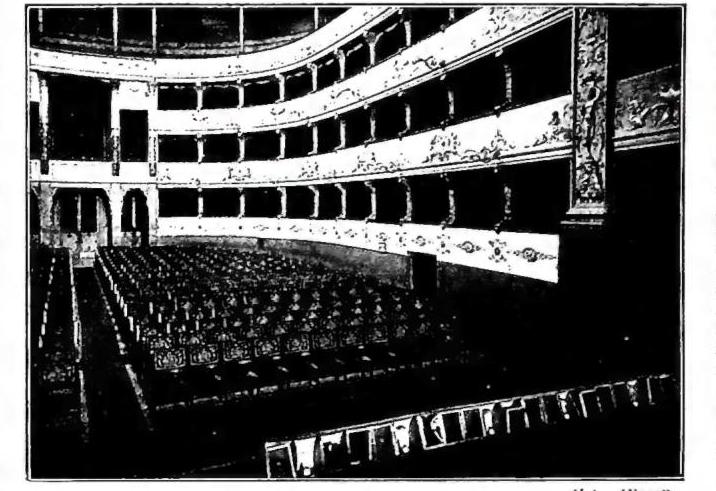
It is from the Italian theatre that we must begin: because it was first in chronological order, as we have seen; but also because, so restricted in seeking its reasons within itself, it matured and developed an extremely sophisticated technical expertise—precisely all that would render it suspect to the Romantics. Let us begin with technique: it is the Italian theatre that fixed the most observed patterns and customs—the Italian architecture of the building, the Italian organization of the companies, the Italian custom of the audience. Later, or gradually, the others followed, perhaps renouncing a treasury of poetry, as Restoration England did, which chose to be Italian and French after having been Shakespearean. The theatre imitates the hall of a princely palace, where the first comedies and the first operas in music had been performed: later adding the tiers of boxes, a compromise between an ancient model echoed by Palladio’s Teatro Olimpico and the Spanish *corral*. Professional companies took the place of amateurs: certainly less open to new inventions, certainly bound by the pursuit of profit—a financial relationship that weighed and sometimes degraded, but far more expert in expressive means and master of popular appeal. And the audience, for the first time in the history of the new theatre, was a paying public, whether in the actors’ room of the Commedia dell’Arte or in the opera house in Venice. Singers and actors were at the centre of the Italian theatre of the Baroque age, and remained there, teaching others as well, even at the cost of overshadowing the poetic text or diverting the moral life of the audience towards the allurements of sensation or spectacular escapism.
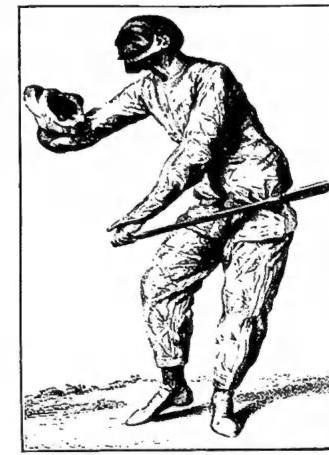
The three Atlantic nations—Spain, England, and France—remained faithful to the dignity of the word, as free towards the open sea: a word that, like every other form of art, indicates a total commitment to life, but declares and comments upon it more boldly in its rational and moral relationship. Italy evaded this: the forms of Italian theatricality in the Baroque age, even as they continued—often with marvellous inventions (Tasso, Bruno, Della Valle...)—the traditions of literary theatre, were the Commedia dell’Arte and opera in music. The technical skill of the actors triumphed in the *Arte*: the schema of the Commedia was firmly established, drawn from the long reflection conducted by scholars around Latin texts, in the complementary groups of the Servants, the Old Men, and the Lovers; the characters became rigid in their fixed costumes, mime, and language (the Masks); the ways of carnival ascended onto the stage—the coarse plebeian face, the play of dialectal mixtures (popular Italy was still regional and dialectal: though even this of the *Arte* was a way of looking down from above at this fragmentation and, by ridiculing it, overcoming it); dialogue was improvised following an action outlined in broad strokes in a scenario or plot, introducing *lazzi* (comic sketches, these, lines extraneous to the action), duelling in jest with wooden spoons that had replaced the jester’s mock sceptre, dancing, singing, and playing music. The *Zanni* (generic and traditional name for the servant; but soon specified and divided into parts for first and second *Zanni*: one being Brighella, Buffetto, Pedrolino, etc., the other Arlecchino, Truffaldino, Pulcinella, etc.) continually interrupted the action with their comic inventions, mocking the old men (Pantalone, the Doctor) and aiding or parodying the Lovers (Orazio, Flaminio, Livio; Isabella, Lidia, Lavinia, etc.), who themselves were duplicated in pairs.
Quite another world was that of opera: as meditative as it was soaring, as intimate as it was expansive, in the forms of musical language capable of overwhelming with their poetic impulse the meagre customs of the Istrian trade; and a sphere of sentimental transfiguration contrasted with the mimetic play of the *Arte*. Even here, the intrinsic tradition of the historical form exerted its weight: for the *Arte* had gathered from medieval minstrelsy the jest and brawl of buffoons; but music had first been dramatically defined in the *Laudi*, and before addressing the pathos and ethos of drama had accompanied the *Fedeli* in their meditations on sacred drama. Even when the Florentine Camerata dei Bardi had erudite justification for reviving Greek tragedy,
mother of nations, or arrayed against her to usurp her; beaten, plundered, torn, pursued, Italy has perhaps only what suffices to let her survive. The t. becomes,
in the new encounter of words and music, one recalled the ancient dramatic lauda (Emilio del Cavaliere); and Claudio Monteverdi sought to fathom the secret of the profound soul by giving to the stage creatures (Arianna, Ulisse, Nerone) the revelation of musical speech: austere and sorrowful in nature, his, intimately religious: until the new scenic language received its Roman investiture in the t. of the Barberini. From then on it unfolds, enriched throughout the entire Baroque age: its most active centers are Florence, Rome, Venice. The advent of the opera composers of the Neapolitan school marks a turning point: and just as the Neapolitan comic actors of the Commedia dell’Arte (Pulcinella, Scaramuccia) impressed upon Comedy a bold exuberance of mimetic forms, different if not opposed to the mordant moralism of the Lombard comedians, so the Neapolitan musical comedy, the opera buffa, expressed a more cheerful sentiment toward the world, a vaguer indulgence in the festivity of a gentle nature, the idea of a serene land, peopled by human creatures reconciled with their fate.
Another is the cycle of the t. in the Baroque age elsewhere. In England, within the brief, dense, and prodigious decades of Elizabethan t., it delineated a parabola worthy of Greek t. Here too one begins with a humanistic experimentation with the antique; but Italy had already cleared the path; and the university wits, who promoted the first understandings with the new theatrical culture, rapidly overstepped the cautious limits of academicism. Seneca offered his models, and the idea of a t. of horrors, of an unrelenting and unredeemed tragedy (Gorboduc by Norton and Sackville, 1562); but a popular drama, mingling tragedy and comedy, kings and buffoons (thus Sidney’s reproach), stood alongside it and quickly responded to the expectations of many. A bold genius, Marlowe, drove it to an extreme condition, toward the idea and image of a more-than-human decision of one’s own fate in comparison with the absolute (Tamburlaine). A prodigious genius, Shakespeare, through a long, daring mobility, misery, indifference, inexhaustible invention, absolute responsibility before the truth of the word, reconstituted it in the image of a universe; and of a universe open to the message of God: among the last words of Shakespeare’s creatures are prayer, compassion, penitence, humble reconciliation with brother man after titanic wandering. Tragedy of immense speculative force and comedian of another iridescent fantasy; but in none like him is the human horizon, traversed by the light of the word, vaster, nor is the divine destiny probed more deeply. Around him a pleiad of authors: Kyd, Jonson, Beaumont, Fletcher, Massinger, Ford, Shirley, Marston, Webster, Tourneur, Middleton.... A flourishing soon interrupted by the Puritan revolution that closed the t. The Restoration, which reopened them, preferred voluptuousness to truth, pleasing forms, but superficial, varied and adroit, sometimes still harsh to taste. Until the eighteenth century, now turning to comedy of manners (Steele, Goldsmith, Sheridan....), now to the imported Italian musical opera, now to a satirical mingling of both (The Beggar’s Opera by John Gay), proposed a consistent vicissitude.
It seemed to Romantic criticism that the fortune of Spanish t., like that of English t., had lain in not allowing itself to be diverted toward the classicizing formalism of the Greek-Roman structure promoted by the Italians. The modern perspective is quite different: the culturalism and technicalism learned in Italy did not stifle new inventions; rather, they enabled them; and the vigor of religious and national spirits was in no way suppressed, but rather became self-aware, with the growth of experience. Juan del Encina had well marked the passage from the old to the new; and a crisis had revealed, at the turn of the new times, the Tragicomedia de Calisto y Melibea, the famous Celestina by Fernando de Rojas. A new scenic language slowly formed throughout the Cinquecento: and the Portuguese Gil Vicente ensured it with inventive genius. The work of Rueda, who was impresario, actor, and author, displayed technical prowess; while in Madrid, Valencia, and Seville the first stable t. were founded. The traditionalism of the Iberian spirit meant that old themes persisted alongside the new, and the chivalric fidelity of ancient times alongside the modern imaginative spirit of adventure: behold the work of Juan de la Cueva. Behold the dramatists of the Siglo de Oro: Cervantes, Lope de Vega, Tirso de Molina, Juan Ruiz de Alarcon; and, to close the cycle and the century, Calderón de la Barca. They worked with prodigious activity (more than two thousand comedies were attributed to Lope de Vega), but always referring their marvels to a tradition that yielded nothing or abandoned nothing: the sacred drama alongside the buffoonish games of the gracioso, the patriotic drama alongside the carefree enchantment of the “interludes” that mimed realistic themes in dance. A sonorous and generous impulse pervades that t.; and the mastery of the word gathers within the sumptuous drapery of eloquent discourse all possible adventures. The concord of author, actor, and public was achieved by remaining faithful to a past that was known and devoting oneself with inexhaustible ardor to a destiny of luminous adventure, always great, whatever the setting in which it took place.
Of such a spirit in Spanish theatre one recalls the French beginnings; and CORNEILLE’s *Cid*. But France transferred the wandering inspiration of Iberian theatre into oratorical and procedural debate: for a prevalence of classicist inspiration and rational rigor in embracing the inventive freedom of the word; for France’s gravitation toward Paris, and Paris toward the Court; and finally for an inheritance of Italian literary tragedy, which had remained so much more composed even as theatrical experience in Italy was so much freer. Indeed, French cultural hegemony found support in theatre; and that theatre, even compared to English theatre, seemed worthy of representing the harmony between word and spectacle, and of emulating ancient tragedy and comedy. CORNEILLE, RACINE, MOLIÈRE, ever more obedient to the extrinsic indications of society, custom, and theatricality, were in their innermost selves strenuous and compassionate investigators of human drama, great moralists, fully worthy of standing at the center of a difficult and fruitful debate engaged with the most decisive problems of life and custom.
Whether the tragedy of heroic will, CORNEILLE, or the poet of passion and the shipwreck of the soul overwhelmed by a terrible and dear obsession, RACINE, or even the comic playwright MOLIÈRE, who accepts entering into dialogue and conflict with a reality that seems to impose upon him—whether by the weight of social evidence or the force of scenic convention—topics and development, all translate the theatre of the Baroque age into terms of literary dramaturgy, rich in echoes and prodigious in complying with all ingrained or mediocre conditions. They distance the old and perennial stage games, composedly summarizing in perfect strophic form the weave of scenic action. The legacy of literary humanism, which had made ancient tragedy and comedy newly relevant and had elsewhere been overwhelmed by mimetic and melodic evasion (in Italy) or by the very inventive verve of poetic language (in England and Spain), here recomposes itself into a domain of intelligence—and indeed of literature—as the place of the word reflectively received and intellectually elaborated, without losing any of that concreteness of scenic action, music, and dance that Baroque culture had reintegrated into theatre and was no longer willing to renounce.
Within this sphere of words suggested and immediately reflected, and within the French custom of a carefully cultivated abandonment to the suggestions of image and sense, the dramaturgy of the eighteenth century must be observed, in that phase which can historically be isolated as the culture of the Enlightenment. The seventeenth century had adventurously blended all theatrical forms, superimposing music and dance, mime and prose, art poetry and popular poetry; but the new culture, in every country of Europe, subjected every form to critical scrutiny, turning them into history and reason. In the century of encyclopedic erudition, everything is accepted, but everything is placed in a reasonably arranged catalogue; and in the hierarchy of spectacular forms, literary drama stands at the forefront, from which the varied vicissitudes of theatrical proposals begin, to which the public responds according to the concrete availability of the actor.
Thus the text is gathered into a more circumspect attention and a constant propensity to respect the probable: actors abandon or attenuate declamatory tones for a more natural diction and performance (the actress CLAIRON); the public itself, now that the bourgeoisie prevails over the aristocracy in directing social life, demands to be moved and persuaded rather than transported into a world of wondrous supersensibility. In France, which maintains a theatrical primacy throughout the century and sends tragedies, comedies, and companies everywhere in Europe, this evolution is felt and documented better than elsewhere. The tradition of high tragedy continues through CÉBILLON and VOLTAIRE, rivals in public favor, but VOLTAIRE sometimes opens—as a spirit ever curious—to the novelty of *drame larmoyant*, also called bourgeois tragedy, which unfolds from LA CHAUSSÉE to DIDEROT; while a place for pure fantasy or whimsy is preserved in France by the Comédie Italienne, where the Italian commedia dell’arte players, now Frenchified and tamed, entertain this side of rational oversight and intellectual commitment in other theatres; and MARIVAUX is their poet. In Italy, the same concern—manifested through criticism and polemics from the beginning of the century, and through illustrious interventions in poetic debates, such as those of the great MURATORI—gives rise to a tradition of tragic and comic literature not always firmly connected to a total renewal in stage technique, yet always closely followed: suffice it to name SCIPIONE MAFFEI among the tragedians.
CARLO GOLDONI restored the union between dramatic literature and scenic art through assiduous work, passing through all the experiences of forms and always maturing his inventions with a most concrete and rich sense of theatrical actuality: after his youthful attempts at a theatre imposed from above with only external dignity, he began to work by refining the search for valid language through the conventions of the commedia dell’arte. He spoke of “reform,” and he was driven by intellectualist concerns that authoritatively supported him even beyond Italy; in reality, his was a long and ingenious labor to discover what remained alive and what was dead in improvised theatre, and to restore a sense of active and moral contemporaneity to the life of the people. Thus he progressed, fortunate and modest, from the Baroque age to Romanticism. His influence was considerable in many parts of Europe, though not always perceived in its profound truth; and it aided the renewal of Spanish theatre, which was then dominated by observance of French theatre, through the work of the younger MORATÍN at the turn of the new century.
On rather common grounds—namely, active morality and observation of custom replacing the evasion of fantasy—a little work was done everywhere in Europe: from the comedies of HOLBERG, Scandinavian theatre begins; and on a not dissimilar path, English theatre unfolds, still richly original and insular, through LILLO, STEELE, GOLDSMITH, SHERIDAN, and CONGREVE, until the actor GARRICK concludes—with the rediscovery of SHAKESPEARE, soon to become the salient fact of European dramaturgy—a vicissitude begun with the classicizing and moralizing historicism of ADDISON’s *Cato*. Even Russia enters this shared European theatre scene; the tragedies of SUMAROKOV, composed according to French rules but drawn from Russian history and entrusted to the young cadets of the Cadet Corps, formed the first nucleus of national theatre. But it is Germany that enters into the most intrinsic dialogue and contrast with French hegemony, from GOTTSCHED through LESSING, who, as critic and author, secured the poetic and cultural foundations of the new dramaturgy. When GOETHE appears, the path is open in every direction.
---
TEATRO
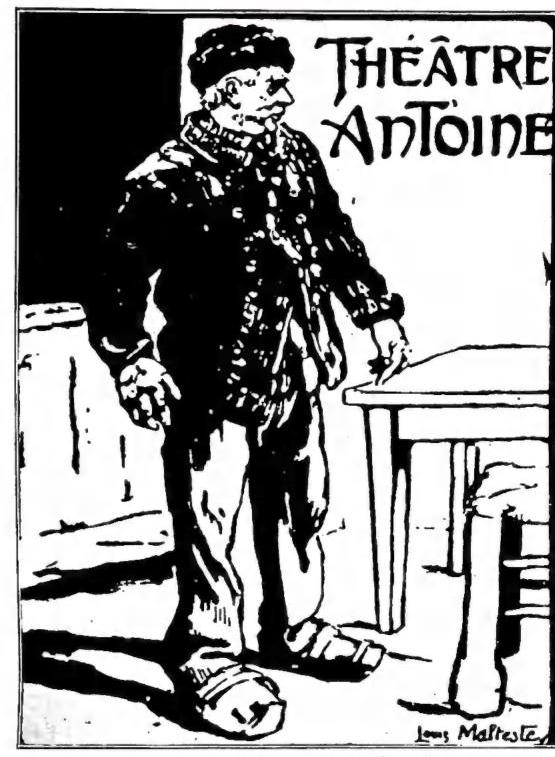
TEATRO – Poster by Louis Malteste for the Théâtre Antoine.
IX. THE THEATRE OF THE ROMANTIC AGE: LITERARY THEATRE IN EUROPE AND ITS EVOLUTION. IN GERMANY. IN ITALY AND IN RUSSIA. IN ENGLAND AND IN FRANCE. THE THEATRE OF OPERA. SCENOGRAPHY AND ACTORS. VERISMO AND SYMBOLISM.
A history of Romantic theatre becomes possible and convincing through Goethe, who for almost his entire long life meditated upon or wrote about Faust and experimented with every possible direction of the theatre as a playwright, as a superintendent and director, and sometimes as an actor; and certainly no one has been able to contribute to it with greater ingenuity and assiduousness, repositioning the responsibilities of the individual at the centre of the drama and reopening it to philosophical, indeed theological, meditation that had seemed forgotten for centuries, within the cautious observance of conventional separatism. Perhaps less evocative but more comprehensive would be a history that also considers theatre within the sphere of a cultural phenomenon, namely Romanticism itself, which almost proposed to begin anew the history of the world and to make present once more what past ages had suffered and experienced.
The theatre of the late eighteenth and entire nineteenth centuries, up to the First World War, concerns itself with gathering into a ritualised and mythographic Romanticism; and it establishes an imaginative yet bold, but always circumspect and reflective, equilibrium between the proposal of poetry and its journey among the people: no longer entrusted to the overwhelming power of genius, as in more fanciful and perhaps more barbaric epochs (Romanticism, with all its cult of the primitive, is the era par excellence of culture, of intellectually meditated responsibility, extending its attention immeasurably beyond the limits of reason and codified form to embrace the entire historical world and the entire human world; thus preserving, beyond historical man, the eternal soul of man, of each man, and, this side of history, nature), but validated by all the refinements of shared culture. Therefore, a synthesis, or even merely an account, must gather together, alongside lyrical effusions and doctrinal commentaries (more often entrusted to the printed theatre, but effective in shaping the tradition of performed theatre, which always draws upon literary inventions and draws more upon them in this era of culturalism), the myths interpreted by musical theatre, the mimetic language—not merely verbal—of performers.
It is better to begin, in order to understand a history to which all the peoples of Europe contribute, with the contrast between the Italian Alfieri and the German Tieck. The Italian tradition thus reinserts itself into the history of European theatre: for Italians seemed to have detached themselves from literary theatre precisely at the time when the English, Spanish, and French entrusted it with the celebration of the most worthy values and the boldest intentions of the new peoples gathered in the states of divine-right monarchies, summarising almost everything in the mimetic forms of Art and the musical forms of Opera, which even in this new age enjoyed fresh fortune, transforming and surpassing their artisanal limits.
Tieck makes the boldest proposals and vastly expands the limits of theatre. Alfieri, to temper the audacity of his proto-Romantic insurrections, seeks through the most rigorously accepted and humbly endured limits the profound truth of the soul, discovering behind eloquent gesture the heroes’ arrival at sacrifice and words at silence. For a long time, theatre remained divided between adventurous Romanticism and a traditional discipline that nonetheless revealed the profound meaning of choral concentration and verbal debate accompanying action and its implications. After a veristic phase, in which it supposed that the thing directly represented possessed intrinsic power and directly shaped souls through its evident truth, dramaturgy decomposes into symbolism, which makes pure poetic presence the engine of stage life and translates representation into ritual, and into the superimposition of directorial and spectacular elements that reduce the text to a pretext.
Romanticism regards theatre as a supreme form; and the ambitions of poets, besieged by the myth of Shakespeare, seek to traverse lightning-fast—without giving time to time—indeed in a religious extratemporality—the itinerary of the word that asserts itself among many. This does not mean that the best and most significant Romantic dramas found their way to the stage: Shelley and Manzoni, to cite two extremes, had no direct stage success; yet this does not imply that Romantic literary dramaturgy went unheeded: theatre has many points of entry, and what is not entrusted to words enters through costume, sometimes more readily receptive to the influences of lyric and novel, through scenography, through music. On the other hand, thus isolated from their natural setting, theatrical poets conduct in vitro experiments all the more daring for not being subject to the test of success, and they anticipate forms that would become commonplace in the second half of the nineteenth century.
To gather the chronicle of this fruitful silence within the various circles of national literatures—and beginning with Germany, which played the largest part in this revolution of taste—a contrast arises from the outset, while Goethe pursues his own path, between the heroic poetics of Schiller and his followers and the dramatists of Schicksalstragödie (a tragedy of destiny that imprisoned human freedom and responsibility in things and in time), such as Werner and his imitators. Kleist is the most fertile and most brilliant of the poets who, in isolation, imagine the theatre of the future: precisely at a time when the success of a mediocre writer like Kotzebue seemed to preclude any possibility of fantastic life and freedom of invention on the stage. A special place in German culture is occupied by Vienna, as it had during the Italianising Baroque; and Grillparzer’s work ranged widely over Viennese historical drama, awaiting the day when that theatre would open to a current of popular dialect. Then Hebbel swiftly synthesised all tendencies, binding into a knot of great dramatic efficacy words destined to unfold in the years that followed, in currents both of realism (Maria Magdalena) and of symbolism (The Nibelungen).
The history of literary theatre in Italy developed more slowly; for even Goldoni’s success in the eighteenth century had been contradicted by the popularity of Carlo Gozzi’s fairy tales, which restored to Art, as its proper domain, the realm at once childlike and popular of fantastic fable; and Alfieri’s tragedies had to await the new Risorgimento era for even partial understanding and acceptance. The Napoleonic phase, as Monti demonstrates and Foscolo indirectly even with his Romantic rebellions and anxieties, marked a movement of involution and academic formalism. Only with the Romanticism of Pellico and Manzoni did tragedy return as a work and an effective force of word and history:
though the long interval between Manzoni and Verga was too easily filled by the facile historical evocations of Giacometti, who
This Romantic age of the theatre is also singular in this respect: that literature is exalted there, and in the very act of exalting itself it destroys itself. Never before had the formal and technical limits defended by classicism been so overstepped, yet never before had the word been understood as the testimony of a presence that transcends II. The theatre becomes the proving ground for a literature that no longer justifies itself in artistic perfection but appeals to truth, and for that truth claims to liberate mankind. Indeed, between Goethe’s essay Shakespeare und keine Ende and Manzoni’s Lettre à M. Chauvet, Romantic theory of drama is elaborated in the search for a spiritual centre where the extrinsic stimuli of the stage are gathered, and the inner unity of what is dispersed upon the stage, among the spectators, and in the world is revealed. In this heroic yet doomed tension, the chronicle of the theatres everywhere reveals a disordered tumult of experiences: pious and desperate devotions like Kleist’s, ambitions and contradictions like Vigny’s—great poets who founder in silence or in adventure.
The story unfolds coherently, richly, and fruitfully only in the sphere of musical theatre, where—significantly—the music seemed to permit that commitment, that ineffable spirituality, and perhaps, contradictorily, that fantastic and willful ambition that were the most ambitious aspirations of Romanticism. Moreover, opera in France—where intellectualism had won its great anti-Baroque battle in the height of the seventeenth century—had never been subjected to rationalistic regulation. The eighteenth century indeed proposes a theory of musical drama, but in practice resolves it through Metastasio, who gathers into an archaic circle of nobly affectionate sentiments, expressed in crystal-clear and intrinsically musical verse, the experiences of a century and a half of melodrama; and through Gluck, who likewise works within the Italian tradition to compose musical dramas of profound truth and disciplined artistry. Before them, despite Metastasio’s literary reform, the theatre remained a bold adventure in which the star of the poet-musician contended against the sufficiency of the craftsmanly practice of musicians, actors, and dancers.
Mozart encounters this opportunity as he does every other that presents itself. He moves through the old and new forms of musical comedy, Baroque drama, and allegorical drama, from Italian craftsmanship to the ambitions of German Enlightenment, shifting the centre of attention toward musical language. Yet he is already a free and genial spirit who believes only in inspiration and surrenders to it entirely. He does not overload his writing with intentions, nor does he accept the allegories offered him with the fervour of a reformer. In short, he is the most complete embodiment of the spirit of the most Italianate opera drama, yet he is a German. Rossini follows this path, beginning as a brilliant craftsman and always remaining within the sphere of the theatre (Mozart extends into every zone frequented by musical language; Rossini does not leave the theatre except to glance, and even then only at the end, toward liturgy). This is not an apologue: Mozart, Rossini, and Verdi are aware of and express this expectation—I would say this final consecration of drama, which reconciles itself to its sacred origins. They prepare for it in their own way; even Wagner, though unable to renounce any of his ambitions, attempts liturgy. It is not merely a chapter in the history of the theatre that is revealed here; it is the very history of the theatre seeking its transcendental proportions.
The Italians, with Rossini—who sums up the entire old history from Pergolesi to Cimarosa—make musical theatre a coherent narrative. Meanwhile, the “theatre of prose” (as it began to be called then, significantly contrasting the term “prose” with the “lyric” theatre) dissipates itself in so many ambitious directions. Bellini seems to encapsulate the taste for classicism in the splendid linearity of his melody; Donizetti appears to enrich himself with Romantic colours and moods. In reality, they know what is so easily forgotten by those who engage in philosophical debates: that all reality, without needing to be rescued by doctrine, can be traversed and summed up by poetic form, which implicitly contains within itself a whole intuition of universal life.
After them, the Italian opera of the early nineteenth century possesses the splendid coherence of invention and reflection that characterized the great epochs of dramaturgy. Verdi plunges his meditation into a populism religiously inspired by Lombard Romanticism, moving from choral dramas to portraits, venturing into amorous and warlike adventures set in distant times and places, and concluding with a rediscovery of Shakespeare. Even beyond this grand dramaturgy, musical theatre celebrates its national glories; and Wagner makes his drama the culmination of all German Romanticism. The symbolist approach of the new theatre is also dominated by his presence in the culture of Europe during the second half of the nineteenth century.
It is advisable to summarize this unitary reality—though it appears dispersed in many different aspects—in distinct paragraphs if one wishes to convey an adequate notion of nineteenth-century theatre. In these ambitious upheavals, nothing remains foreign to it: not the art of dance, certainly, which forms a prominent chapter; nor technical inventions, which multiplied the possibilities of scenic illusion until, with Symbolism and the very excess of illusions, it was discovered that external verisimilitude mattered less than the inner truth of poetic revelation. The culturalism of much painting and architecture, with its presumption of restoring to currency the palaces of Babylon or medieval castles, invaded stage design, which had hitherto been dominated by the Bibiena tradition. When it did not happen naïvely, the architect, availing himself of the new construction techniques, translated into iron, brick, and cement the scenographic inventions of the theatre. So easily did theatrical costume overflow from the stage into the street, where journalism interpreted and disseminated II. Even the organization of actors underwent profound changes: state-subsidized national companies, impresarios of musical theatre, and capocomici of prose theatre represent the salient aspects of the economic dimension tied to the art of spectacle.
The spread of theatrical culture and the predominance of German culture—always eager to take account of everything and leave nothing to chance—imposed a scrutiny of the art of actors and singers. The actor tended to become an instrument (whether in his own hands, as Diderot had proposed, or in the hands of the director, as Gordon Craig would propose on the threshold of contemporary experiments). The Meiningen company, led by the Duke himself in productions designed to exemplify culture and art, remained exemplary in Northern Europe; yet far greater intrinsic efficacy was revealed by Italian actors (Gustavo Modena, Tommaso Salvini, Eleonora Duse), who restored the person of the actor to the centre of theatrical life. Person, we say—and not to forget that the theatre’s story had begun with the persona as mask, whether ritualistic and magical or sometimes merely conventional (another pregnant word)—but here “person” regains its full meaning. Beyond theatrical technique, there arises the idea of a creature responsible for the truth of dramatic fiction, who discovers it by analogy, suffering and living within the limits of word and gesture.
The Romantic era thus drew to a close, after a century of tumultuous developments: the second half of the 19th century brought to fruition, through cultural encyclopedism, the schools of Realism and Symbolism. Always compelled to proceed by antitheses, it gathered from the legacy of past centuries and from contemporary literary movements—which were precisely locked in combat between those two opposing tendencies—the drive toward realization (once, mimetic realism had stood opposed to the magniloquence of tragedy; there had been the carnivalesque escape from the ethical and religious discipline of a humanistically organized society; in Italy, there was a tendency toward the concrete realities of popular and bourgeois society, which opposed the heroic and exceptional transfigurations of musical drama; and it had now become the documentation of reality, accepted positivistically as absolute truth) and the drive toward transfiguration. The history of this dual experience begins with Hebbel, passes through Ibsen, and concludes with Chekhov: these figures reveal how Symbolism and Realism, transfiguration and realization, poetry and thing are dialectically bound together, even in art—a truth that was perfectly understood in an artisan civilization but forgotten amid so many perhaps presumptuous theorizations. In contemporary publicistic reflection, however, it was easy to re-divide them, moving from the bourgeois theater of Augier and Dumas fils to Zola, and rediscovering a Naturalist component in Italy (Verga), in Germany (Hauptmann), and in Russia (beginning with Ostrovskij). Similarly, for the other current, whether draped in mysticism and aestheticism or not, between D’Annunzio and Maeterlinck.
X. CONTEMPORARY THEATER: THE ACTUALITY OF HISTORICAL EXPERIENCE AND INDICATION OF ITS SIGNIFICANT FEATURES. SACRED THEATER RE-EMERGES AS A DEMAND OF TOTAL INTELLIGENCE. ALL IMPORTANT CONTEMPORARY THEATRICAL PHENOMENA IN EVERY COUNTRY ARE RELATED, BY AGREEMENT OR DISSENT, TO THE REVIVAL OF RELIGIOUS SENSE. SPECTACULAR ORGANIZATION IN RUSSIA AND TEXTUAL ELABORATION IN AMERICA. — Such is the historical landscape of European theater, and it has been sketched here to trace the terms of its presence among us: many forms that once held sway have declined, but those that are reviving respond to the needs of an actuality that cannot help but accept the responsibilities of the past. The names that float upon the tide of generations that time presumes to submerge point the way we retrace toward the secret of historical and poetic creativity—indeed, to speak more precisely, of creativity in poetry and, through poetry, in history. The commitment to participation and knowledge is more immediate in the words of contemporaries, yet also more difficult, for criticism and time have not yet helped to free it from the confused and mediocre solicitations of a reality that, as usual, appropriates truth for itself. We shall indicate some salient aspects of contemporary dramaturgy and some perspectives that may facilitate the choice between what is destined to live and what is destined to die among the many voices that usurp today’s life.
One observation that in turn summarizes the past is this: in contemporary custom, theater is gaining in depth what it seems to lose in breadth. The experience of Romantic culture has served it not only to abolish the abstract technicalism and formalism that might have sterilized inventive genius and arrested the commitment to moral life, but also to seek truth in time and eternity in the transvaluation of time. Thus, through the actuality of history, those attentions to religious life that encyclopedism had scorned and immortalism attempted to reabsorb have been revived. It is no longer a matter of establishing two parallel lines of sacred and profane theater; rather, one must observe the strengthening of religious sentiment even through the presumption of an absolute human dominion over reality. In this sense, if religiosity was perceived from Pre-Romanticism onward (and the great Alfieri concluded his work in the religious dramas *Saul* and *Abel*), it now re-emerges capable of permeating even the densest zones of historical and realistic drama, more in some places and less in others. Russian 19th-century theater already demonstrated this: Russian literature maintained a spiritualistic stance against positivism and Realism, especially of the French variety, until the new century saw it, weighed down by the overwhelming force of politics, adopt the scientific immortalism that other European peoples were abandoning. Religious anxiety permeated not only Pushkin’s historicism but even Gogol’s Realism itself; and it found concrete expression, through Ostrovskij’s *The Storm*, which symbolizes the apocalyptic horror of a final judgment, in Tolstoy’s *The Power of Darkness*. One may speak of a religious impulse where Verist theater, struggling within its closed circle, brushes against the limits of transcendence; and when Ibsen’s poetics, which believed itself sufficient unto itself, detaches itself from them entirely, entrusting itself to judgment—
that ambitions sink,
and entrusts itself to judgment
and even to judgment
—through the experience of Antoine’s Théâtre Libre (a program of total spectacle, based on the most rigorous canons of documentary theater) and echoing social concerns, it begins to dramatize metaphysical problems without resolving them. The so-called Knights of the Spirit in Italy (a mention not lacking in ironic efficacy) gather such concerns, and theater variously presents them (Fogazzaro, Bracco, Butti). These were, however, uncertain expectations, inclined to make drama of uncertainty itself, until the actuality of a total religious meditation was proposed—and, with magnanimous confidence, left to be contested—by Paul Claudel, who from the late 19th century onward dominated the twilight of the old culture and invaded the new. In him, not only is the legacy of sacred theater made actual again, but everything becomes sacred representation, even costume comedy (*The Exchange*, 1893) and historical comedy (*The Hostage*, 1911), and the Baroque adventure comedy (*The Satin Slipper*, 1914–24, performed in 1943), while the explicitly religious theme (*The Tidings Brought to Mary*, 1912) projects itself across vast zones of historical, moral, and social life.
At this point, it is clear—first in France, more than elsewhere—owing to the stimuli of poetic language and the broad movement of religious renewal, the need for a new conception of theater and for a stage organization that corresponds to II. Jacques Copeau (1878–1949) became the interpreter of this exigency; he too had passed through Antoine’s realistic conception, from which he learned the commitment to concreteness that could become coherence and an appeal to transcendence, but he was also driven by literary-cultural demands to oppose the dominance exercised on the French stage by both the dogma of Realism and the exclusivity of mere craftsmen. The restoration of aesthetic values could also obey the aestheticizing wave that, for example in Italy, coincided with the so-called poetry theater; but
He aimed at a total restoration of permanent values, and his programme was no less concerned with truth and morality than with beauty. To promote it, he composed works of drama, founded the *Vieux Colombier*, which overturned all the conventions of theatrical architecture, reduced the spectacular element—favoured by dissipation and distraction—and promoted a symbolic simplification of staging and direction. He trained actors through a comforting discipline. The efficacy of this programme, of which this example is decisive, is evident in contemporary theatre; his disciples extended his technique and inspiration especially in France (Jouvet) and Italy (Costa).
With Henry Ghéon (1875–1943), the religious current became a popular phenomenon; texts of immediate appeal and utmost simplicity multiplied, and companies formed in parishes, colleges, and schools—even theatre for *boy scouts* (Chancerel).
It is not difficult to discern in this religious revival a decisive factor in the new orientations of theatre worldwide: for it is now impossible to pursue information confined within isolated national circles, if indeed such a case of incommunicability among national expressions ever truly existed in Europe. Equally important is the need to relate, whether by agreement or dissent, all significant developments in dramatic literature, organisation, direction, and even historical reflection on theatre—naturally tied to the investigation of the primal impulse that either prompted renewal or provided the clearest opportunities for II.
The Spanish theatre responded to this, though hesitating between the naturalistic and folkloric vitality of García Lorca and the effective poetics of Martínez Sierra; yet rich in a tradition that revives many contemporary experiences, from Benavente and the Quintero brothers, through Unamuno, to the two named above and Alberti. The English theatre (almost in reaction to the dissolution proposed by the sarcastic and cerebral, yet inventive constructor of perfect stage machinery, G. B. Shaw) found expression in the work of the American T. S. Eliot (*Murder in the Cathedral*, 1935) and Christopher Fry; while the French theatre gravitated more explicitly around it, whether in the populist and reflective continuations of Marcel and Mauriac, the lost crepuscular and intimate phase after the armistice (Villarceaux, Bourdet—though Giraudoux’s mythological works are not unrelated to this retreat), the multifaceted experimentation of Jean Cocteau, or the deliberate negation and earthbound stance of the existentialist Sartre in the second post-war period, which in part also connects politically to German expression.
Indeed, in every European and American country, observing these events and forms led to modifying a development that, within certain limits, presumed to be autonomous (and here we claim no more than to offer a few reference points and a few more valid perspectives). In Scandinavian theatre, for instance, rich in the great tradition of Ibsen, dramaturgy seems to unfold more or less independently, linked to the violently negating work of Strindberg; yet the Norwegians Helge Krog and Nordahl Grieg reflect deeper emotions and speak a more widely shared language.
The two European countries where the crisis was most acutely suffered were Germany and Italy. In Germany, the defeat of the First World War gave renewed resonance and urgency to the innovative and revolutionary current that challenged the restless presumptions of Wilhelmine society. Yet equally—and more importantly—it must be remembered that German cultural primacy in the 19th century had already explored every possibility and accustomed critical literature to draw on every suggestion, wherever it came from. Expressionism, the most imposing theatrical phenomenon of the post-war years, had affinities with the visual arts, from which it took its name (a reaction against French Impressionism, which submerged images in a luminous atmosphere with the naive exuberance of a new discovery of created nature, and proposed a new evidentiary force assigned to things and an invasive, obsessive corporeality assigned to creatures). It accumulated revolutionary ferment, dismantled the mechanism of the individual or dispersed it in the mass. Brecht, Kaiser, and Toller are the names most frequently recalled from a large cohort extending from Reinhard Sorge to Fritz von Unruh; and it culminates and is transfigured in the poetry of Franz Werfel, destined to open to the religious message. The pre-eminent director, facing the eclecticism of Max Reinhardt—who attempted expressive modes of direction and stage organisation and almost codified the rules for those open-air spectacles, spread worldwide, that exploit environmental suggestion and historical memory—was Erwin Piscator, opposed to that humanistic liberation of the actor which was the Italian contribution.
It is precisely in Italy, with perhaps a modest but eloquent and conscious clarity—even in accepting its limits—that these experiences are easily summarised. The work of Luigi Pirandello must be observed not so much in his dialectical responsibilities (sparse and, moreover, introduced as dialogue beats beyond which the character lives only in his pain and pity) but in the denunciation he persistently offers of a theatre and a social custom stripped of valid justification, resting on habit. Thus he encapsulates the final instances of verist theatre and surpasses the often vain and ambitious interlude of pseudo-historical poetic theatre. He himself proposes a final diegetic and poetic solution in the *mythical plays*; and this was the path already opened—and pursued with far greater awareness—by religious theatre. Meanwhile, it served to expose the provisional nature of the intrusive and material solutions of Expressionism, the mechanical quality of existentialist proposals, and to abolish many traditional superstructures. It proposed to word and moral life the necessity of ultimate decisions made without the aid of rhetoric.
To the east and west of this Europe, which thus closes the cycle of Romantic culture and perhaps inaugurates a culture of more prompt and profound moral responsibility—a language that calls for the shared responsibility of all men and the total commitment of man to the word, almost a t. of the world, as the Spanish playwright said, after the geographical domination of the earth had been achieved, where norms and customs exist only to be surpassed, a benign and arduous occasion for the rediscovery of the soul—the Soviet t. and the American t. seem to have divided the task of textual organization. Already at the turn of the century, Russia had witnessed the work of Nemirovič-Dančenko and Stanislavskij and the founding (1898) of the Moscow Art Theatre: the t. was perhaps the only form of participatory life that the imperial government allowed to choose proposals and formulate responses with a certain freedom of initiative. With the Revolution, not only did organizational assistance multiply, with thousands of t. arising everywhere in every sector of the new society and in all the languages of the peoples of the Union, but the most diverse directorial experiments were attempted, still following Stanislavskij, who never hardened into his initial realism, but rather promoted coloristic and choreographic experiences, which gained European fame through the Russian ballets, and also embraced symbolism and constructivism from various trends. Meyerhold, Tairov, Akimov, Vakhangov indicate the most acute and mobile attentions of contemporary Russian t.: where the act of interpretation as recreation almost always surpasses textual depth. And among the authors of t., we may mention, around Gorkij, who accompanied him from pre-revolutionary times to the revolution, Vsevolod Ivanov, Bulgakov, and a typical figure of a producer, a function that in such a t. necessarily comes to replace the author, Reuben Simonov.
As for America, and without excluding the multiplicity of organizational and directorial experiences, which leave no program untried, from industrial t. to the *Nationwide Theatre*, from university and youth t. to touring companies, for a humanistic and Romantic tradition that places the word at the center of human participation, the author retains preeminence: Eugene O'Neill, who also arrives at a religious reconciliation after many divergent experiences (costumistic, psychoanalytic, mythographic), is the best known and followed of a very large group, where the names of Howard, Sherwood, Rice, and Anderson stand out: to conclude, provisionally, with the most observed work in