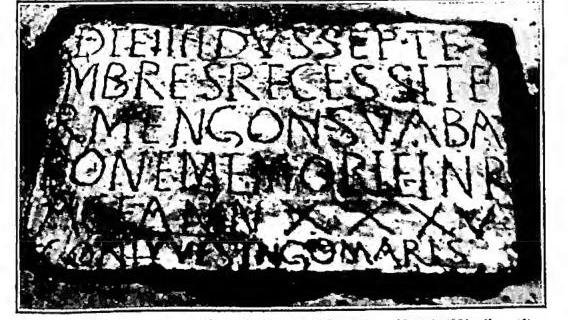
IPSO FACTO and IPSO IURE. – These two formulas are equivalent in meaning, and their use is found especially in penal matters: more precisely, to indicate equivalently the poenae latae sententiae. The synonymy of the two expressions is authoritatively established by the legislator of the CIC (can. 2217, 2).
By them, the perfect coincidence between the transgression of the law and the penalty incurred automatically, without the concurrence of human will, is meant to be expressed. Once the delict, complete in its kind, has been committed, the penalty necessarily follows as the retribution for the disturbance of society. These expressions, with identical meaning, are frequently found in the sources of canon law. Ipso facto occurs in c. 2, de rebus ecclesiae non alienandis, III, 9, in VI, together with the expression eo ipso; c. 1, de homicidio, V, 4, in VI; c. 1, de usuris, V, 5, in VI; c. 3, de poenis, V, 8, in Clem. Pius VI also used it in his const. Auctorem fidei, 28 Aug. 1794, prop. 47, against the Jansenists (cf. Denz-U, 1547). Ipso iure is found in c. 25, X, de sententia excommunicationis, V, 39; c. 37, de electione et electi potestate, I, 6, in VI; c. 5, de poenis, V, 9, in VI, together with the expression eo ipso, which is also found in isolation in c. 16, de electione et electi potestate, I, 6, in VI; c. 11, de sententia excommunicationis, suspensionis et interdicti, V, 11, in VI. The CIC retains this wording only in cann. 2346, 2365, 2381 n. 1. The other expressions used in the canonical sources are ipso actu: c. 24, X, de appellationibus, recusationibus et relationibus, II, 28, and ipso suo genere in c. 26, X, II, 28. The expression ipso iure is found several times in the CIC; ipso facto is more commonly used.
Of particular importance for the subject under discussion is the deprivation of a benefice, which may occur ipso iure et per sententiam declaratoriam of the judge. In this case, the penalty is retroactive to the day on which the delict was committed, and from that time the offender ceases to be the holder of the benefice.