
### Institutes of Higher Studies
Under this name are designated the universities or ecclesiastical studies institutions where teaching is imparted in a scientific manner, in the university style. In particular, those existing in Rome are recalled here (in the order in which they appear in the *Annuario Pontificio*) which welcome students from all parts of the world; those existing outside Rome are mentioned under the entries for the individual dioceses where they are located.
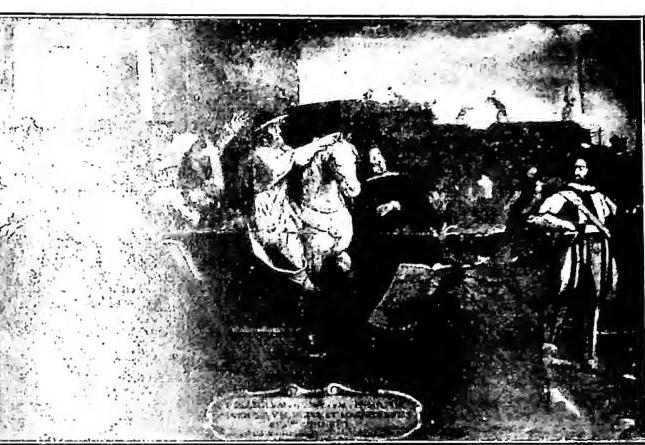
I. **Pontifical Gregorian University**. - The origins of the Pontifical Gregorian University date back to 1551, when St. Ignatius of Loyola, with money received from St. Francis Borgia, having rented a modest house at the foot of the Capitoline Hill, opened the Roman College there on 18 February. The following year, Julius III, with the bull *Sacrae religionis*, granted the faculty to establish chairs of philosophy and theology (which were erected in 1553) and to confer upon students the doctorate in philosophy and theology with all the privileges of other universities. As the first and subsequent temporary seats proved insufficient to accommodate the students, who, coming from all over Europe, already numbered over a thousand by 1567, Gregory XIII wished to provide this seminary of all nations and all languages, as he defined it, with a suitable endowment and a dignified seat, built by the architect Ammannati and inaugurated in 1584. In memory of the Pope, who was truly the "fundator et parens" of the Roman College, it gradually assumed the name of Pontifical Gregorian University. In 1773, following the suppression of the Society of Jesus, the University was entrusted to the secular clergy under the high direction of a cardinal commission which governed it until 1824, when Leo XII, with the brief *Cura multa*, entrusted its direction once again to the Society of Jesus. After the political events of 1870, the Roman College was deprived of its seat; the literary schools were suspended (later resumed with the foundation of the Massimo Institute at the Baths), while the Faculties of Philosophy and Theology continued in the nearby Palazzo Borromeo. In 1876, Pius IX added the Faculty of Canon Law, and further developments occurred under his successors, so that, when the Palazzo Borromeo became inadequate, in 1930 it moved to its new seat in Piazza della Pilotta, built by the architect G. Barluzzi. New faculties and chairs were established, while the associated Biblical and Oriental Institutes arose and developed, in such a way as to fulfill the will of Pius XI, who in his own *Quam maxime* wished the Pontifical Gregorian University to be a "true and perfect University of all ecclesiastical studies, fully adapted to the needs of the times." It is, in the words of Pius XI, the true and proper University of the Pope; the Grand Chancellor is the Cardinal Prefect of the Sacred Congregation of Seminaries and Universities, and the Rector is appointed by the Holy Father.
It is recognized as a Pontifical University by the Italian State and, by virtue of the Lateran Pacts, enjoys special privileges.
It comprises the Faculties of Theology, Philosophy, Canon Law, and the Higher Institute of Canon Law, as well as the Pontifical Biblical and Oriental Institutes.
Ea comprende
Ea comprende
Ea comprende
Ea comprende
Ea comprende
Ee comprende
Ee comprende
Ee comprende
Ee comprende
Ee comprende
Ee comprende
Ea comprende
Ea comprende
Ea comprende
Ea comprende
Ea comprende
Eo comprende
Eo comprende
Eo comprende
Eo comprende
Eo comprende
Eo comprende
Ea comprende
Ea comprende
Ea comprende
Ea comprende
Ea comprende
Ea comprende
Ee comprende
Ee comprende
Ee comprende
Ee comprende
Ee comprende
Ee comprende
Ea comprende
Ea comprende
Ea comprende
Ea comprende
Ea comprende
Eo comprende
Eo comprende
Eo comprende
Eo comprende
Eo comprende
Eo comprende
Ea comprende
Ea comprende
Ea comprende
Ea comprende
Ea comprendeEa comprises
Ee comprises
Ee comprises
Ee comprises
Ee comprises
Ee comprises
Ee comprises
Ea comprises
Ea comprises
Ea comprises
Ea comprises
Ea comprises
Eo comprises
Eo comprises
Eo comprises
Eo comprises
Eo comprises
Eo comprises
Ea comprises
Ea comprises
Ea comprises
Ea comprises
Ea comprises
Ea comprises
Ee comprises
Ee comprises
Ee comprises
Ee comprises
Ee comprises
Ee comprises
Ea comprises
Ea comprises
Ea comprises
Ea comprises
Ea comprises
Eo comprises
Eo comprises
Eo comprises
Eo comprises
Eo comprises
Eo comprises
Ea comprises
Ea comprises
Ea comprises
Ea comprises
Ea comprises
Ea comprises
Ee comprises
Ee comprises
Ee comprises
Ee comprises
Ee comprises
Ee comprises
Ea comprises
Ea comprises
Ea comprises
Ea comprises
Ea comprises
Eo comprises
Eo comprises
Eo comprises
Eo comprises
Eo comprises
Eo comprises
Ea comprises
Ea comprises
Ea comprises
Ea comprises
Ea comprises
Ea comprises
Ee comprises
Ee comprises
Ee comprises
Ee comprises
Ee comprises
Ee comprises
Ea comprises
Ea comprises
Ea comprises
Ea comprises
Ea comprises
Eo comprises
Eo comprises
Eo comprises
Eo comprises
Eo comprises
Eo comprises
Ea comprises
Ea comprises
Ea comprises
Ea comprises
Ea comprises
Ea comprises
Ee comprises
Ee comprises
Ee comprises
Ee comprises
Ee comprisesEe comprende
Ee comprende
Ea comprende
Ea comprende
Ea comprende
Ea comprende
Ea comprende
Eo comprende
Eo comprende
Eo comprende
Eo comprende
Eo comprende
Eo comprende
Ea comprende
Ea comprende
Ea comprende
Ea comprende
Ea comprende
Ea comprende
Ee comprende
Ee comprende
Ee comprende
Ee comprende
Ee comprende
Ee comprende
Ea comprende
Ea comprende
Ea comprende
Ea comprende
Ea comprende
Eo comprende
Eo comprende
Eo comprende
Eo comprende
Eo comprende
Eo comprende
Ea comprende
Ea comprende
Ea comprende
Ea comprende
Ea comprende
Ea comprende
Ee comprende
Ee comprende
Ee comprende
Ee comprende
Ee comprende
Ee comprende
Ea comprende
Ea comprende
Ea comprende
Ea comprende
Ea comprende
Eo comprende
Eo comprende
Eo comprende
Eo comprende
Eo comprende
Eo comprende
Ea comprende
Ea comprende
Ea comprende
Ea comprende
Ea comprende
Ea comprende
Ee comprende
Ee comprende
Ee comprende
Ee comprende
Ee comprende
Ee comprende
Ea comprende
Ea comprende
Ea comprende
Ea comprende
Ea comprendeEa comprises
Ea comprises
Ea comprises
Eo comprises
Eo comprises
Eo comprises
Eo comprises
Eo comprises
Eo comprises
Ea comprises
Ea comprises
Ea comprises
Ea comprises
Ea comprises
Ea comprises
Ee comprises
Ee comprises
Ee comprises
Ee comprises
Ee comprises
Ee comprises
Ea comprises
Ea comprises
Ea comprises
Ea comprises
Ea comprises
Eo comprises
Eo comprises
Eo comprises
Eo comprises
Eo comprises
Eo comprises
Ea comprises
Ea comprises
Ea comprises
Ea comprises
Ea comprises
Ea comprises
Ee comprises
Ee comprises
Ee comprises
Ee comprises
Ee comprises
Ee comprises
Ea comprises
Ea comprises
Ea comprises
Ea comprises
Ea comprises
Eo comprises
Eo comprises
Eo comprises
Eo comprises
Eo comprises
Eo comprises
Ea comprises
Ea comprises
Ea comprises
Ea comprises
Ea comprises
Ea comprises
Ee comprises
Ee comprises
Ee comprises
Ee comprises
Ee comprises
Ee comprises
Ea comprises
Ea comprises
Ea comprises
Ea comprises
Ea comprises
Eo comprises
Eo comprises
Eo comprises
Eo comprises
Eo comprises
Eo comprises
Ea comprises
Ea comprises
Ea comprises
Ea comprises
Ea comprises
Ea comprises
Ee comprises
Ee comprises
Ee comprises
Ee comprises
Ee comprises
Ee comprises
ISTITUTES OF HIGHER STUDIES
The Pontifical Biblical Institute (founded in 1909) offers two faculties: Biblical and Oriental Studies. The former includes biblical exegesis, Hebrew, Aramaic, and Arabic; the latter comprises Egyptology, Assyriology, and Indo-Iranian studies. Both faculties confer academic degrees: the licentiate after two years of study (three years in the Oriental Faculty), and the doctorate no earlier than four years after the beginning of the curriculum.
In the academic year 1950–51, the Institute had 25 professors. It was attended by 203 students: 74 diocesan priests, 127 religious, and two laymen, hailing from 29 different nations. The Institute publishes three journals: *Biblica*, *Orientalia*, and *Verbum Domini*, as well as four series of monographs: *Scripta Pontificii Instituti Biblici* (100 volumes to date), *Analecta Orientalia* (28 volumes), *Monumenta Biblica et Ecclesiastica*, and *Biblica et Orientalia*. To date, the Institute has trained more than 600 professors of Sacred Scripture.
III. Pontifical Oriental Institute
Benedict XV founded it with the motu proprio *Orientis Catholici* on 15 October 1917. Its tasks and organization were later defined and refined in Pius XI’s constitution *Rerum Orientalium* and in the Institute’s statutes, drawn up and approved following the apostolic constitution *Deus scientiarum Dominus* (1932). The Institute, whose activity includes teaching and the publication of scholarly works on the Christian East, has a twofold purpose: to reveal to Latin priests the treasures of the East, and to supplement the education of Easterners—even non-Catholics—regarding their own rite and Church, while highlighting the truth of Catholic teaching. The Institute aims to be a meeting point between East and West, using scholarly research to dispel the many prejudices born of mutual misunderstanding, which constitute one of the gravest obstacles to unity.The curriculum spans three years, at the end of which the degrees of bachelor, licentiate, and doctor are successively conferred. All disciplines that illuminate the Christian East are taught: theology, patristics, history, liturgy, ascetics and mysticism, archaeology, liturgical and living languages. There is a plan to establish a special faculty for Eastern canon law. In 1926, Pius XI established a chair of Islamic studies.
The first pro-rector of the Institute, which opened its doors on 2 December 1918, was Fr. Antonio Delpuch of the White Fathers, formerly a professor at the Melkite Seminary in Jerusalem. The faculty was composed of specialists drawn from various religious orders, the secular clergy, and laymen. In 1919, Abbot Fr. Ildefonso Schuster—later Cardinal Archbishop of Milan—was appointed rector. In 1920, Benedict XV granted the Institute the power to confer degrees. At the rector’s suggestion, Pius XI entrusted the Institute exclusively to the Society of Jesus in 1922, transferring it from its original location in Piazza Scossacavalli to the Pontifical Biblical Institute, and in 1926 it was given its current home on Piazza Santa Maria Maggiore. In this new phase, the rectors were Fr. Michel d’Herbigny (1922–31) and Fr. Emilio Herman. Among the deceased professors, the distinguished Fr. Guglielmo de Jerphanion (q.v.) is noteworthy.
The Institute possesses a rich specialized library of approximately 60,000 volumes. The number of regular students usually ranged between 25 and 30, to which an equal number of “guests” attending certain lectures must be added. In the academic year 1950–51, there were 24 professors and 48 students. In 1923, the Institute began the series *Orientalia Christiana*, which, after reaching 100 fascicles in 1934, split into two: *Orientalia Christiana Analecta*, a continuation of monographs (34 issues published to date), and *Orientalia Christiana Periodica*, a semiannual journal begun in 1935. Moreover, the Institute has undertaken two monumental works: the edition of the *Analphorae Syriacae quotquot in codicibus adhuc repertae sunt* (three fascicles published to date) and the acts of the Council of Florence (six fascicles published to date). To these must be added many other works by the professors covering all sectors of the Christian East.
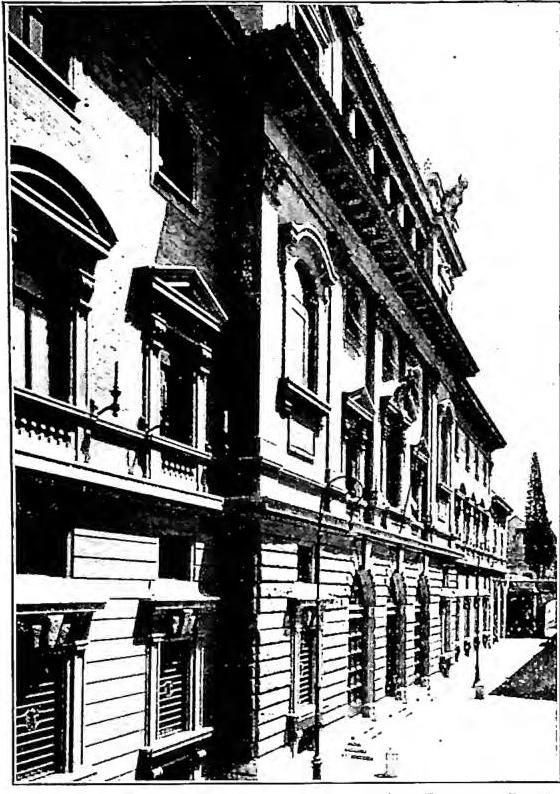
Higher Institutes of Study – Exterior of the Pontifical Gregorian University. Architect: G. Barluzzi (1930) – Rome.
IV. PONTIFICAL LATERAN ATHENEUM
It traces its origins to the suppression of the Society of Jesus, when the schools of the Roman College were entrusted to the secular clergy. After the restoration of the Society and the Jesuits’ return to the Roman College (1814), the Roman Seminary took up residence in the building of the College near S. Apollinare, maintaining its own schools with the faculty to confer academic degrees in theology. In 1828, Leo XII added the faculty to confer degrees in philosophy as well.
In 1853, Pius IX founded alongside the Roman Seminary the Pio Seminary for young ecclesiastics of the dioceses of the Papal States and added schools of canon and civil law with the faculty to confer academic degrees (3 October), thereby constituting the Athenaeum of the Pontifical Roman Seminary.
In 1878, Leo XIII added a Historical-Juridical Academy, and in 1885 the Colonian Institute of Advanced Literature, which, after a promising start, declined and ceased to exist. In 1913, Pius X founded the Minor Seminary with its own seat, and assigned to the Major Seminary a new building on the Caelian Hill, on a site adjacent to the Basilica of the Lateran, where the schools of the Faculties of Philosophy and Theology were also transferred; the schools of the Faculty of Law meanwhile had their seat first at the Colonian College in Prati, then again at S. Apollinare in 1920.
In 1932, in application of the Apostolic Constitution *Deus scientiarum Dominus* of 24 May 1931, a new reorganization of studies took place, and the Athenaeum was placed under the Grand Chancellor as cardinal vicar of Rome. Finally, to foster scientific activity, Pius XI erected a new building for the schools on the same Lateran site, which he personally inaugurated in the presence of the Sacred College and the Roman prelature on 3 November 1937; from then on, the Institute was called the Pontifical Lateran Athenaeum, and the seat of the Faculty of Law was also transferred there. The Institute is entrusted to the secular clergy, is open to students of every nation, and in its teaching alternates masters from both clerical states and of different nationalities. It is provided with a library rich in many thousands of volumes, pamphlets, and journals, particularly on philosophical, theological, and juridical subjects, to which students and other scholars have access for their research. Many illustrious cardinals, bishops, prelates of the Roman Curia, and distinguished figures have emerged from the Institute.
Among those who taught in the Faculty of Law were Aliprandi, G. Sebastiani, F. Cavagnis, M. Lega, P. Gasparri, F. Maroto, and Albertario; in the Faculty of Theology: F. Satolli, R. Tabarelli, M. Hertzzenhauer, Vizzini, T. Armellini, G. Antonelli, and others still living. Many of the most illustrious cardinals, bishops, diplomats, officials of the Curia, and scholars of recent times have emerged from the Athenaeum.
It publishes the periodicals: *Lateranum* (since 1935) for historical-theological studies; *Apollinaris*, a commentary on canon law; and *Studia et documenta historiae et iuris*, almost as a continuation of the famous periodical of the same name published by the Historical-Juridical Academy since 1880.
VII. PONTIFICAL ATHENEUM OF ST ANSELM
Erected by Innocent XI with the constitution *Inscrutabili* of 22 March 1687 for the Benedictines of the Cassinese Congregation, it embraced studies in philosophy, theology, and canon law, with the obligation for professors to follow in theological matters the approach of St Anselm of Canterbury.
From this seat at St Paul’s Outside the Walls there emerged an illustrious company of masters (M. Armellini, *Bibliotheca Benedictina-Casinensis*, 2 vols., Assisi 1731–32), among whom was G. B. Chiaramonti, later Pius VII, who was a student there (1763–66) and later professor of theology (1772–81). Interrupted by the Napoleonic suppression (1810), the College became extinct in 1837 (the year of the cholera in Rome). Reopened under Pius IX for a very short time (1867–70), it was reconstituted by Leo XIII, who assigned it to all the Congregations of Black Benedictines (brief *Abbiamo appreso* of 4 January 1887). Inaugurated a year later (4 January 1888) in the Palazzo dei Conventi, it was transferred in 1893 to the Palazzo in Bocca di Leone, and in 1896 to the new seat built by the Pope on the Aventine. The right to confer academic degrees in theology, already granted by Pius IX, was extended by Leo XIII to the three Faculties of theology, philosophy, and canon law; this was renewed by Pius X “for the alumni of the entire clergy, both regular and secular” (*motu proprio* *Praeclara inter* of 24 June 1914). By decree of the Sacred Congregation of Seminaries and of Universities of Studies of 5 January 1933, the Anselmian Institute was decorated with the title “Pontifical.”
The Athenaeum publishes the collection *Studia Anselmiana* (26 fascicles, Rome 1933–51). In 1950, a Liturgical Institute of the *Societas Anselmiana* was erected to promote studies of Christian worship.
BIML.: R. Molitor, Aus der Rechtsgeschichte benediktinischer Verbände, II, Münster 1932, pp. 386-91; III, ivi 1933, pp. 11-14, 81-170; T. Leccisotti, Il Collegio S. Anselmo dalla fondazione della prima interruzione, in Benedictina, 3 (1949), pp. 1-53. Agostino Mayer
VIII. PONTIFICAL ANTONIAN INSTITUTE
In 1883, the Minister General of the Franciscans, Fr. Bernardino Del Vago da Portogruaro, founded the International College of St. Anthony in Rome. Courses began on 20 November 1890. In 1905, six faculties were established (Sacred Scripture, Dogmatic Theology, Canon and Moral Sciences, Philosophy, Church History, Sacred Eloquence). In 1923, an “Institutum Biblicum Franciscanum” was attached to the Antonian in Jerusalem for the advanced training of Sacred Scripture students. From 1924, for a decade, an advanced course was offered for the preparation of missionaries. Following Pius XI’s *Deus scientiarum* and the new academic regulations, the Institute’s premises were expanded and, by decree of the Sacred Congregation of Seminaries and Studies dated 17 May 1933, it was canonically erected as an Athenaeum with faculties of theology, canon law, and philosophy. A subsequent decree of 14 June 1938 granted it the title “Pontifical.”In 1946, Fr. Pacifico Perantoni, Minister General, began new expansions to the building for the library, seminaries, schools, and especially for the grand hall (Aula Assumptionis B. M. Virginis), inaugurated on the occasion of the dogmatic proclamation of the Assumption on 30 October 1950.
The Athenaeum has at its disposal the Central Library of the Order, with over 150,000 volumes and more than 200 scholarly journals. The Athenaeum publishes the quarterly periodical *Antonianum* and various scholarly collections (*Spicilegium Pont. Athenaei Antoniani, Bibliotheca Pont. Ath. Ant., Studia Antoniana, Editiones Pont. Ath. Ant.*). It also hosts other cultural institutions such as the Commission for the Critical Edition of the Works of G. Duns Scotus and the International Marian Academy.
IX. PONTIFICAL INSTITUTE OF SACRED MUSIC
The Pontifical Institute of Sacred Music was founded in 1910 by His Holiness Pius X at the instigation SANTITÀ (v.); it was initially titled the Higher School of Sacred Music and began operations on 3 January 1911. The same Pontiff granted it full approval with the brief *Expleverunt* (4 November 1911); on 10 July 1914, he declared it Pontifical, granting it the authority to confer academic degrees. His Holiness Pius XI issued its statutes on 22 November 1922, confirming its direct dependence on the Holy See; on 24 May 1931, with the apostolic constitution *Deus scientiarum Dominus*, he designated the “School” as an “Institute,” enrolling it among the pontifical universities.The Pontifical Institute of Sacred Music has an international character and is intended to train students who can promote the ever-greater dissemination, understanding, and perfection of sacred music in the spirit of St. Pius X’s motu proprio *Tra le sollecitudini* (22 November 1903). The Institute offers four courses: Gregorian chant (ordinary course: 3 years); Gregorian chant and musicology (advanced course: 3 years); sacred composition (5 years); organ (4 years). The Institute awards diplomas of bachelor, licentiate, master, and doctorate.
Directors of the Institute were: Fr. Angelo De Santi (1911-21); Abbot Paolo M. Ferretti, OSB (1921-1938); Abbot Gregorio M. Suñol, OSB (1938-46). Since 1946, the director has been Prof. Mons. Igino Angles.
X. PONTIFICAL INSTITUTE OF CHRISTIAN ARCHAEOLOGY
Founded by Pius XI on 11 December 1925 in Rome to “provide new encouragement and assistance, commensurate with the importance of the discipline, to the study of sacred archaeology, in light of the results already achieved and those we may yet expect….”To respond fittingly to Pius XI’s initiative, Mons. G. P. Kirsch (v.), appointed director, outlined the Institute’s intended activities: 1) to gather all scholarly material for the comprehensive study of the documents and institutions of primitive Christianity, so as to examine the various aspects of monuments themselves and determine their proper value for understanding the Christian life of the early Church; 2) to initiate and promote scholarly studies on Christian monuments in Rome and the ancient world, addressing the various problems arising from their examination as constructive elements for ancient Christian culture; 3) finally, to train methodical scholars in the field of Christian archaeology; to acquaint them at first hand with the various Christian monuments of Rome; to initiate them in personal research on individual questions; to prepare them for teaching sacred archaeology and the history of the early Church and to train them in the conservation and publication of sacred monuments scattered throughout the regions of the Christian world.
The Institute’s Library, established from its foundation, has been enriched by donations from Pius XI, the Pontifical Commission for Sacred Archaeology, Mons. Kirsch, Mons. Wilpert, Mrs. Strong, and others, and is also sustained by the periodicals received in exchange for the *Rivista di archeologia cristiana*, founded in 1924 by the Pontifical Commission for Sacred Archaeology to replace the *Nuovo Bollettino di archeologia cristiana*, and which has been published at the Institute’s expense since 1927. Mons. Kirsch established four series of publications: 1) *Monumenti di antichità cristiana*; 2) *Le iscrizioni cristiane di Roma e d’Italia dell’antichità e del Medioevo*; 3) *Studi di antichità cristiana*; 4) *Sussidi per l’archeologia cristiana*.
The Institute is enriched by the collection of watercolors executed for *Pitture delle Catacombe* and for *Musei e le pitture cristiane dal VI al XIII sec.* by Wilpert; it also possesses a rich photographic archive.
The Institute further promoted and organized the last two International Congresses of Christian Archaeology, namely the Third in Ravenna in the autumn of 1932 and the Fourth in Rome in the autumn of 1935; the proceedings of these Congresses, which illustrate the most recent discoveries in the field of Christian archaeology and especially studies relating to the origins and development of Christian places of worship, are a fruit of these gatherings.
Since 1932, the Institute’s faculty has constituted the permanent committee for organizing future International Congresses of Christian Archaeology.
In its twenty-five years of existence, the Institute has been assiduously attended by students from the secular and regular clergy and by laypeople from the following nations: Austria, Belgium, Canada, France, Germany, England, Ireland, Italy, Yugoslavia, Lithuania, Luxembourg, the Netherlands, Poland, Spain, the United States, Switzerland, Turkey, and Hungary. The young scholars trained at the Pontifical Institute of Christian Archaeology have become professors in theological universities in Rome, Italy, France, the Netherlands, Spain, Germany, and Canada; they carry out fruitful work in the historical section of the Sacred Congregation of Rites and in other Sacred Congregations; in the Pontifical Commission for Sacred Archaeology, in museums of sacred art, in episcopal archives, etc. The current director is Mons. Luciano De Bruyne, one of the Institute’s first students.
XII. Pontifical Theological Faculty of the Conventual Friars Minor
The present Theological Faculty, erected on 24 January 1905 by a rescript of the Sacred Congregation of Bishops and Regulars at the International College of the Conventual Friars Minor, was raised to the rank of Pontifical by a decree of 13 June 1935 of the Sacred Congregation of Seminaries and Universities, which approved its new statutes in conformity with the Apostolic Constitution *Deus scientiarum Dominus*.
It is linked to the ancient General Studies of Theology with university degree, which flourished in the Franciscan Order from the first half of the 13th century (Paris, Oxford, Cambridge, and later Toulouse, Bologna, etc.), and especially to the celebrated College of St. Bonaventure, founded by Sixtus V in the Roman convent of the Holy Apostles with a bull of 17 December 1587; a true Theological Faculty, which had a glorious life until 1873, when it was suspended due to the law suppressing religious orders. Among the professors and students of this latter period (1905-1950) are to be remembered: H.E. Monsignor D. Jaquet, Bishop of Jassy in Romania (d. 1931); the canonists Monsignor L. Bondini, Apostolic Visitor of the Armenian Catholic Patriarchate of Cilicia (d. 1936); Fr. F. S. D'Ambrosio (d. 1945); the historian Monsignor M. Faloci Pulignani (d. 1940); Fr. D. Sparacio (d. 1929), writer on Franciscan history; Fr. S. Ignudi (d. 1945), author of a commentary on the *Divine Comedy*. The Faculty has an attached library with approximately 30,000 volumes.
XII. Theological Faculty of the International College of Discalced Carmelites
The first international college of the Order in Rome was the Seminary of Missions decreed by the General Chapter of 1605, inaugurated in 1620, and suppressed in 1873. The present International College owes its foundation to the General Chapter of 1920.
It was inaugurated in 1926; erected as a Theological Faculty by a papal decree of 16 July 1935. Curriculum: licentiate in 5 years; doctorate in 6 years. Current status (1949): professors 17; internal students 51, external students 10. Library: 40,000 volumes. Periodical publication (historical-doctrinal): *Ephemerides carmelitanae*.
For the Pontifical Lateran Athenaeum (IV): V. tav. XX.