LEOPOLI
### LEOPOLI, DIOCESE OF
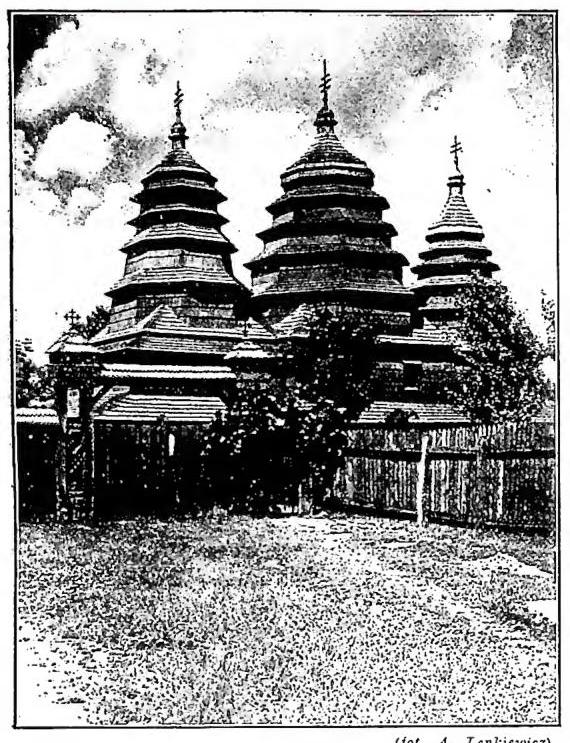
Wooden church — Na Znesieniu (fol. 4, Lenkiewicz)
Bishops: Ignacy Wyżycki, d. 1757; Wacław Hieronim Sierakowski (1699–1780); Łukasz Baraniecki, d. 1838; Józef Twardowski (1864–1944), expelled by the Soviets.
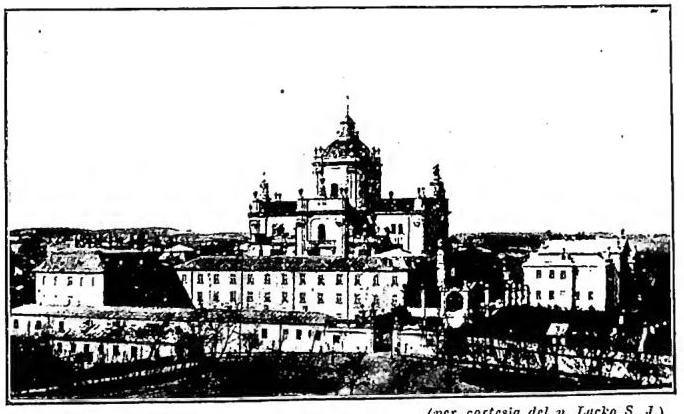
Notable churches: the Gothic cathedral basilica (1350–1479) with the miraculous image of Our Lady of Mercy; before this image in 1656 John Casimir, King of Poland, took a solemn vow, electing Mary as Queen of the Kingdom of Poland. Near the cathedral stands the Boim Chapel (1610), Renaissance in style. The Dominican church and convent (1749–64) occupy the site of an earlier 13th-century structure; within is a miraculous statue of Mary. The Bernardine cloister and church (1600–1609) housed the relics of Bl. John of Dukla (1411–84), whose cult was confirmed on 21 January 1733; he is patron of Poland and Lithuania, having in 1645 saved Lwów from the siege of the Cossacks. The Jesuit church dates from 1608; that of St John the Baptist from the 13th–14th centuries.
The city of Lwów — “antemurale totius christianitatis,” “semper fidelis” — founded in the 13th century, was rebuilt in 1340 by Casimir the Great, King of Poland. It possesses an academy (university) founded in 1661 by John Casimir, King of Poland. The Ossolineum National Institute, founded in 1817, once held over 600,000 volumes and 7,500 manuscripts, together with a museum and art gallery, much of which was devastated by the Soviets. At Halicz there is a 12th-century rotunda cathedral and a Franciscan church (1596). At Tarnopol an ex-Dominican church (1623) and a parish rotunda with a miraculous image of Our Lady.
### II. THE ARMENIANS OF LEOPOLI
In the 11th and 16th centuries colonies of Armenian refugees settled in Poland and were recognized by the local government as an ethnic minority. Already in 1365, when Archbishop Gregory effected union with Rome, the Armenian archbishops of L. acted as delegates of the patriarchs of Etchmiadzin, their jurisdiction extending also to Armenians in Wallachia and Moldavia.
In 1625 the fugitive katholikos Melchisedek settled in L.; as a Catholic he required his newly consecrated bishops to make a Catholic profession of faith. Non-Catholic Armenians disapproved and unleashed persecution.
In 1632 Mikolaj Torossowicz, ordained by katholikos Melchisedek, was named by Pope Urban VIII and recognized as archbishop of L. In 1652, after protracted negotiations, he also secured recognition from katholikos Philip, and thereby gained acceptance among the non-Catholic Armenians as well.
Distinguished archbishops: Hunanian Wartan (d. 1715); Samuel Cyrill Stefanowicz (d. 1858); Józef Teodorowicz, writer (d. 1938). In 1939 the archdiocese counted 8 parishes, 5,000 faithful, and 19 diocesan priests. Under Soviet occupation the Armenian Church was almost entirely destroyed.
### III. THE RUTHENIANS OF LEOPOLI
The see was founded in 1539 by King Sigismund of Poland. Its incumbent in 1595 was one of the most vehement opponents of the Union with Rome, resisting even after the Union of Brest-Litovsk (1596). Only in 1701 did the see of L. unite with the Holy See through Bishop Józef Szumlański, who had secretly adhered to Rome since 1680.