
LUDWIG I, King of Bavaria. - B. Aug. 25, 1786, at Strasbourg; d. Feb. 29, 1868, at Nice. Son of Maximilian Joseph of the Two Palatinates and of Wilhelmina Augusta of Hesse-Darmstadt. His father was related to Charles Theodore, Elector of Bavaria, whom he succeeded in 1799 in the sovereignty over that region. His tutor was Giuseppe Antonio Sambuga, a priest who implanted in the young Ludwig the first seeds of his religious ideas. In 1803 he attended the University of Landshut and listened with particular interest to the lectures of Johann Michael Sailer, who gave a course on the morality of rulers according to Christian principles. Hostile to France, to Napoleon, and to the Francophile and anti-Catholic policy of Count Montgelas, in 1817 he succeeded in persuading his father to dismiss that minister, who nevertheless deserved credit for having enlarged the territory of the state and for having procured for his sovereign the title of king in 1806.
On ascending the throne at his father’s death in 1825, Ludwig summoned to his side the physician Ringseis, the jurist Schenk, and his former tutor Sailer, and began the Catholic restoration of Bavaria. The following year the University of Landshut was transferred to Munich. The restrictions imposed by Montgelas on the free development of the Catholic faith and Church were largely repealed. The convents of religious orders secularized in 1803 were reopened. In principle, however, Ludwig regarded the Church as subordinate to the state, and he did not permit the return of the Jesuits or allow bishops to communicate freely with the Holy See. He acted as mediator in resolving the conflict between the Holy See and Prussia concerning the person of Droste-Vischering. After 1840 the king’s relations with Catholics deteriorated markedly. He made no secret of his passion for the dancer Lola Montez, who arrived in Munich in 1846, and his conduct was harshly criticized.
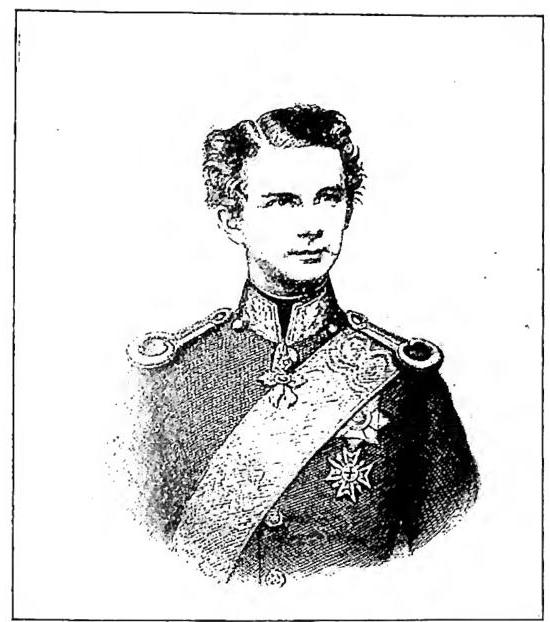
LUDWIG II, KING OF BAVARIA – Portrait.
De Sacramentis in genere, de venerabili Eucharistiae Sacramento et de sacrosancto Missae sacrificio (ibid. 1636), De virtute et Sacramento Poenitentiae, de suffragiis et indulgentiis (ibid. 1638), in which he revealed his strength as a speculative theologian, while in De iustitia et iure (ibid. 1642) he established himself as a moralist. Even today this work is considered a model of its kind, and St. Alphonsus (Theol. mor., III, 552) judged from it that L. was the prince of moralists after St. Thomas. Also noteworthy are: De virtute fidei divinae (Lyons 1646) and Responsorum moralium libri VI (ibid. 1651). Several of his writings appeared posthumously, including De Deo, de angelis, de actibus humanis, de divina Gratia (Cologne 1716), until all his works were collected in Opera omnia (7 vols., Venice 1718; then in 8 vols., Paris 1868–69). Many, however, remained in manuscript.
His works, in their imposing entirety, offer new and ingenious solutions, many of which have passed into common usage, while some (e.g., on the essence of the Mass sacrifice and on the formal motive of faith) remain uniquely his own.
tized by ministers, the Church, and the people. Jealous of his royal prerogatives, Ludwig refused in any way to be a constitutional monarch or to renounce control of the state. The disturbances in Munich in March 1848 therefore decided him to abdicate.