
LUNI (LA SPEZIA), SARZANA, and BRUGNATO, DIOCESES OF. – United dioceses in Liguria.
Out of a total population of 245,266, there are 243,000 Catholics, distributed in 150 parishes, served by 216 diocesan priests and 83 regular clergy; one seminary, 15 male religious communities and 79 female (Annuario Pontificio, 1951, p. 257).
The origins of LUNI are uncertain. According to Livy, a Roman colony of 2,000 citizens was transferred there in 177 BC. The importance of the place is evident from the reference by Ennius: «Lunai portus est operae cognoscere cives». The city flourished after the victory of Claudius Marcellus over the Ligurian tribes of the Apuani, Velleiates, and Finiates; the quarrying of Carrara marble, begun in the 1st century BC, further enhanced its prosperity. The curia, forum, and basilica were established; municipal magistrates and an amphitheater functioned. In the 5th century AD, Rutilius Namatianus still hailed it as a shining vision. During the barbarian invasions, thanks to the protection of the Eastern fleet, which had a permanent base in Sardinia, LUNI became the maritime province of the Italians, linked by frequent maritime relations with Rome and Byzantium. At the beginning of the 8th century, LUNI fell to Liutprand and was incorporated into the Lombard duchy of Lucca. With the descent of the Franks, its fate was no different until it was attacked by the Saracens in 849 and by the Normans in 860.
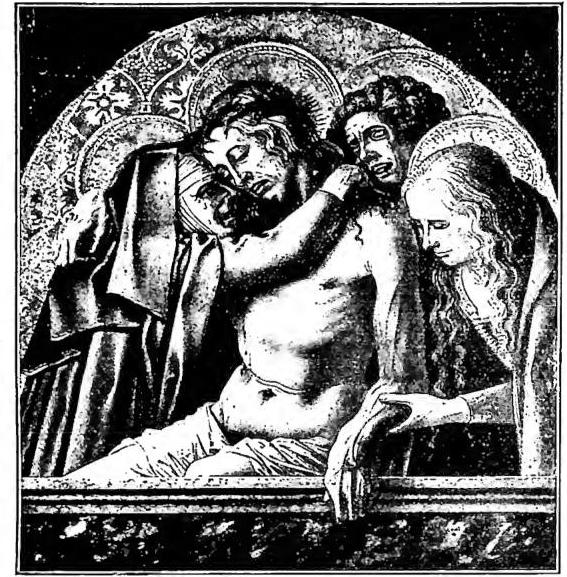
Christianity was preached in LUNI in early times, though the identity of the first bishop is unknown; in 465, the bishop of LUNI, St. Felix, subscribed to the Roman Council. Other known bishops include: Victor (499–503), Justus (556), St. Venantius (594–603), mentioned in the correspondence of St. Gregory the Great; Thomas, present at the Lateran Council of 649, and Severus at that of 680. A Lunense Martyrology lists bishops whose figures are mingled with legend, such as St. Solarius, St. Terentius, St. Ceccardus, and others. Christian life in LUNI is evidenced by the cathedral of St. Mary and by pieve churches in territories where pagan cults persisted until the 8th century, as well as by the foundation of abbeys such as those of Tino, Brugnato, Aulla, and Linari. After the collapse of the March and County, the figure of the bishop asserted itself decisively against the encroaching Obertenghi dynasties, obtaining in 900 from Berengar, in 963 from Otto I, and in 981 from Otto II, immunity over the richest part of Lunigiana. Thus began the temporal power of the bishop, to whom comital sovereignty over the territory of Lunigiana was recognized in full, long before receiving official investiture (1185) from Frederick I. The bishop was, in fact and in law, the count of Lunigiana with the right to mint coins, and the Liber Iurium of the Church of LUNI, the famous Codex Pelavicinus, collected its acts from 900 to 1207. His jurisdiction extended over the islands of Capraia and Gorgona, Palmaria and Tino, with their famous monasteries; over the three valleys of the Magra, Vara, and Frigido, along the entire southern slope of the Apennines, reaching beyond them; to the north in the valleys of the Parma and Taro, and to the east in the valley of the Serchio and almost as far as Pietrasanta.
Probably after the Saracen raid at the beginning of the 11th century, the bishops placed their see at Ameglia, Carrara, and Sarzana, until in 1204 Bishop Gualtieri transferred the cathedral to Sarzana, which, however, received papal recognition as the definitive episcopal see only in 1465 from Paul II. But already in the 16th century, the autonomy of Lunigiana began to disappear: even Dante Alighieri, as arbiter between the Malaspina of Spino Secco and Bishop Antonio da Camilla, marked its decline at Castelnuovo Magra on 6 October 1306. Spiritual authority was also circumscribed: after the islands of Capraia and Gorgona, which passed to the diocese of Pisa in 1133, Innocent II, recognizing the diocese of LUNI as immediately subject to the Apostolic See, removed the abbey of Tino and attached it to the new archdiocese of Genoa, and established the abbey of St. Columbanus of Brugnato as an autonomous diocese with its vast possessions. Finally, Alexander III in 1161 detached the area of Portovenere, in the Gulf of La Spezia, to unite it with the possessions of Genoa.
The series of warrior bishops ended with Gabriele Malaspina, who in 1355 obtained from Charles IV the useless recognition of his ancient privileges and the title of Prince of the Empire. He was succeeded by Dominican and Franciscan bishops. But the diocese reached its greatest glory under Tommaso Parentucelli, later Nicholas V, a native of Sarzana, who arranged for the diocese of LUNI to be united with that of Sarzana, and incorporated into the chapter of the city the possessions of the abbey of Corvo, at the mouth of the Magra, and of the Augustinians of Vezzano Ligure. His relatives adorned the recently built cathedral with sovereign munificence and left a lasting mark of generosity.
In 1545, Simone Pasqua, bishop of LUNI-SARZANA, attended the Council of Trent and began the series of cardinal bishops (1561–65). He was followed by Cardinal Benedetto Lomellini (1565–72), and after the bishops G. B. Braccelli, a distinguished prelate and papal diplomat (1575–89), and G. B. Salvago (1590–1632), founder of the diocesan seminary, Cardinal Bishop G. D. Spinola (1632–36). Other eminent figures of the diocese at that time include the two Cardinals Zacchia (Emilio, d. 1605, and Ludovico, d. 1637), Monsignor Agostino Favoriti, secretary of state to four popes (d. 1682), and Cardinal Lorenzo Casoni.
The see of BRUGNATO also enjoyed a period of prosperity in the 16th century, largely due to Bishop Filippo Sauli (1512–28), who, in accordance with a bull of Leo X (1518), arranged with the archbishop of Genoa an exchange of parishes, thus obtaining the coastal area of Sestri Levante; he revived the cathedral chapter by founding six canonries and revitalized spiritual life in the diocese. His successors as administrators were Cardinal Grimaldi (1528), Cardinal Trivulzio (1535), and Bishop Antonio di Cognoro, who attended the Council of Trent. Subsequently, due to political events, the sense of Lunigianese unity gradually disintegrated; the region was governed in turn by the Genoese, the Sforzas, the Grand Duke of Tuscany, and the Duke of Modena, and new political hegemonies gave rise to new diocesan boundaries. Pius VI, in 1787, with the bull In suprema, created the diocese of Pontremoli, removing 124 parishes from that of LUNI and from BRUGNATO the churches of Zeri, Teglia, the vicariate of San Pietro di Pontremoli, Gotta, and Buzzo in the Val di Taro. The new diocese was declared a suffragan of Pisa, which in 1798 was forced to cede the vicariate of Serravezza. It then seemed opportune to transfer the episcopal see of BRUGNATO to La Spezia, but it was King Victor Emmanuel I of Sardinia who proposed to the Holy See the definitive union of BRUGNATO with SARZANA and of NOLI (formerly governed by the bishop of BRUGNATO) with SAVONA «given the small populations and the meagerness of the revenues of the episcopal tables». This took place in December 1820, by decision of Pius VII. In 1822, Pius VII, with the bull of 20 February, made Massa, which was part of the diocese, a new episcopal see suffragan of Modena, removing 109 parishes from LUNI. A ministerial project of 1865 even aimed at suppressing the see of SARZANA.
At the beginning of the 20th century, the rapid development of La Spezia, which had quickly risen to the status of a major city, necessitated a reorganization of the ancient diocesan divisions in Lunigiana. In 1923, La Spezia was declared the provincial capital, and in 1929, Pius XI, with the apostolic constitution *Universi dominici gregis* of 12 January 1929 (AAS, 21 [1929], pp. 114-46), recognized La Spezia as the legitimate successor to the episcopal see of L., assigning it the designation: "diocese of L., that is, La Spezia, Sarzana, and Brugnato." The three cities were granted the rights of episcopal sees, though under a single pastor and a single curia, definitively established in La Spezia, which inherited all the privileges of L. The first bishop-count elected was Msgr. Giovanni Costantini, formerly apostolic administrator and originator of the national competition for the design of the new cathedral dedicated to Christ the King. — See pl. CXVII.