
MACCABEES (Gk. Μακκαβάτοι, Lat. Machabaei). — With the surname “Maccabee” given to Judas, the principal hero of the Jewish revolt against the yoke of Antiochus IV Epiphanes, the ecclesiastical writers from the 2nd century onward designated all the members of the family of the priest Mattathias (John, Simon, Judas, Eleazar and Jonathan) and their partisans, who began and brought to completion the so-called “Maccabean” revolt, the history of which is narrated in 1 and 2 Maccabees.
The etymology and even the spelling of the name are uncertain. It is commonly derived from maqqabihah (“hammer”) to indicate the strength of Judas in striking the enemy; but more probably it is an abbreviation of maqqabihahah (“marked by Jahweh”) with reference to Is. 62:2.
I. THE HISTORY OF THE MACCABEES
The oppressive measures taken by Antiochus IV Epiphanes against the worship of Jahweh—prohibition, under pain of death, of the observance of the Sabbath, of circumcision, and of legal abstinences; the abolition of legitimate worship and the profanation of the altar of burnt offerings by the offering of sacrifices to Olympian Zeus (1 Macc. 1:29–51; 2 Macc. 6:1–7)—determined the revolt.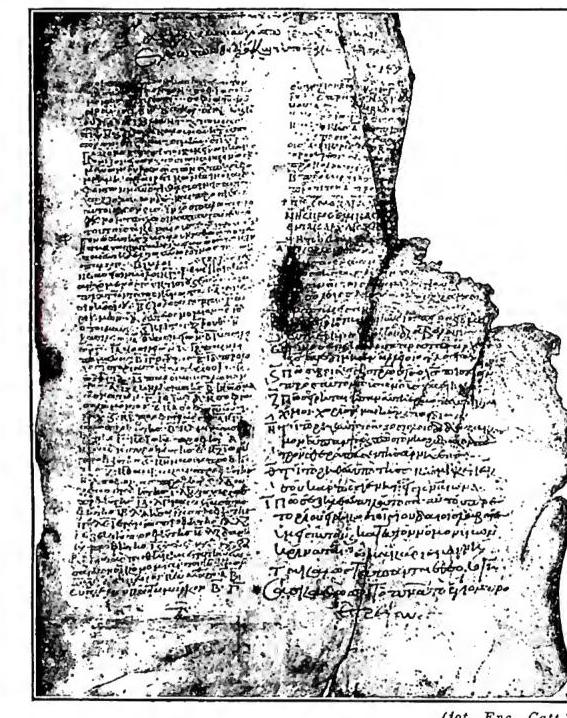
Many Jews, especially in the cities, yielded and apostatized, but in the deserts and villages the reaction arose. A priest of Modein (q.v.; today el-Midjjeh), Mattathias, of the class of Joiarib (1 Chron. 24:7), was its initiator. When the royal commissioner came to the little village to set up an altar for foreign worship, he killed a renegade Jew who was about to sacrifice, then the royal envoy, destroyed the altar, and summoning the faithful, took to the hills with his sons, beginning guerrilla warfare against renegade Jews and Syrian troops (1 Macc. 2:1–48). Dying a year after the uprising (166–165 B.C.), he entrusted the task to his sons, giving direction of the war to the third-born, Judas, and the office of administrator to Simon. Mattathias was buried at Modein (ibid. 2:49–70; 3:1–9).
Under the young leader Judas (166–160 B.C.) the struggle took on a more decisive turn. The first victory was in the mountains of Ephraim against the general Apollonius, who came from Samaria to aid Philip, commander of Aca (ibid. 3:10–12). When Seron, general from Coele-Syria, arrived to repair the setback, Judas defeated him in the narrow pass of Beth-horon (Bejt 'Ur el-Foqa; ibid. 3:13–26). Antiochus, preparing to march against the Parthians, learning of the Jewish situation, ordered his lieutenant Lysias to restore order and put an end to the rebellion (ibid. 3:27–37).
An army of 40,000 foot soldiers and 7,000 cavalry, according to 1 Macc. 3:39 (only 20,000 according to 2 Macc. 8:9), under Nicanor, to whom Gorgias had been added as military expert, camped at Emmaus ('Amwās) in the Shephelah. Judas, gathering his men at Mizpah (Tell en-Naṣbeh), suddenly fell upon the enemy camp, throwing it into panic. Nicanor, deprived of his best forces, which had gone with Gorgias into the hills that night to surprise Judas, fled in pursuit as far as Gezer, Azotus, and Jamnia. Judas then turned back to prepare to face Gorgias, who, however, refused battle and withdrew into Philistia (1 Macc. 3:38–4:25; 2 Macc. 8:8–29; 34–36). Lysias then intervened directly, leading a large army and, following the coast, sought through friendly territory to reach the heights overlooking Hebron and Jerusalem, camping at Beth-zur (Hirbet et-Ta-bejqah, 28 km. south of Jerusalem). The clash with Judas’ 10,000 men was sharp but indecisive (1 Macc. 4:26–34; 2 Macc. 11:1–12). Lysias, convinced now that he could not force the Jews, who were resolved to live or die nobly (1 Macc. 4:35), to accept the laws of Antiochus, sought to open negotiations for an armistice, the documents of which, reported in 2 Macc. 11:13, are by historical and literary criticism detached from their immediate context. The memorandum transmitted by Judas to the regent and by him to the king (ibid. 11:14–21) was favorably received, and with a royal report dated the 15th of Xanthicus of the year 148 (= 15 April 164 B.C.) all the oppressive measures that had sparked the revolt were revoked (ibid. 11:27–33). As a result, Judas re-entered Jerusalem and restored the Temple to Jahwistic worship, and on the 25th of Kislev, exactly three years after its profanation (1 Macc. 1:59), the continual sacrifice was resumed on the altar of burnt offerings. To commemorate the event, the feast of ḥanukkāh (q.V. DEDICATION) was instituted, to be celebrated annually for eight days, beginning on the 25th of Kislev.
Having thus achieved the first objective of the revolt, Judas, assisted by his brother Simon, sought to free the Jewish brethren in neighboring lands oppressed by pagans. Having succeeded in this, he returned to Jerusalem, welcomed triumphantly by the entire population at the feast of Pentecost (ibid. 5:45–46). Meanwhile his brother Simon had won similar victories in Galilee (ibid. 5:21–23), while Joseph son of Zacharias and Azariah had met defeat in the war against Gorgias at Jamnia (ibid. 5:55–62).
After the death of Epiphanes (164–163 B.C.) and the accession to the throne of his minor son Antiochus V Eupator, under the regency of Lysias, Judas, taking advantage of the difficulties arising in the succession to the throne, attempted to complete his work by occupying Aca. Informed of this and summoned by the Hellenizing Jews, Lysias with the young king again marched with an army by way of Hebron, besieging the fortress of Beth-zur, which held out thanks to the military preparations brought to light by recent excavations. Judas, hastening to the aid of the besieged, was defeated at Beth-zechariah. During the battle Eleazar, son of Mattathias, also fell, crushed by an elephant that he himself had killed in the hope of killing the king whom he mistakenly believed to be on the elephant (1 Macc. 6:28–47; 2 Macc. 13:1, 2, 9–17). But the victory did not bring Lysias the fruits he desired, for he was forced to abandon the region to return to Syria, where Philip had arrived from the East as a pretender. Lysias judged it wiser to make peace with Judas, and a royal decree, in the form of a letter to Lysias, granted the Jews full religious freedom (2 Macc. 11:22–26). The Hellenizing Jews were displeased, especially the high priest Menelaus, whom Lysias had put to death to prevent his intrigues; then he returned to Antioch, driving out Philip, who took refuge in Egypt (1 Macc. 6:63; 2 Macc. 9:29).
Taking advantage of the new and graver disturbances that beset the Syrian kingdom, Judas sought to obtain, now that religious peace had been restored, full national independence. When the young king Antiochus V and his regent Lysias were killed at Antioch and Demetrius I, son of Seleucus IV, ascended the throne, the Hellenizing party of Judea together with the high priest Joakim, appointed by Lysias and who for his Hellenistic sentiments had taken the name Alcimus, asked Demetrius for help to regain all their privileges and fight Judas. But the army sent by Demetrius, first under Bacchides and then under Nicanor, was defeated by Judas at Adasa (Hirbet 'Adaseh, 8 km. north of Jerusalem). For a long time the anniversary of this victory (13th of Adar, 161 B.C.) was celebrated by the Jews as a great feast under the name of “Day of Nicanor” (1 Macc. 7:39–50; 2 Macc. 15:1–17). Despite this success, Judas, feeling his position growing ever more critical, sought to strengthen it by an alliance with the Romans. But Demetrius, informed of this, sent against him an army under Bacchides and accompanied by Alcimus.
In the month of Nisan 152 of the Seleucid era (= April 160 B.C.), the Syrian army, having arrived in Jerusalem, made its way into the Gophnitide, to Birzeit (20 km. north of Jerusalem), where Judas had encamped. With his usual courage, Judas threw himself into the fray and succeeded in breaking through the enemy's right wing and pursuing them for a long time; but a concentric turning movement by the left wing caught him from behind, and with many other warriors he fell dead on the field, while the remnants of his troops scattered (1 Macc. 9:1-22).
With the death of Judas, the victors sought to annihilate the opposing party by means of denunciations, espionage, and imprisonments. Bacchides held sway from Aca, Alcimus from the Temple, and both took advantage of a severe famine that had broken out to favor only those who were or pretended to be Hellenists. The nationalists once again withdrew into the wilderness, into the desert of Thecua near Bethlehem. JONATHAN (160-142 B.C.), the fifth son of Mattathias, was recognized as leader and established the cistern of Asphar (Hirbet Bir ez-Za'ferān, 5 km. south of Bethlehem) as a rallying point.
Jonathan sought to secure the families and baggage, entrusting them to his brother John to be taken to the Nabataeans. The caravan was surprised by the sons of Jambri near Madaba, plundered, and John was killed. Jonathan immediately avenged the deed by crossing the Jordan, suddenly falling upon Madabath (Hirbet et-Tejm, 2 km. south of Madaba) during a wedding feast (1 Macc. 9:32, 35-42). On the return journey, after a brief clash with the troops of Bacchides, who had come to await him at the fords of the Jordan, he escaped by swimming across the river with his men and once again dispersed into the desert (ibid. 9:45-49), where he set about organizing a new army.
Serious internal dissensions induced the Hellenists to recall Bacchides, under the pretext that Jonathan was plotting a conspiracy. Jonathan, informed of his adversaries' intentions, made a sortie from the desert, killing about fifty of the chief agitators (ibid. 9:57-61) and then withdrew to the fortress of Bethbesse (Hirbet Bejt Başşah, southeast of Bethlehem), which resisted Bacchides' assaults. Enraged against those who had summoned him, Bacchides slaughtered them and decided to return to Antioch. But before his departure, Jonathan sent a delegation to negotiate the return of prisoners and a general settlement. Bacchides accepted, and thus Jonathan was able to establish himself freely at Michmash (Muḥmās, 15 km. north of Jerusalem), fortifying it and taking firm control (ibid. 9:62-73).
In the struggle between the claimants to the Syrian throne, Alexander Bala, supported by the Romans, and Demetrius I, Jonathan sought to obtain honors and concessions from both. From Alexander he received the dignity of high priest with the right to wear a purple tunic and a golden crown, and in the month of Tishri 152, to the great enthusiasm of the entire population, he officiated for the first time in the Temple (ibid. 10:1).
Jonathan remained loyal to Alexander even when he attempted to consolidate his position through concessions and honors, and so, after Alexander had definitively prevailed, at the occasion of the latter's marriage to Cleopatra, daughter of Ptolemy Philometor, he was received in Ptolemais with all honors and recognized as civil and military governor of all Judea (ibid. 10:51-66).
Under Demetrius II, son of Demetrius I, Jonathan fought against Apollonius, a friend of Demetrius, and Alexander again rewarded him, naming him "kinsman of the king" and granting him the city of Ekron as personal property (ibid. 10:78-89). After Alexander's defeat and death, abandoned by all except Jonathan, he sided with Demetrius II, obtaining territorial expansions, concessions, and exemptions (ibid. 11:20-37). Later, Demetrius found himself in danger because a certain Diodotus, called Tryphon, general of Alexander Bala, had risen against him, supporting Antiochus VI, the minor son of Alexander, as a claimant to the throne, and induced Jonathan, with the promise of withdrawing the troops from Acre, to assist him militarily (ibid. 11:38-50); but after defeating Antiochus, Tryphon did not keep his promises, whereupon Jonathan went over to Antiochus and renewed the alliance with the Romans (ibid. 11:60-73; 12:1-23).
The prestige and power that Jonathan was acquiring in the eyes of Antiochus VI aroused the envy of Tryphon, who, once free from the danger posed by Demetrius, intended to rid himself of the puppet king in order to seize the succession. To eliminate a probable rival to his usurpation, Tryphon lured Jonathan to Ptolemais with specious peaceful overtures; but as soon as he arrived, he was taken prisoner and his men were slaughtered (ibid. 12:39-53).
When the news of Jonathan's capture and death spread, his brother SIMON (142-134 B.C.), who was in the fortress of Adiada, immediately went to Jerusalem and, assuming command, provided for the defense of the city and the occupation of Joppa, bringing peace and joy to the land of Israel (ibid. 13:1-11).
Tryphon marched against him but, unwilling to risk battle, preferred to negotiate, offering Simon the release of Jonathan in exchange for a sum of money and the delivery of Jonathan's sons as hostages. The terms were accepted; but Jonathan, instead of being released, was put to death (ibid. 13:20-24). His mortal remains were buried at Modin, where his brother Simon erected a great pyramid-shaped monument (ibid. 13:25-30), which could be seen from the sea and was still recognizable in the 4th century; traces of it still exist in the Muslim sanctuary of Sheikh el-Gharbawi.
After returning to Antioch and putting the young king Antiochus VI to death, Tryphon had himself crowned, taking the title of "autocrat" (142 B.C.). His criminal usurpation was the signal for numerous revolts. Simon took advantage of the situation to secure recognition of Jewish independence. He sided with Demetrius II, who, delighted to secure an ally, granted a general amnesty, perpetual exemption from all tribute, and legal possession of the occupied strongholds, finally proclaiming religious peace (ibid. 13:33-40). Thus, in the year 170 of the Seleucid era (142 B.C.), according to rabbinic tradition, "the yoke of the nations was lifted from Israel," and with this year begins the era of Simon as "high priest, strategos, and ethnarch of the Jews" (ibid. 13:41).
The first result of the treaty was Simon's conquest of the stronghold of Gazara (Gezer, where excavations have brought to light the fortress built by Simon) and the siege of the powerful fortress of Acre, which fell on the 23rd of the second month of 171 (June 141 B.C.). The Jews entered with palm branches and singing hymns (ibid. 13:49-52), and the conquest was celebrated with great festivities for many years. To secure and strengthen the privileges he had acquired, Simon renewed the alliance with the Romans and the Spartans (ibid. 14:18-24; 15:15-24). His national merits were recognized by the people, who, following Hellenistic custom, in an assembly held in the month of Elul (August-September) had his deeds inscribed on bronze and named him high priest, supreme commander of the army, and founder of a new dynasty (ibid. 14:25-49), that of the Hasmoneans (q.v.).
It is highly probable that from that time Simon began to mint his own coins. His final years were marked by fresh struggles with the kings of Syria. After Demetrius II had been taken prisoner by the Parthians (138 B.C.), his brother Antiochus VII Sidetes, writing from Rhodes to Simon and the Jewish nation, sought their aid in the campaign he intended to wage against Trypho, confirming all the privileges they enjoyed, including that of minting coins (ibid. 15, 1-9). But once the Sidetes had defeated Trypho, he changed his policy, demanding that Simon surrender the strongholds of Gaza, Joppa, and Acre, or pay a thousand talents, conditions rejected by Simon (ibid. 15, 32-36), who offered a tenth of the sum demanded. Antiochus VII then sent an army under the command of Cendebeus against Simon, but in the battle of Kedron (Qatrah, 6 km southeast of Jamnia) the general was defeated by Judas and John, Simon’s sons (ibid. 16, 1-10).
This was the last victory for the aged Simon. In February 134 B.C., while inspecting the fortresses and troops with his sons Judas and Mattathias, he was treacherously slain at a banquet hosted by his son-in-law Ptolemy, son of Abubus, in the fortress of Dōk (Ġebel Qarantāl), whose name survives in the spring of ‘Ayin Dūq. His two sons and their mother were taken prisoner.
With Simon the line of Mattathias came to an end, and the throne passed to the son who had escaped Ptolemy’s plot (ibid. 16, 11-24), who took the name John Hyrcanus (v.).
II. THE BOOKS OF THE MACCABEES
The two “deuterocanonical” books of the Old Testament narrate the revolt led chiefly by Judas Maccabeus. Each book is an original work; though sharing a common subject, they differ in author, language, purpose, and especially in chronological data. 1 Maccabees covers a period of about forty-one years, from the beginning of the reign of Antiochus IV Epiphanes (175-63 B.C.) to the death of Simon, head of the new Jewish state (135 B.C.). 2 Maccabees, beginning with the last years of Seleucus Philopator, predecessor of Antiochus Epiphanes, ends with the death of Judas Maccabeus (161 B.C.), thus covering a span of about fourteen years.
1 MACCABEES — After setting forth the causes that gave rise to the revolt (1 Macc. 1:1-2:70), the narrative is divided into three parts according to the three brothers who directed and brought it to completion: Judas (ibid. 3:1-9:22), Jonathan (ibid. 9:23-12:54), Simon (ibid. 13:1-16:22). The epilogue recounts the beginning of the reign of John Hyrcanus (ibid. 16:23-24).
The author, whose identity is unknown, appears as a pious and zealous judge of Jerusalem, thoroughly versed in the Hebrew language of the Holy Scriptures, knowledgeable about the terrain of Palestine, a convinced partisan of the Hasmoneans, and in contact with the leaders of politics and affairs.
The book was written in Hebrew, as indicated by the testimony of certain Fathers (St. Jerome in the Prologue to the Hebrew, and Origen [in Eusebius, Hist. eccl., VI, 25, 2], who preserves the title of the work, variously interpreted as σαφθυθ σαβανακελ = Sepher Beth Hašmonaj, “Book of the House of the Hasmoneans”). But the original text was soon lost, and only an ancient Greek version remains. The style, which imitates that of the historical books of the Old Testament, is simple and concise, clear and orderly; yet it easily shifts from narrative to poetic and enthusiastic tones.
The entire book is animated by a religious spirit of attachment to the religion of the fathers and to the observance of God’s Law. The successes and failures of Israel are explained by their observance or abandonment of the Law. Out of reverent respect for the august name, instead of “God of heaven” one always finds “Heaven.” The author, a fervent nationalist, regards renegade Jews as goyim or pagans, shows complete adherence to the Hasmoneans, and considers it just that, with the highest priestly dignity, they should also assume royal authority: through them Israel preserved the right to observe its own religion.
The accuracy of topographical and chronological data and the vividness of certain details seem to attest that the author was contemporary with or very close to the events narrated, and that he may have had access to the archives of the high priest, probably the library of Nehemiah, where, according to 2 Macc. 2:13, the letters of the kings of Persia were preserved, and from which he may have drawn the eleven official documents he inserts into the narrative: letters between heads of state (1 Macc. 12:5; 14:20), royal edicts (ibid. 10:17; 11:30; 13:36; 15:2), treaties of alliance (ibid. 8:22; 15:16), and plebiscites (ibid. 14:27). The integrity of the book is now beyond doubt. The last three chapters are a natural continuation and conclusion of the narrative. Although Josephus preferred, in this instance, to follow Nicolaus of Damascus, this does not imply that he was unaware of the text of the Maccabees. The praise of the Romans contained in the book shows that it was written before 63 B.C., when Pompey’s capture of Jerusalem aroused the hatred of all the Jews; yet even the author, though in a different way, never had the opportunity to present his book in a context of justice and love.
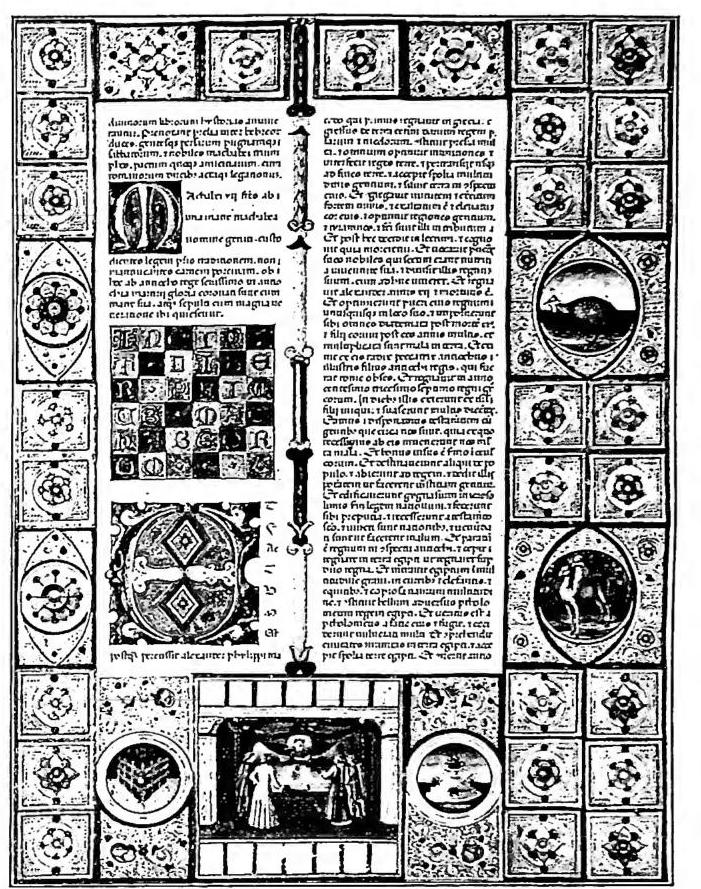
2 MACCABEES — The book presents itself (2 Macc. 2:23) as a summary of a much larger work in five books by a certain Jason, a literary man and historian of the flourishing diaspora in Cyrene. From the faithful summary of the book, whose author is unknown, Jason appears to have gathered information on the history of the Seleucids from official documents or reliable witnesses, showing a thorough knowledge of administration, titles, and offices.
The content of the book concerns chiefly the glorious deeds of Judas from the beginning until the defeat of Nicanor (ibid. 8:1-15:37), preceded by a lengthy account of the circumstances that led to the uprising (ibid. 3:1-7:42). At the beginning of the book are inserted two or three letters from the Jews of Jerusalem to those in Egypt, recommending the celebration of the feast of the Dedication (ibid. 1:1-2:32).
Jason and the abbreviator wrote in Greek, but the book differs from ordinary biblical Greek, both because it is not a translation and because Jason intended to produce a literary work. The style is oratorical: grandiloquent speeches, emphasis on numbers, a taste for the dramatic, a pronounced fondness for miracles, and frequent substitution of rhetoric for technical description, in keeping with the taste of the time. This literary method in no way diminishes its great historical value. The differences from 1 Maccabees are undeniable, but the two books can be set side by side in a synoptic framework where, despite their independent composition, the essential agreement in the historical account can be recognized.
In the prehistory of the insurrection, many details unknown to 1 Maccabees are reported; they come from Jason, who gives the impression of a conscientious historian. The seven letters are of certain authenticity; the first two were written in Aramaic and translated into Greek, probably by the abbreviator, and inserted into the book by another hand.
The author presents the enemies as instruments of divine justice, the sufferings of the martyrs as means of reconciliation, and the victories of Judas as a sign of God’s mercy. With words of profound emotion, the resurrection of the body is taught (2 Macc. 7:11; 12:43–44; 14:46), as well as the efficacy of prayer and sacrifice for the dead and the prayer of the saints for those still on earth (ibid. 13:43–44; 15:12–16), the existence of angels and their miraculous intervention in aid of the people at critical moments. But beyond the purpose of edifying the Jews and making known the doctrines that pertain to them, one notes in 2 Macc. a constant care to group all events around the Temple. It is quite cold toward the Hasmoneans but enthusiastic about Judas, who prevented Nicanor from destroying the Temple. Wars and victories are regarded not as a means of expanding territory but as successive stages toward the liberation of the Temple.
If Jason obtained his information orally, one cannot suppose a great lapse of time between the events he recounts and his narrative. The last event took place in the 151st year of Jason’s Seleucid era, so he would have written shortly after 160 B.C. The epitomizer, perhaps an Alexandrian scholar, would have composed the work between 161 B.C. and A.D. 70, probably about 100 B.C.
---
### III. THE THIRD BOOK OF THE MACCABEES
An apocryphal book of the Old Testament, which has nothing to do with the Maccabees except for the analogy of a persecution of the Jews and their liberation through miraculous divine interventions.
It narrates that Ptolemy IV Philopator, after his victory at Raphia (217 B.C.), ascends to Jerusalem and seeks to enter the Sanctuary. God punishes the intruder by striking him with paralysis. Returning to Egypt, Ptolemy, in revenge, persecutes the Jews and finally orders that they be gathered from all over Egypt into the hippodrome of Alexandria to be trampled by 500 specially incited elephants. Everything is ready, but God intervenes: first by plunging Ptolemy into a deep sleep; then by making him forget what he had ordered; and finally, when the massacre is about to begin, by sending two angels to terrify the king and his counselors, while the elephants turn against the Egyptian soldiers and slaughter them. Ptolemy then decrees the liberation of the Jews, gives them a lavish banquet, and grants them permission to kill their apostate coreligionists. Before returning to their homes, the Jews erect a monument and institute an annual feast.
It is an edifying narrative, full of exaggerations and psychologically implausible elements, written in a bombastic and emphatic style. There is no historical trace of such a persecution by Ptolemy Philopator. Flavius Josephus (*Contra Apionem*, II, 5) recounts something similar about Ptolemy VII Physcon (170–164 and later 145–117): the Jews of Alexandria are confined in the hippodrome, but the elephants do them no harm; instead, they kill several of the king’s friends. An annual feast is instituted to commemorate this deliverance. It therefore seems that a historical nucleus served as the basis for this legend, which in Josephus appears in a simpler and more ancient form.
The author’s purpose was to console and encourage the Jews of Alexandria in particularly difficult circumstances. Many critics think of the persecution under Caligula (cf. Philo, *In Flaccum*, 53–96), though there is insufficient evidence. The composition is to be placed between the 1st century B.C. and the 1st century A.D., but before the destruction of the Temple. The author knew the deuterocanonical parts of Daniel (cf. 6:6). It was written in Greek at Alexandria. Besides the original text, Syriac and Armenian versions exist.
---
### IV. THE FOURTH BOOK OF THE MACCABEES
A didactic apocryphon of the Old Testament. In elegant hortatory form, it inculcates the subjection of all the movements of the soul to the rule of sound reason or reason informed by piety, defined as “the mistress of the passions” (I, 1). The author, who addresses Jews (18:1) and is influenced by Stoicism, develops his theme first with philosophical arguments (I, 13–III, 18) and then with examples drawn from Jewish history, precisely from 2 Maccabees: the piety of Onias, Eleazar, and the seven brothers with their mother, who, resisting passions and tyrants even to martyrdom, earned eternal praise by preserving their faith intact (III, 19–XVIII, 24).
It is not a synagogue homily (J. Freudenthal), for its subject is philosophical and does not take its starting point in Holy Scripture. Eusebius (*Hist. eccl.*, III, 10, 6), followed by St. Jerome (*De viris ill.*, 13), attributes it to Flavius Josephus. This is only a hypothesis, since the book is anonymous in several manuscripts; moreover, it is clearly inconsistent with Josephus’s style and especially with the fact that he never uses 2 Maccabees in his *Antiquitates Judaicae*, upon which the present apocryphon depends. It was written in Greek shortly before or after Christ, while the Jews enjoyed a period of calm (14:9), but before the destruction of the Temple, by a Hellenistic Jew. One cannot speak of numerous Christian interpolations (J. Freudenthal); only 7:19 and 16:25 may be discussed in relation to Mark 12:26 and Rom. 6:10 (J.-B. Frey). The text is preserved in three manuscripts of the Greek version of the Septuagint (S, A, V); a Syriac and a Latin version also exist.