
SEVEN MACCABEE BROTHERS, Saints. - From the title of the book (II Maccabees), which narrates their martyrdom, seven brothers are thus called, who together with their mother faced death during the persecution of Antiochus IV (175-164 B.C.), rather than eat forbidden meats.
The direct participation of the King together with the ancient memory of their cult in Antioch would suggest that they were martyred in the capital of the Kingdom; whereas from the general historical context it seems more logical to think of Jerusalem, the chief target of the persecution. The presence of the King suggests the period described in II Mach. 5:11 ff. The chapter (II Mach. 7:1-41) that recounts their cruel death, besides being an enthusiastic homage paid to the constancy of the young men, is exceedingly rich in theological teaching, as on creation from nothing (7:28), on the resurrection (7:9-14), on the happiness or reward due to martyrdom (7:36) and on the punishments that await the impious (7:17, 35).
The perpetuation of the memory of these young men and of their mother in Judaism is documented in the apocryphon IV Maccabees (1st cent. B.C.), which treats of their violent death within a philosophical framework (IV Mach. 8:1-18:24), and by some allusions in later works. Much more vivid did their memory remain in Christianity. Not only are they often held up as an example during the anti-Christian persecutions, but they were soon equated with the Christian martyrs and honored like these with a true cult.
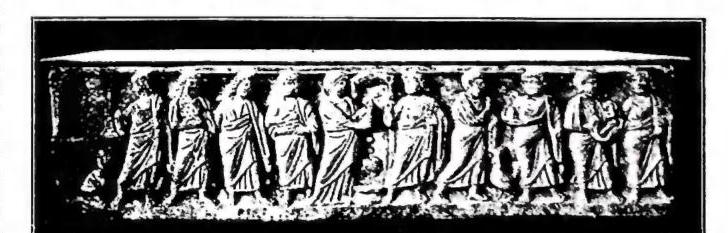
Liturgical feast. Their cult is already attested in the clearest manner in the 4th century (cf. Ambrose, Ep., 40, 16: PL 16, 1154; John Chrysostom, In sanctos Machabaeos, hom. 2: PG 50, 617-26; Theophilus of Alexandria, Ep., 100, 9 in the epistolary of St. Jerome: CSEL, 55, 221; St. Augustine, Sermones, 300-301: PL 38, 1376-85; id., Serm., 17: PL 46, 874-81, ed. by G. Morin in Miscellanea agostiniana, I, Rome 1930, pp. 81-89). Their feast on August 1 is listed in the Syriac Martyrology (there the Jewish quarter of Antioch is indicated), in the Calendar of Carthage, in the Hieronymian Martyrology, in the historical ones and in the Roman, in the ancient Gelasian Sacramentary (ed. A. H. Wilson, Oxford 1894, p. 188), in the Visigothic Orationary of the end of the 7th or beginning of the 8th century (ed. J. Vives, Barcelona 1946, pp. 368-69), in the Gelasian Sacramentaries of the 8th century (cf. P. De Puniet, Le Sacramentaire Romain de Gellone [offprint from Eph. Lit.], Rome [1938], pp. 124-25); from these latter the feast of the M. then passed into the Roman Missal and Breviary. The Leonine and Gregorian Sacramentaries do not commemorate the aforesaid feast. Antioch was the center from which the cult of the M. radiated. Rome possessed relics of them which were deposited in the basilica of St. Peter in Chains; there in fact in 1876, on the occasion of work for the arrangement of the chains of St. Peter, there came to light beneath the high altar an early Christian sarcophagus divided internally into seven compartments with two lead plates, bearing the inscription: «in his septem loculis recondita sunt ossa et cineres sanctorum septem Machabeorum» etc. (cf. G. B. De Rossi, cit.* in bibl.).
Bibliography8 works
Pietro Frutaz