
SERVUS SERVORUM DEI (Ἰούλιος τῶν Ἰούλων τοῦ Θεοῦ). — Formula used consistently by the Papal Chancery in the « superscriptio » or « intitulatio » of documents issued by the Pope from the 9th century to the present day.
The use of the formula of devotion or humility Servus Dei or Jesu, Jesu Christi, Ἰούλιος Θεοῦ ὁ Χριστοῦ, Ἰεσοῦ Χριστοῦ in the « intitulatio » of letters goes back to the Apostles: Paul (Rom. 1:1; Tit. 1:1), Peter (II Pt. 1:1), James (1:1), and Jude (1:1) employed it, and their example was subsequently followed by others, such as, to recall only a few examples, the Christians of Vienne and Lyons, « Ἰούλιος Χριστοῦ » in their letter to the brethren of Asia and Phrygia (Eusebius, Hist. eccl., V, 1, 3); St Augustine « servus Christi servorumque Christi » (De peccatorum meritis et remissione, III, 1; Ep. 130; PL 44, 185; ibid., 33, 494); St Caesarius of Arles « episcopus minimus servorum Dei famulus » (Ep. II to the abbess Caesaria: PL 67, 1128; ed. G. Morin, II, Maredsous 1942, p. 134); Laurence of Canterbury and his colleagues Mellitus and Justus « servi s. D. » (Bede, Hist. eccl., II, 4); John the Almsgiver (d. 619) « Ἰούλιος τῶν Ἰούλων τοῦ κυρίου ἡμῶν Ἰεσοῦ Χριστοῦ » (Vita, 3; ed. H. Gelzer, Freiburg im Brisgau–Leipzig 1893, p. 9; PG 93, 1619); and Maurus of Cesena in 649, who signed himself « Maurus s. s. D. episcopus » (Mansi, X, 883), etc. Moreover, Damasus, in the inscription in honour of St Saturninus, subscribed himself « Damasus episcopus servus Dei » (A. Ferrua, Epigrammata Damascena, Vatican City 1942, p. 189), and Pope Hilary called himself « Famulus Christi » in the dedicatory inscription of the oratory of St John the Evangelist in the Lateran Baptistery (v. ILARIONE). It is not the place here
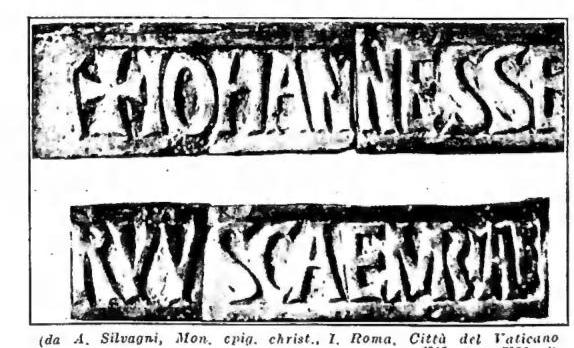
to list the epigraphic monuments concerning bishops with the « Servus Dei » or « Christi » (cf. E. Diehl, Inscriptiones latinae christianae veteres, I, Berlin 1924, nos. 995, 1797, 1851, 1855), or ordinary faithful, « famulus » or « servus Dei » or « Christi » (cf. ibid., nos. 1419-58; F. Grossi-Gondi, Trattato di epigrafia cristiana latina e greca, Rome 1920, pp. 159-61), « servus sanctorum » (H. Delehaye, op. cit. in bibl., p. 378), because they are too numerous. Pope John VII called himself « Servus Sanctae Mariae » (v. illustration); Gregory II « Apostolorum principum servus » (cf. illustration in Enc. Catt., VI, cols. 1125 ff.). The expression « ill. ecclesiae servus » had a long duration (cf., for example, the letter of Hugh, archbishop of Lyons, of 1099, in the Monasticon Cisterciense, ed. H. Séjalon, Solesmes 1892, p. 56; letters 340 and 466 of St Anselm of Aosta: in letter 472 he himself uses « minister »; ed. F. Schmitt, S. Anselmi Cantuariensis Opera Omnia, V, Edinburgh 1951, pp. 278, 415, 420).
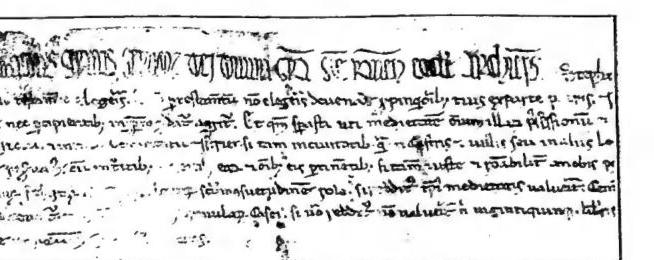
St Gregory the Great, who had already called himself s. s. D. while still a deacon, in the donation to the monastery of St Andrew of 28 December 587 (appendix to the Registrum, ed. cit. below, III, p. 437), was the first Pope to make extensive use of s. s. D. in the « superscriptiones » of his letters and his « praecepta » (cf. Paul the Deacon, Vita s. Gregorii, II, 1: PL 75, 87: several letters that have preserved the protocolary formula in the Registrum, I, 14ᵃ, 39ᵃ; IV, 17ᵃ; V, 53ᵃ; VI, 50ᵃ; XII, 16ᵃ; ed. P. Hewald–L. M. Hartmann, in MGH, Epistolae, I, pp. 14, 53, 251, 353, 425; II, p. 363; and the « praeceptum » of 25 January 604 for the basilica of St Paul, engraved on a marble slab). Gregory was then imitated with increasing frequency by his successors of the 7th and 8th centuries, as is shown by the documents that have come down to us (cf. C. Silva Tarouca, Nuovi studi sulle antiche lettere dei papi, Rome 1932) and by the list of the « superscriptiones » placed at the beginning of the Liber diurnus and in formula 86 (ed. Th. E. V. Sickel, Vienna 1899, pp. 1-3, 111). As s. s. D. gradually came to become the exclusive title of the Pope, it ceased to be used by other ecclesiastical dignitaries; nevertheless, the archbishops of Ravenna continued to use it until the beginning of the 13th century (cf., for example, the document issued by Archbishop Ubaldo on 12 October 1213, parchment no. 4694 of the Archiepiscopal Archive), together with the pompous title: « Dominus sanctus ac meritis beatissimus atque Apostolicus Pater Patrum » (same Archive, parchments of the 10th–12th centuries).
(courtesy of Canon M. Mazzotti)
SERVUS SERVORUM DEI - Documento dell'arciv. Ubaldo di Ravenna (12 ott. 1213) con la superscriptio: « Hubaldus s. s. D. divina gratia sancte Ravennatensis Ecclesie archiepiscopus » - Ravenna, Archivio arciv., pergamena n. 4694.
sotto i pontificati di Pelagio II e di s. Gregorio Magno contro i patriarchi di Costantinopoli, che si fregiavano di tale appellativo almeno dal tempo di Acacio (489-519), abbia influito sulla scelta del s. s. D. da parte di s. Gregorio. Nella polemica contro Giovanni il digiunatore, s. Gregorio, pur conscio della sua autorità, spinse tant'oltre la sua umiltà da rifiutare per sé il titolo di « papa universalis » (Registrum, VIII, 28, ed. cit., II, p. 30).