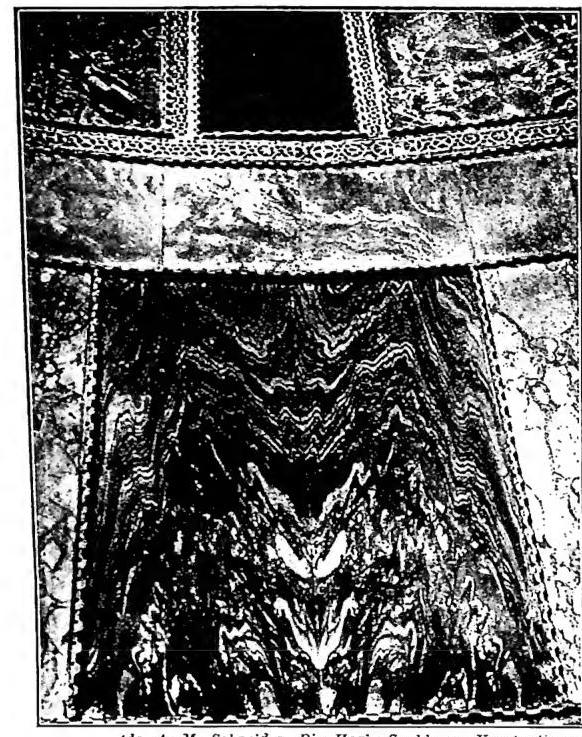
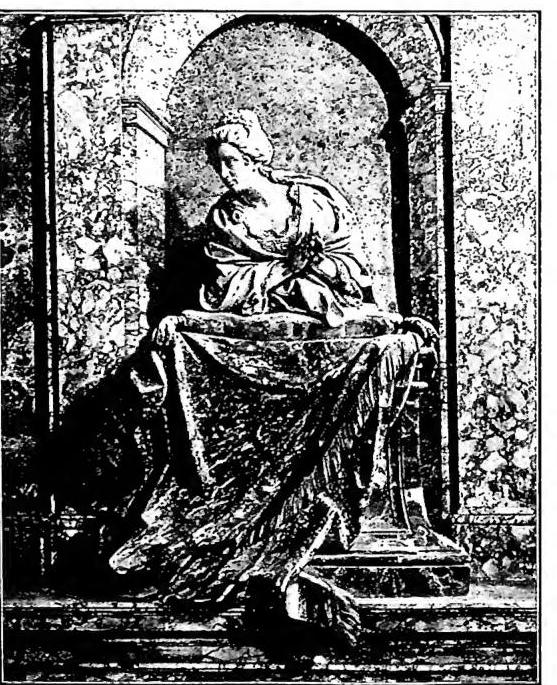
White and dark green (churches of Pistoia) or white and black (cathedral of Genoa; St. Peter’s of Portovenere, etc.). In Rome the use of colored marbles on the exterior of churches was abandoned in the late Renaissance, which introduced far greater variety of polychromy to the interior after Raffaello first employed precious colored marbles in the Chigi Chapel in Santa Maria del Popolo in Rome. In the same city, countless subsequent examples appear, with ever-increasing splendor in Baroque architecture. There, precious marbles were used for columns (revetted with Sicilian jasper in San Marco and in Santa Maria in Via Lata; Portuguese brocatello in Sant’Antonio dei Portoghesi; Verona yellow in the Cybo Chapel in Santa Maria del Popolo, etc.) and rare marbles were combined with bronze and hard stones in altars (examples of exceptional richness include the altars of Sant’Ignazio al Gesù and the Palombara Chapel in Santa Maria Maggiore), in ciboria, and in pulpits. With no less magnificence, yet with softer chromatic harmonies, marble was used in the interiors of churches and chapels, especially in southern Italy and Sicily, during the 18th century; but in the Rococo period stucco increasingly supplanted marble. The 19th century returned, even in architecture, to an almost exclusive use of white marble, and when, rarely, colored marbles were employed, they maintained a stark coldness of polychromy. Today polychrome marble in architecture is used in more or less successful imitation of Baroque models (see also the entries: ALTAR; CIBORIUM; REVETMENT). Mario Zocca
MARMORO