
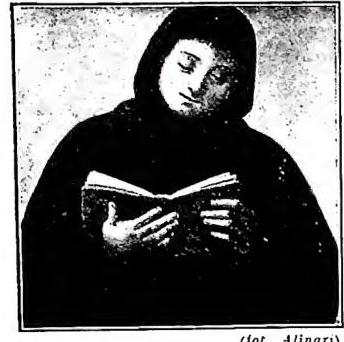
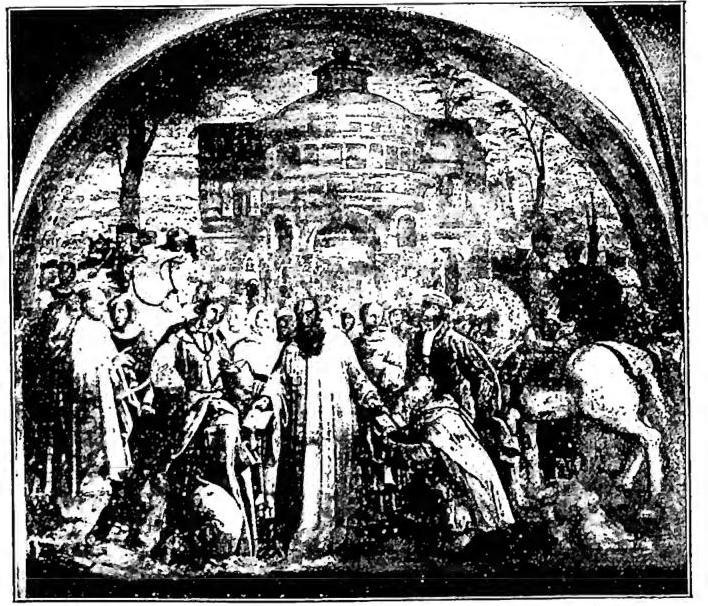
A fresco by Maestro Riccio (15th cent.) – Monteoliveto Maggiore.
Of solid philosophical and theological grounding (he had been introduced to the study of St Thomas by Pallavicino [v.]), clear and precise in his teaching and writings, MAURO was also esteemed for the exemplary holiness of his religious life. He is chiefly remembered for his commentary on Aristotle: Aristotelio opera quae exstant omnia brevi paraphrasi ac litterae perpetuo inhaerente explanatione illustrata (6 vols., Rome 1668; new ed. of the Ethics, Venice 1696; of the Politics, ibid. 1698; and of the entire corpus, Paris-Ratisbon 1885-87, edited by Frs. Ehrle, Beringer and Felchlin). His commentary, of undoubted value, is sober, faithful to the text (he kept the original Greek constantly before him) and informed by the Thomist interpretation of Aristotle.
Other works: Quaestionum philosophicarum II, 5, 5 vols., Rome 1658; 2nd ed., ibid. 1670; new ed. with a preface by Liberatore, Paris 1876; Opus theologicum, 3 vols., Rome 1687; Quaestionum theologicarum II, 6, 6 vols., ibid. 1676-79.