
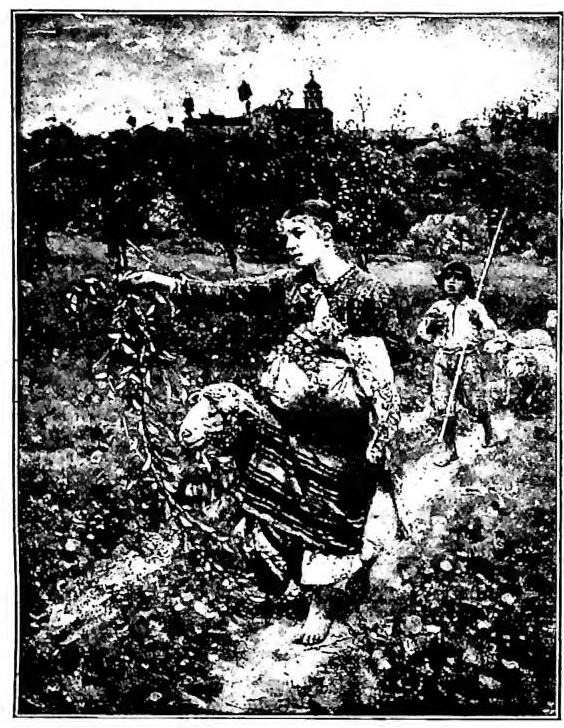
He was shaped by the environment of Palizzi-Morelli-Dalbono, but also sensitive to the picturesque polychromy of Fortuny (in Naples in 1874), to a more lively and abundant painting (*Il Voto*, Rome, Galleria d'arte moderna, 1880–83) and thus to a more solid and composed manner (*La Figlia di Forio*, Pescara, Municipio). An instinctive artist of great potential and immediate expressiveness, he was very active until the year 1900, when he sent two large canvases to the Paris Exhibition: *Gli storpi* and *Le serpi*, now in Francavilla’s Town Hall, in which one can discern a return to the initial modes of his style. Thereafter he lived as an inactive painter, focusing mainly on various technical problems.
BIBL.: M. Biancale, *Le serpi e gli storpi* di F. P. M., in *Bollettino d’arte* del Min. della p. istruzione, 6 May 1927, pp. 481–507; T. Sillani, *F. P. M.*, Milan 1932; A. N. Brizio, *Ottocento Novecento*, Turin 1939, pp. 390–91. Emilio Lavagnino.