
Ascetic, probably born c. 1460 in Brussels, died at the end of 1501. He entered the Canons Regular (Congregation of Windsheim) at Agnetenberg, near Zwolle, where he was soon entrusted with governing his brethren and displayed uncommon talents. In 1496 he was summoned to France to introduce reform into various monasteries of his Order. His activity met with both success and bitter opposition. Elected abbot of Livry in 1501, M. saw his grand plans for reform cut short by premature death.
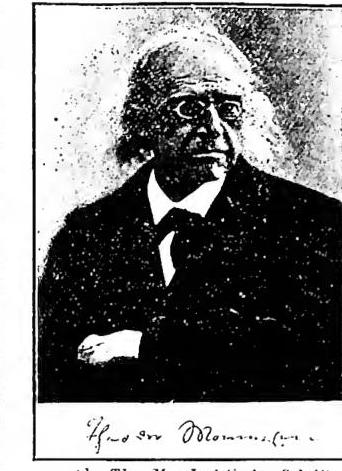
MOMMSEN, Theodor – Portrait with signature.
M.’s external work was considerable and imbued with a method of spiritual renewal whose doctrine is found in his printed and manuscript works: Rosetum, Venatorium, etc. A great scholar, essentially eclectic, positive and practical, highly reserved toward any mysticism, M. gathered everything that ecclesiastical literature transmitted concerning the practice of prayer, asceticism and virtue, and arranged it in scales, divisions, sets of seven, diagrams, mnemonic verses, etc. Devotio moderna (v.), yet deformed by overly mechanical and schematic tendencies, M. sought to sustain the intense effort of interior life, but often dismayed the best wills by his rigidity, his verbalism and his complexity. The greatness of M. lies in his work as a reformer, almost forgotten, rather than in his writings, which are cited and praised more than they are savored or read. M. represents the spirituality of his time with its possibilities and its shortcomings.