
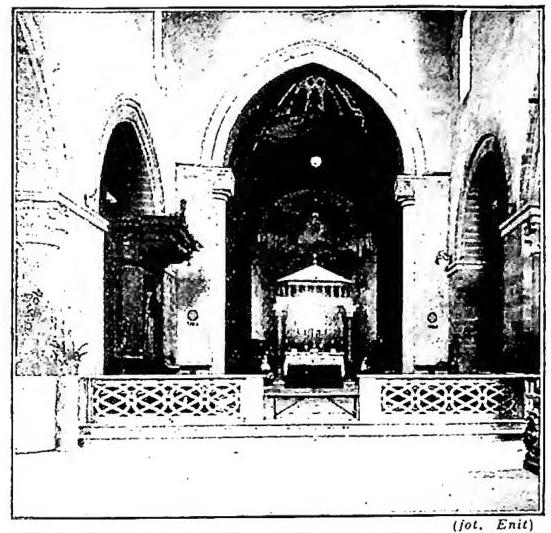
HISTORY. – The origins of the diocese are obscured by legends that grew up amid the turbulent events that the city experienced during the Middle Ages. A Byzantine possession since the fall of the Roman Empire, NARDO remained tenaciously Greek for a long time. Its episcopate already existed in the 8th century, when groups of Basilian monks arrived from Constantinople and in 761 succeeded in obtaining from Pope Paul I the suspension of the appointment of a new bishop and the transformation of the episcopal see into a monastery with all the rights and revenues of the former episcopal seat. From the 8th to the 11th century, the Greek priors rendered the see of NARDO as a suffragan of Brindisi. In 1090, Urban II took over the governance of the diocese with the Benedictines, who shortly afterward obtained from his successor Paschal II the appointment of an abbot with episcopal jurisdiction. The granting of these rights gave rise to a controversy with neighboring bishops, particularly those of Gallipoli and Brindisi, but always to no avail: all the popes confirmed the authority of the Benedictine abbot. The work of Latinization, begun with the Norman occupation (1055), received a decisive blow from the reform of Cardinal Rodolfo, sent as apostolic visitor by Clement IV in 1267 following the disorders between the followers of the two rites. The repeated attempts, though in vain, to suppress the Greek rite—which still counted 16 colonies in the diocese—were thwarted by the same Benedictines. Finally, in 1413, John XXIII restored the episcopal see and elected as its first bishop Giovanni Epifani, the Benedictine abbot who had defended the Basilians, confirming the independence of the see and the privileges granted. Among his successors, Fabio Chigi (1634) is remembered, who later became Alexander VII. The see is immediately subject to the Holy See.
NARDI, JACOPO - NARNI
NARDI, JACOPO - NARNI
NARDI, JACOPO - NARNI
NARDI, JACOPO - NARNI
NARDI, JACOPO - NARNI
NARDI, JACOPO - NARNI
NARDI, JACOPO - NARNI
NARDI, JACOPO - NARNI
HISTORY. – The origins of the diocese are obscured by legends that grew up amid the turbulent events that the city experienced during the Middle Ages. A Byzantine possession until the suspension of the appointment of a new bishop and the transformation of the episco
Christianity appears in NARDO from very early times; according to tradition, the Christian faith was preached there by St. Felician, bishop of Foligno, and by St. Juvenal, who is said to have been its first bishop and who was buried outside the city in a monument that still survives. Also known from the earliest centuries are Bishop Pancras, son and brother of bishops, who died in 444, and St. Cassius, consecrated in 536 and died in 558, of whom St. Gregory speaks with praise in his Dialogues and who witnessed the events of the Gothic War. Later, reliable records exist for the bishops John (mentioned 558–60), Projectus (mentioned 591), and Constantine (mentioned 595, 598). From the 7th century, the diocese of NARDO absorbed that of Otricoli, while the bishop of Narni occasionally exercised jurisdiction over the suppressed diocese of Terni. In 965, Bishop John was elected pope under the name John XIII. In 1159, Alexander III laid down rules for the election of canons, and later Celestine III fixed their number at 22, increased to 24 by Honorius III and reduced to 16 in 1224. In 1343, the bishop of Narni was Agostino Tignosi of San Gimignano, a most learned and celebrated preacher. Bishop Pierdonato Cesi, later a cardinal, confirmed in 1546 to the Chapter the privilege of freeing a condemned man to death on the feast of St. Juvenal. In 1660, Bishop Raimondo Castelli established the seminary. In 1687, Innocent XI granted the canons the use of the rochet and the cappa magna.
Natives of Narni include the blessed Lucy, a Dominican (d. 1544), Cardinals Berardo Eroli, Giuseppe and Carlo Maria Sacripante, and Fr. Caravita, founder of the Roman Oratory that bears his name.
II. ABBEYS AND MONASTERIES
In 1846, in the city and its surroundings there were seven male convents (Dominicans, Augustinians, Servites, Scolopi, Fatebenefratelli, and Observant Franciscans) and three female convents (Benedictines, Franciscans); in the diocese there were two convents of Capuchins, two of Observant Franciscans, one of Reformed Franciscans, three monasteries of Benedictine nuns, and two convents of Ursulines. Now almost all of these have been suppressed. Among the oldest monasteries of Narni and its diocese are: in Narni, the monastery of St. Jerome (12th–13th century; rebuilt by Cardinal Berardo Eroli); the Benedictine abbey of St. Cassian (13th century, now in ruins); the abbey of St. Clare, of the Poor Clares; the abbey of St. Bernard, of the Benedictines; and the Speco of St. Francis near Narni, where the Saint dwelt for a long time. At Otricoli, the monastery of St. Victor, which was declared subject to the bishop of Narni by Gregory IX (1232) and later became the right and property of the Roman Church. It was founded by St. Fulgentius, bishop of Otricoli, in the 6th century and has an attached underground cemetery. At San Gemini, the Benedictine abbey of St. Nicholas on the Mountain, known from the 12th century (church now in ruins), and the also Benedictine abbey of San Gemini, founded before 800, now the parish church of San Gemini. At Stroncone, the Benedictine abbey of St. Benedict de Fundis, founded in 758 by Ansa, mother of Adelchis (records from 1232, church with three naves, now in ruins); at Calvi, the convent of St. Francis, founded, according to tradition, by the Saint; at Collescipoli, the monastery of St. Joseph, of the Sylvestrines.III. CULTURAL INSTITUTIONS
In the municipal palace are the Library (about 7,000 volumes, 26 incunabula, 74 manuscripts), the Archive, and the Picture Gallery (which contains some fine works: *Coronation of the Virgin* by Ghirlandaio, 1486; *Annunciation* by Benozzo Gozzoli); an archive is also preserved in the Cathedral.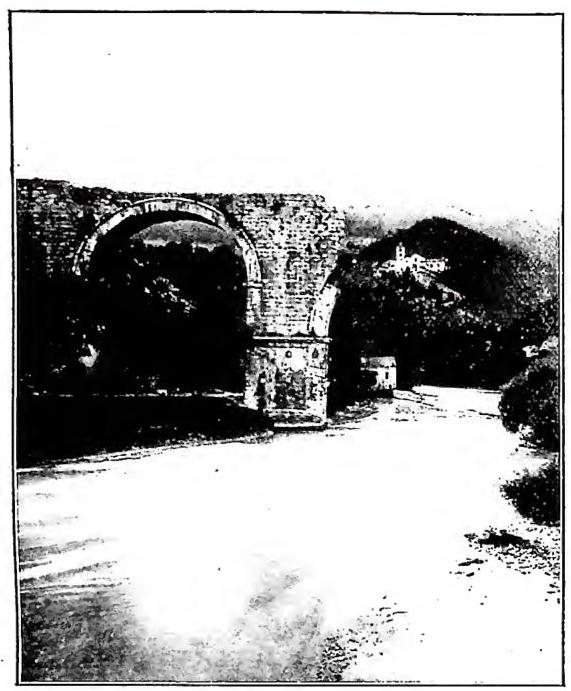
IV. MONUMENTS OF NARNI AND ITS SURROUNDINGS
The cathedral church of St. Juvenal, Romanesque, dating from the early 12th century and consecrated in 1145: it has three naves, divided by columns with round arches. It contains the oratory of St. Juvenal from the 4th century, which served as the tomb of the city’s first bishops, with an interesting façade divided by pilasters; the parish church of St. Augustine, from the 15th century; the parish church of St. Mary Impensole, Romanesque from 1173, with three naves divided by columns with round arches and a small portico; the church of St. Dominic (formerly St. Mary Major) with a fine Romanesque portal (12th century); the church of St. Francis from the 14th century, with a rich Gothic portal. In the surroundings: the church of St. Angelo in Massa, with 12th-century doors; the ruined church of St. Martin in the hamlet of Taizzano, Romanesque; the church of St. Pudentiana at Visciano, Romanesque, with a 10th-century crypt. There are some paleochristian inscriptions (CIL, XI, 4162–69).Among the civil monuments are the fortress, the municipal palace rebuilt in 1273, the Loggia of the Podestà, and a fountain from the early 14th century.
In the diocese: Otricoli: church of St. Mary (records from the 13th century). There are some paleochristian inscriptions near the city, and notable remains of Roman monuments of the ancient town of Oriculum. Collescipoli: church of St. Nicholas with a 14th-century portal, and the rural church of St. Stephen (1093). San Gemini: church of St. John with a façade from 1199, and the church of St. Francis from the 15th century, in addition to those already mentioned. Stroncone: church of St. Francis (portal from the 13th century); parish church of St. Nicholas (portal from 1171); church of St. Blaise of Coppe (15th-century frescoes).
– See pl. CX.