NARDI, JACOPO

NARDI, Jacopo. — Writer, born in Florence in 1476, died in Venice in March 1563. He was the most sugge-

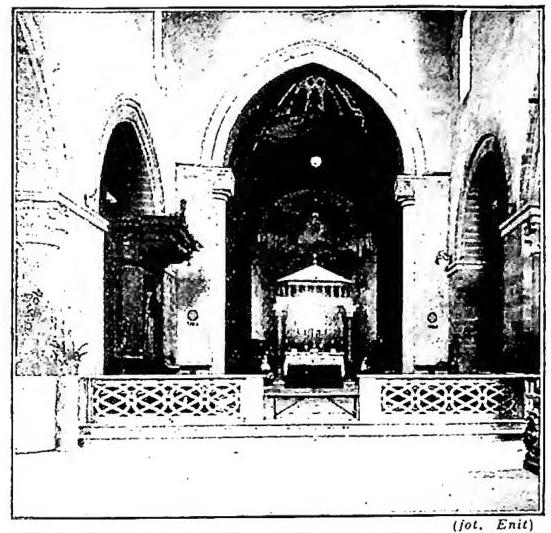
NARDO, DIOCESE OF — Interior of the Cathedral (1230, with modern restorations).

NARDI, JACOPO — NARNI

time. His episcopate already existed in the 8th century, when groups of Basilian monks arrived from Constantinople who in 761 succeeded in obtaining from Paul I the suspension of the appointment of a new bishop and the transformation of the episcopal see into a monastery with all the rights and revenues of the former episcopal seat. From the 8th to the 11th century, the Greek priors made the see of Nardò a suffragan of Brindisi. In 1090 Urban II took over the governance of the diocese with the Benedictines, who shortly afterward obtained from his successor Paschal II the appointment of an abbot with episcopal jurisdiction. The granting of these rights generated a controversy with neighboring bishops, particularly with Gallipoli and Brindisi, but always in vain: all the popes confirmed the authority of the Benedictine abbot. The work of Latinization, begun with the Norman occupation (1055), received a decisive blow from the reform of Cardinal Rodolfo, sent as apostolic visitor by Clement IV in 1267 following disturbances between the followers of the two rites. The most notable result was the establishment of a double Greek and Latin archpriesthood; the Latin archpriest took the title of maximus. The coexistence of the two rites lasted a long time in the church and territory of the diocese: during the Greek celebrations of Epiphany or the Latin ones of Pentecost, it was now one group, now the other, that provided assistance. Harmony was disrupted by the schism of Clement VII, who in 1388 appointed as bishop of Nardò Matteo De Castellis, deposed in 1401 by Boniface IX. The See, in the throes of disorder, was subjected to the archbishop of Otranto, who repeatedly but in vain attempted to suppress the Greek rite, which nonetheless counted 16 colonies in the diocese. The Benedictines themselves contributed to nullifying all efforts. Finally, in 1413 John XXIII reinstated the episcopal see and elected as first bishop Giovanni Epifani, the Benedictine abbot defender of the Basilians, confirming the independence of the see and the privileges granted. Among his successors, Fabio Chigi (1634) is remembered, who later became Alexander VII. The see is immediately subject to the Holy See.

NARDI, JACOPO — NARNI

NARDO, DIOCESE OF — Interior of the Cathedral (1230, with modern restorations).