
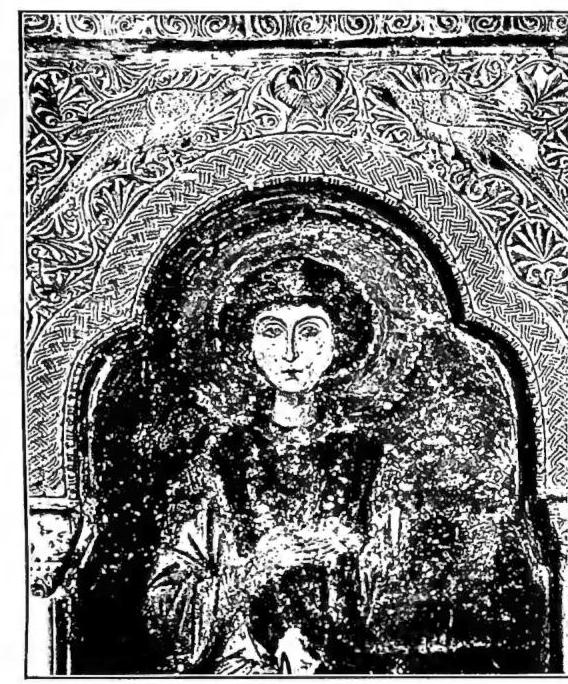
PANTALEONE, Saint and Martyr
He is commemorated in the *Martyrologium Hieronymianum* on July 28; in the Roman Martyrology and the Greek Synaxaria on the preceding day.
Venerated throughout antiquity and the Middle Ages, both in the East and in the West, he is considered the patron saint of physicians. His cult is attested by reliable documents, but the *Passio* is quite legendary: born in Nicomedia and having studied medicine, he is said to have been summoned to the imperial court by Emperor Maximian. After converting to Christianity and being accused by his colleagues, Maximian subjected him to terrible torments from which P. emerged unharmed until he was finally beheaded.
PANTALEONI, Diomede
Senator, born in Macerata on March 21, 1810, died there on May 3, 1885. A physician of considerable renown, he also engaged in notable political activity and in 1848 was elected deputy for Cingoli to the Roman Parliament, where he sat on the right, opposing the extremists.
After the fall of the Roman Republic, he worked to ensure that the papal restoration continued along the path of constitutional reform. He thus shared the ideas of Minghetti and Pasolini and, with them, ultimately adhered to the policies of Count Cavour. In 1861, Cavour entrusted him with supporting the well-known mission of Fr. Passaglia, intended to secure from Pius IX a peaceful renunciation of the papal temporal power. The attempt naturally came to nothing, and the priest, invited to leave Rome, retired to Paris, from where he continued—particularly through an intense correspondence with moderate political figures—his efforts toward a diplomatic resolution of the Roman Question. The entire correspondence of P. is preserved, still unpublished, in the Biblioteca civica of Macerata. Its publication would shed further light on the role he “played with some prominence in 1860-61, and more limitedly in the following years, during which he remained politically active both as a private citizen and as a member of the Senate, to which he was elected on November 6, 1873.” A year before his death, he published a volume on *L’idea italiana nella soppressione del potere temporale dei papi* (Turin 1884), which provoked extensive debate.