
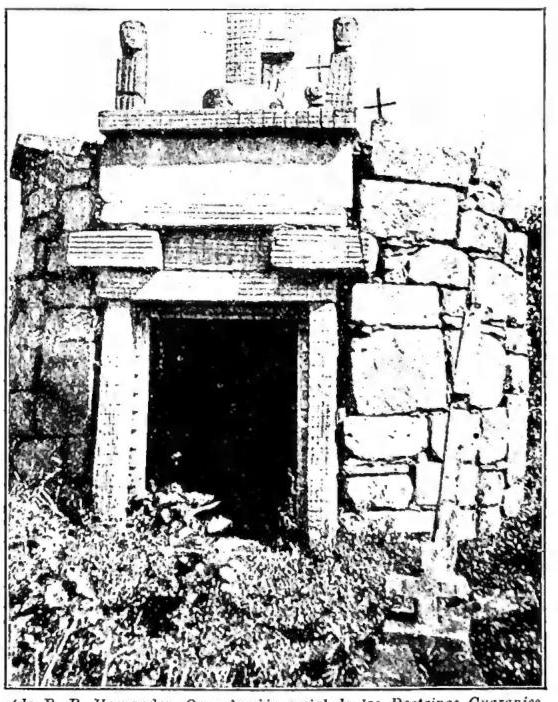
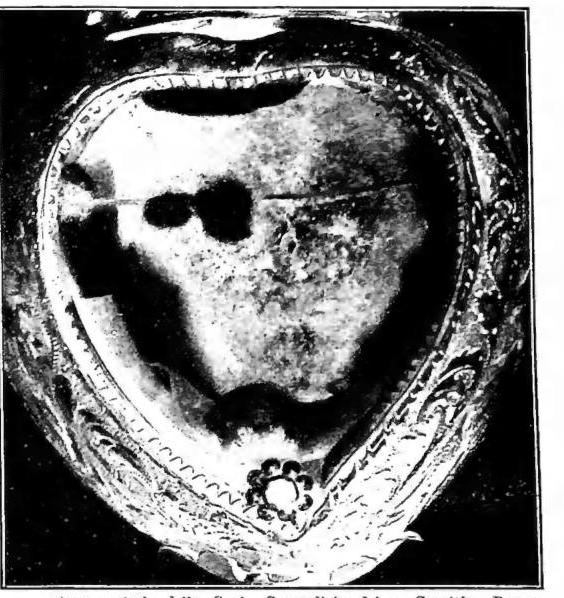
Of all the "Guarani reductions," founded in 1609, of St. Ignatius-Guazú. From there, González expanded his pioneering work as explorer and founder of 10 new reductions in the regions of the Paraguay, Paraná, and Uruguay rivers: St. Anne, Itapuá (1615), and Yaguapó (1618) on the banks of the Paraná; Concepción (1620), St. Nicholas, St. Francis Xavier, and Yapeyú or St. Mary of the Three Kings (1626); Candelaria of Caazapamini, Asunción del Iyui, and All Saints of Caarò (1628) along the banks of the Uruguay. All this heroic and difficult work aroused and sharpened the hatred of the sorcerers, who saw themselves dethroned and therefore conspired to kill him. González was indeed killed with two blows of an axe while, in the last reduction, founded 15 days earlier, he was preparing to raise a bell on some tree trunks (15 Nov. 1628); shortly afterward they struck Father A. Rodríguez and two days later Father G. del Castillo. The heart of Father González, torn from his chest and pierced by an arrow and thrown onto the flames (for, according to the *Relación de la gloriosa muerte... del p. Provincial Vasquez Trujillo al p. Mucio Vitelleschi*, in Blanco, op. cit. in bibl., pp. 494-495, the day after his death he would have reproached his executioners), was instead found intact and is still preserved today in the Colegio del Salvador in Buenos Aires. Several letters of González remain, published in the *Annuae* of the Society, and a catechism in Guarani.
Father A. Rodríguez, born in Zamora (Spain) on 10 March 1598, was a novice at Villagarcía in 1614; missionary in Paraguay from 1619. Father G. del Castillo, born in Belmonte (Spain) on 14 Sept. 1566, was a novice in Madrid in 1614 and missionary in Paraguay from 1619. The three martyrs were beatified on 28 Jan. 1934. Feast day: 17 Nov.
VI. RELATIONS BETWEEN CHURCH AND STATE
The relations between Church and State are now regulated by the current constitution (10 July 1940), which still draws, in this part, on regalist theories, thereby sanctioning their defects and abusive rights, such as the appointment of bishops. Article 51, in fact, clearly and broadly affirms the national patronage of the Republic with regard to the presentation of bishops by the President of the Republic and the granting of the *exequatur* to the decrees of councils, to papal bulls, briefs, and rescripts. However, the positive aspects of the same constitution must not be overlooked, based as they are on the recognition of Catholicism as the religion of almost the entire citizenry.
The preamble begins in the name of Almighty God, supreme legislator of the universe.
The Catholic religion is declared "the religion of the State" (Art. 3); other cults, not contrary to morality and public order, are "tolerated," and a decree of 13 Apr. 1945, no. 8219, limited their exercise to their respective temples or places designated for that purpose by national authorities.
The Head of State must profess the Catholic religion (Art. 46) and, upon assuming office, must swear an oath before God and the fatherland. The metropolitan archbishop is an ex-officio member of the Council of State, which replaces the Senate (Art. 62). Archbishops and bishops must be Paraguayan citizens (Art. 3). Regarding the family, the constitution contains no provisions contrary to Christian morality, nor does it recognize the rights of the Catholic Church. Article 22 is directly opposed to divorce. Articles 10-11, dealing with education, do not mention religious instruction but do not exclude it either, since they speak of moral and spiritual education. In state schools, however, religious instruction is lacking. The government regularly pays the salaries fixed for the archbishop and bishops, vicars general, secretaries of episcopal curias, and the seminary. In addition to these fixed payments, government economic aid is frequent for the construction and restoration of churches. The clergy are exempt from military service.
The Republic of Paraguay maintains diplomatic relations with the Holy See. In modern times, these date to 1920, when the Apostolic Nuncio in Argentina was also accredited as Internuncio to Paraguay; in August 1930, on the occasion of the erection of the ecclesiastical province of Paraguay, the papal representation was raised to a nunciature. For a brief period (1939-41), the nunciature of Paraguay was united with that of Uruguay, both separated from that of Argentina. Finally, on 21 Aug. 1941, a permanent nunciature was established in Asunción. Only in 1948 did the government decree the creation of a Legation of Paraguay to the Holy See.
VII. SCHOOL SYSTEM
The Paraguayan Constitution guarantees freedom of teaching, the right of parents over the education of their children, freedom of conscience, and the teaching of any religion. Private individuals are guaranteed the right to found schools, and thus also the Catholic Church. Compulsory and free elementary education is provided for children from 7 to 14 years of age. Public schools are informed by the pedagogical doctrines of Pestalozzi, Sarmiento, Ferrière, Kerschensteiner, Dewey, Washburne, and James. Through the National Council of Education, the Ministries of Justice, Worship and Public Instruction, Agriculture, and War, the State seeks to reduce the number of illiterates, defend general and rural education, and promote practical education by establishing rural practical schools and evening schools and courses.
Primary education is provided in 1,742 primary schools, secondary education in 14 national colleges, and higher education in the Ateneo Paraguayo (normal school), the Higher School of Agriculture, and the National University of Asunción, founded in 1929.
The education of the Catholic clergy is provided in the *Seminario de la Santísima Asunción* in the capital.