
PICCHLER, ALOYS. – Church historian, b. 7 Nov. 1833 at Tüssling (diocese of Passau), d. 3 June 1874 at Siegsdorf. Ordained priest in 1859, he was promoted doctor of theology two years later. In 1863, he became a privatdocent at the Faculty of Theology in Munich and devoted himself chiefly to the study of Eastern ecclesiastical history.
He published a history of Protestantism in the Eastern Church (Geschichte des Protestantismus in der orientalischen Kirche im 17. Jahrhundert oder der Patriarch Cyrillus Lukaris und seine Zeit, 1862) and a history of the separation between the Western and Eastern Churches (Geschichte der kirchlichen Trennung zwischen dem Orient und Occident von den ersten Anfängen bis zur jüngsten Gegenwart, 2 vols., 1864–65), which was severely criticized by Hergenröther. The latter work was placed on the Index immediately after its publication. In 1869, Fr. Picchler accepted the invitation of the Russian government to go to St. Petersburg to continue his studies in ecclesiastical history. In 1870, he published a volume on the necessity of a Catholic reform (Die wahren Hindernisse und die Grundbedingungen einer durchgreifenden Reform der katholischen Kirche zunächst in Deutschland), which was condemned by the Congregation of the Index with a decree dated 6 Sept. 1870. Librarian of the Imperial Library of St. Petersburg, he was accused in Sept. 1871 of having stolen volumes and sentenced to life deportation to Siberia. He was pardoned in 1874 through the intervention of Prince Luitpold of Bavaria. Returning to his homeland, he died suddenly a few weeks later.
---
**PICO, GIOVANNI**, count of Mirandola and Concordia. – Philosopher and man of vast erudition.
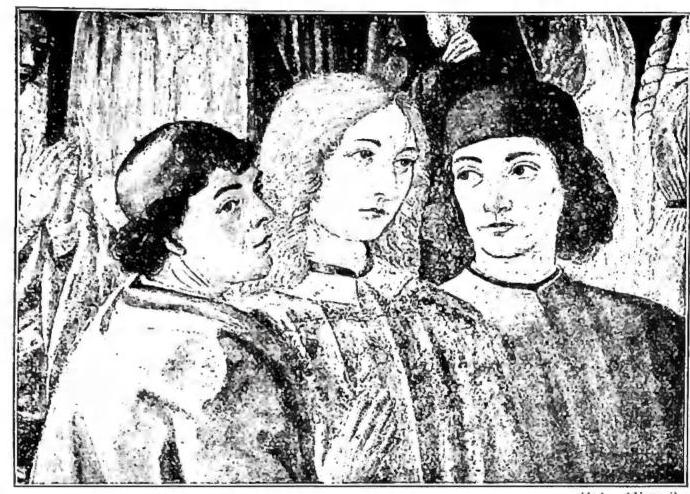
His works embrace the rich philosophical-theological encyclopedia of the second half of the 15th century. Some concern his particular manner of understanding the thought of the authors cited and others, while others hint at an independent thought, the fruit of his own meditations, sometimes quite bold, on the most delicate and difficult problems, so as to arouse wonder, not so much for his “prodigious memory,” as for the breadth of his knowledge and the maturity of judgment displayed by a young man of barely twenty-three.
The disputation that was to have been held in the winter of 1487 did not take place because some theses of a theological nature were incriminated and condemned (5 March). Pico defended himself Lorenzo (v.) the Magnificent. However, Innocent VIII ordered a heresy trial and on 6 Aug. condemned the booklet of the *Conclusiones*, because alongside “Catholic and true” theses there were others deserving of censure. The Mirandolan attempted to escape arrest by fleeing to France. But in Jan. 1488 he was imprisoned in the fortress of Vincennes and was released two months later through the intervention of some Italian princes. Expelled from France, he settled in Florence under the protection of the Magnificent, and in 1489 completed the *Heptaplus de septiformis sex dierum Geneseos enarratione*, dedicated to Lorenzo. In 1491, he renounced part of his goods in favor of his nephew Giovanni Francesco (v. below) in order to devote himself entirely to the study of Christianity, with the intention of preparing a vast apology in which he would bring to bear all his uncommon learning. Also from that year is the *De ente et uno* dedicated to Poliziano. While pursuing the aim of reconciling Aristotle with Plato, drawing support from Plotinus against Ficino, he did not turn his mind from the grand design of demonstrating (as he wrote to Aldo Manuzio on 11 Feb.) that *“philosophia veritatem quaerit, theologia invenit, religio possidet”* (Ep., I, 6). Of the seven categories of adversaries of the Christian faith that he intended to refute one by one, he first took aim at the astrologers, whose charlatan science annihilated human freedom and was most pernicious because it ensnared the conscience of scholars no less than that of the common people in prejudice and superstition. After the death of the Magnificent in 1492, he drew ever closer to Savonarola, whose thought on the necessity of reform he shared, though Pico understood this reform in a much broader sense; and he remained faithful to the Dominican even when some began to doubt whether he was a true prophet. Death took him unawares in the full vigor of his promising youth, before he could complete the work whose outlines, however, can be discerned.
Compared with the thought of Ficino, Pico’s is distinguished by a wider range of information, greater complexity of elements gathered, and a bolder effort at synthesis. While the Aristotelians lingered over particular problems that, precisely because they were never posed, proved insoluble, and the Averroists, by opposing what is true according to reason to what is true according to faith, shattered the unity of human consciousness, Pico strove to restore it, regaining the higher Parmenidean and Platonic unity of being.