
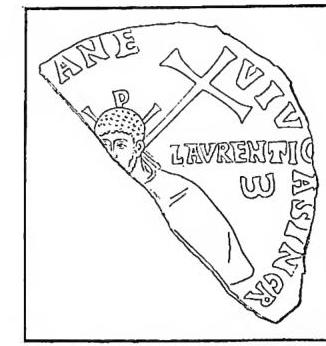
Ravenna (c. mid-5th century) and subsequently by countless other monuments. Even the particulars regarding the arrest and appearance of St. L. before the judge, which poorly accord with the swift application of Valerian’s persecution decree (episcopi et presbyteri et diacones in continenti animadvertantur) against Sixtus and his companions, have been considered legendary data, reminiscences of other hagiographical texts adapted to St. L. to link his passion with that of the martyrs of August 6 and, in a certain way, to justify the delayed martyrdom. The texts studied and the comparisons made by P. Franchi de’ Cavalieri and Fr. H. Delehaye are certainly significant in this regard, yet they do not a priori exclude the possibility that in Rome there existed a genuine tradition, embellished with evident rhetorical flourishes by St. Ambrose, concerning the tragic capture and end of St. L. precisely by means of fire—a punishment also inflicted, under Valerian, upon St. Fructuosus and his deacons Eulogius and Augurius at Tarragona. Moreover, the verb *animadvertere* used in the persecution decree in Cyprian’s version may refer to other forms of capital execution besides decapitation. It is certain that the punishment of the gridiron became the distinctive iconographic motif of St. L., as evidenced by the medallion of Successa (late 4th century), if its authenticity is admitted, by the mosaic of the so-called Mausoleum of Galla Placidia in Ravenna (c. mid-5th century), and subsequently by countless other monuments. Even the Spanish origin attributed—
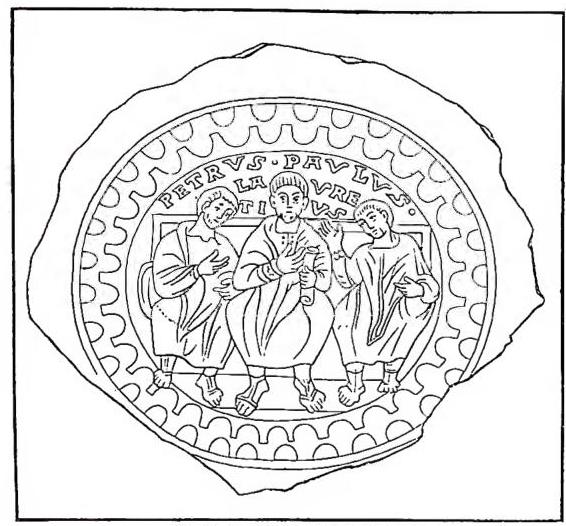
Scassagisma: St. Paul; Quinquagesima: St. Peter. The neophytes were led, after Easter, on Monday to St. Peter, on Tuesday to St. Paul, and on Wednesday to St. Lawrence. Among the monuments of this period attesting to the high esteem in which St. L. was held, various gold-glass vessels must be recalled, notably one in which the martyr is seated between Peter and Paul, and another in the National Museum of Florence in which St. L. is depicted after St. Paul and before St. Sixtus II (cf. G. Bovini, *Monumenti figurati paleocristiani conservati a Firenze*, Vatican City 1950, pp. 18–22).
Preceded by a solemn vigil held in the Basilica of the Verano (cf. *Vita s. Melaniae senatricis Romae*, 5, ed. M. Rampolla del Tindaro, *S. Melania giuniore senatrice romana*, Rome 1905, pp. 5–6 and note pp. 266–268), the feast of St. L. was followed by an octave. Indeed, the so-called Leonine Sacramentary contains the Masses for the vigil (3 formularies, nos. 1, 10, 12) and for the octave, as well as 10 formularies for the Mass of the natal day (ed. C. L. Feltoe, Cambridge 1896, pp. 94–99). When the vigil was transferred to August 9, the celebration of a *Missa mane prima* came into use, distinct from the *Missa publica* in two parts, as seen in the Gelasian (ed. H. A. Wilson, Oxford 1894, pp. 189–91) and Gregorian Sacramentaries (ed. H. Lietzmann, Münster in V. 1921, pp. 85–86), the Comes Evangeliorum of Würzburg (ed. G. Morin, in *Rev. bénéd.*, 28 [1911], p. 312), and other *Capitularia* (cf. Th. Klauser, cited below, pp. 34–35, 80, 120). The vigil is called *in iulium s. Laurentii* in the Lectionary of Capua (Fulda codex of 546) and in the *Capitula Evangeliorum* of Naples from the 7th century (cf. G. Morin, *Liber Comicus*, Maredsous 1893, pp. 429, 433). For this vigil, Amalarius noted the existence in Rome, in his time, of *duo nocturnalia officia* (cf. *Liber de Ordine anthroponavii*, 61: ed. J. M. Hanssens, *Amalarii Opera liturgica*, III, Vatican City 1950, p. 97). The morning Mass then disappeared in most Gelasian sacramentaries of the 8th century (cf. P. De Puniet, *Le Sacramentaire Romain de Gellone*, Rome [1938], pp. 126–28, 130). In the *Capitula Evangeliorum*, including the oldest, that of Würzburg, the four weeks (sometimes five) following the feast of St. L. were called: “Ebdomada I, II, III, IV, post S. Laurentem” (cf. Th. Klauser, *Das römische Capitulare Evangeliorum*, Münster in V. 1935, pp. 35–36, 81–83, 161–63).
In the Roman Canon of the Mass, the name of L. follows that of St. Cyprian, whereas in the Ambrosian Rite it stands between Sixtus and Hippolytus (cf. V. L. Kennedy, *The Saints of the Canon of the Mass*, Vatican City 1938, pp. 68–69, 124–28), a grouping also found in various iconographic monuments (v. PAPILO, SANTO, MARTIRE). In the Mozarabic liturgy, too, St. L. (August 10) is associated with SS. Sixtus and Hippolytus (cf. M. Férotin, *Le Liber Mozarabicus Sacramentorum*, Paris 1912, p. 389; J. Vives-A. Fábregas, *Calendarios hispánicos anteriores al siglo XIII*, in *Hispania sacra*, 2 [1949], pp. 353, 365, 371, 377; though in the *Liber Comicus* he is with Sixtus alone: cf. ed. G. Morin, Maredsous 1893, p. 265).
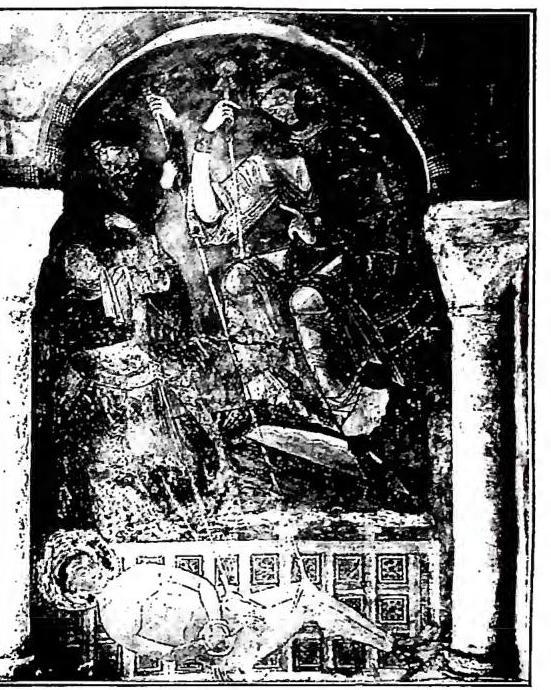
The evocative circumstances of his martyrdom, widely disseminated by St. Ambrose, Prudentius, St. Augustine, and others, the reports of miracles worked by St. L. at his tomb or elsewhere (notably the healing at Ravenna recorded by St. Augustine: *Sermo* 322), and the spread of his relics (brandea, sanctuaria, filings from the gridiron) gave, from the late 4th century onward, a remarkable impetus to his cult outside Rome. At Carthage and Hippo, the feast of St. L. is attested by the aforementioned sermons of St. Augustine, two of which lament the poor attendance of the faithful (Denis XIII of 401; and in the Maurist edition of 303, delivered between 425 and 430). At Sidi-Ferruch, a mosaic inscription records the dedication of a church between 449 and 538 (cf. E. Diehl, *Inscriptiones Christianae latinae veteres*, I, Berlin 1924, no. 1829). At Ravenna, according to the testimony of St. Augustine (*Sermo* 322, April 25, 425: PL 38, 1144), a “memoria” in honor of St. L. had recently been consecrated, its dedication likely occurring under Placidus Valentinian (cf. E. Diehl, op. cit., no. 1792); in the same city, the oldest depiction of the martyrdom of L. is preserved in a lunette of the so-called Mausoleum of Galla Placidia, dating to c. the mid-5th century (cf. G. Bovini, *Il cosiddetto mausoleo di Galla Placidia in Ravenna*, Vatican City 1950, pp. 45–52). In Milan, during the 5th century, a grand basilica (perhaps the “Porta”) dating to the 4th century was dedicated to St. L. In Constantinople, relics of St. L. arrived under Theodosius II (408–50), and the Empress Pulcheria (d. 453) erected a church in his honor. It would be superfluous to continue enumerating churches dedicated to the martyr, for from the 5th century onward, and especially during the Middle Ages, there was no diocese or city that did not have more than one; suffice it to say that in the diocese of Milan alone there were up to 43 (cf. F. Savio, *Gli antichi vescovi d’Italia. La Lombardia*, I, Milan-Florence 1913, p. 775).
### III. Iconography
In funerary art, St. Lawrence is depicted in Rome in the arcosolium of Celerina in the cemetery of Pretestato (R. Garrucci, *Storia dell’arte cristiana*, Prato 1881, tav. 39, 2; cf. the reservations of Wilpert, *Pitture*, pp. 379–380) and in Naples in the so-called cemetery of St. Januarius (H. Achelis, *Die Katakomben von Neapel*, Berlin 1936, tav. 41). He was later depicted in the museum of Santa Maria Capua Vetere (R. Garrucci, *op. cit.*, tav. 256–57). The multiplication of places of worship dedicated to him further developed and spread his iconography.
The attributes of the deacon saint were the cross, as a statuophore, the book, and the gridiron, the instrument of his martyrdom. He appears already as a statuophore in one of the gold-glass vessels mentioned above. In the mausoleum of Galla Placidia in Ravenna, St. Lawrence is represented as crucifer, between the burning gridiron and the cupboard containing the sacred texts. A similar reference to the reading of the Gospel is found on the triumphal arch of the basilica dedicated to him in Rome, from the 6th century: in honorable proximity to Jesus Christ, he holds in his hand the cross and the book of Psalms with the words of V. 111, 9: *«Dispersit, dedit pauperibus»*. He is also depicted with the cross in a 6th-century fresco in the catacomb of Albano.
In the following centuries, the iconographic developments of the depiction of St. Lawrence are to be sought in the miniatures of Sacramentaries, among which those of Udine, Ivrea, Lucca, from the 9th and 11th centuries; notable is the miniature of the Drogo Sacramentary, from the 9th century, where in a large letter “D” are depicted St. Lawrence, in the act of distributing the goods of the Church to the poor, and his martyrdom. The gridiron has been transformed into an enormous machine, balanced on the flames by two solid uprights and operated at a distance by two guards, by means of long chains. Other guards, under the orders of the judge who attends the execution, hasten to feed the brazier with new wood.
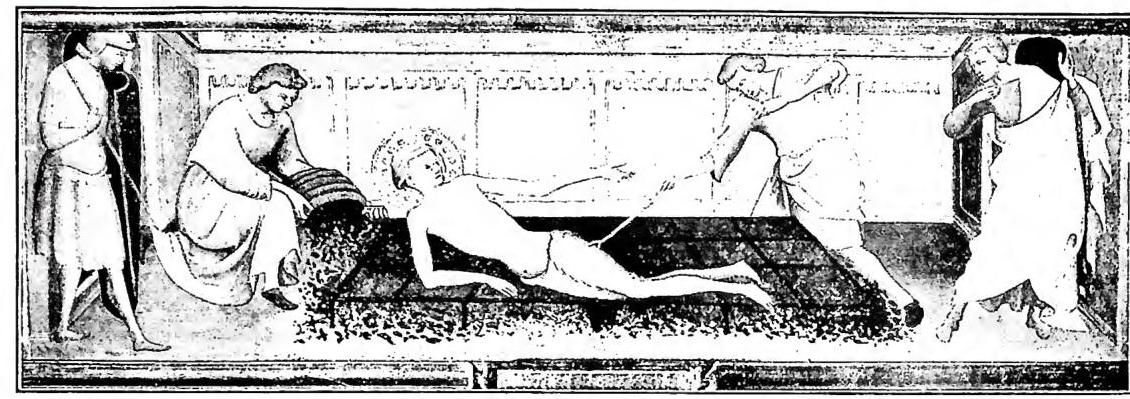
Rome also possesses, at the beginning of the 13th century, during the papacy of Honorius III (1216–27), besides a museum in the chapel of the *Sancta Sanctorum*, three cycles with episodes from the life of the saint, painted: 1) in a side portico now transformed into a sacristy, 2) in the atrium, and 3) on the inner wall of the entrance to the basilica on the Via Tiburtina, partly very restored and now almost disappeared by 1943; but of which copies from 1639 remain in a Vatican Barberini codex (4403). Intact instead is the cycle painted by Masolino and assistants in the church of the Collegiata of Castiglione d’Olona near Milan, from the early decades of the 15th century; and shortly after the middle of the century, the one executed by Fra Angelico with the help of many assistants in the chapel of Nicholas V in the Vatican. In both, the main episodes consist of the delivery to Lawrence, by Pope Sixtus II, of the treasure of the Church, the alms to the poor, the judgment before the Emperor, and the martyrdom, though with some variations. The cycle in the church of Berching, by the school of painting of Regensburg, consists of 8 episodes, including the imprisonment of Pope Sixtus, his arrest and interrogation, his trial, torture, and martyrdom. In the same church, the cycle is repeated on the shutters of the altarpiece of the high altar.
In modern art, the saint is usually depicted in a dalmatic with the specific attribute of the martyr, the gridiron. Thus in a panel by Ghirlandaio in the Pinacoteca of Munich, in a painting by Titian for Philip V of Spain in the Escorial, in another by Andrea d’Assisi in the Pinacoteca of Perugia, in another by Alvise Vivarini in the Accademia of Venice, and in another by Pinturicchio in the duomo of Spello. Beyond the Alps, the depiction of the saint is repeated in various wooden statues preserved in museums and private collections in Frankfurt, Stuttgart, etc. Notable is the admirable painting by Matthias Grünewald in Frankfurt.
**
---
### IV. In Folklore
The saint enjoys a vast and lively popular cult, both in Italy and abroad. In relation to the attributes of his martyrdom, he is invoked against fires and burns: in Sicily, a popular print with the image of the saint is even applied to the burned area. He is therefore also the protector of firefighters, charcoal burners, cooks, roasters, and pastry chefs. On the morning of his feast, or before dawn or around midday, the people search, digging in suitable terrain (fields, gardens, woods, secluded roads), for the so-called *“carboni di s. Lorenzo”* [coals of St. Lawrence], to which various therapeutic virtues are attributed, especially against burns and lumbago, but also against witchcraft, the evil eye, and storms. Reduced to powder and mixed with wine, these coals are swallowed to cure quartan fever. They are placed under the pillow of children and made into small crosses. Since the date of his feast (August 10) falls during the period of the shooting stars, the falling stars are called *“le lacrime di s. Lorenzo”* [the tears of St. Lawrence], either because it is believed that heaven weeps for the death of the saint or that they are the tears shed by the saint as he was roasted on the gridiron.
In popular meteorology, it is believed that summer reaches its peak of heat on St. Lawrence’s day, but then quickly declines, hence the proverb: *“S. Antonio dalla gran freddura – s. Lorenzo dalla gran caldura – l’uno e l’altro poco dura”* [St. Anthony with the great cold – St. Lawrence with the great heat – both last but a little]. On this day, forecasts are also made for the weather in autumn: if it is fair, autumn will be fair too and the year will be good for honey and wine; if it is bad, field mice will abound and cause serious damage.
Since the feast occurs at a time when the great field labors are finished and the farmers have already harvested the fruits of their crops, in many cities and towns a great fair and festival is held on that day. In Udine, the largest annual fair takes place, with shows, races, and tombolas; and it is believed that by St. Lawrence’s day walnuts and hazelnuts ripen. Fairs and festivals also take place in Cervia (Romagna), Veglia (Istria), and in Champagne, where in Souldaine, near Bar-sur-Aube, the *aubade* is performed, corresponding to our *“albate”* or morning serenades. St. Lawrence is the patron saint of the cities of Alba, Chiavenna, Fano, Genoa, Ancona, Viterbo, and many cities of Central and Northern Europe.
The life of the saint has also inspired popular poems and songs: two *cantari* in sestinas, one on his birth and childhood, the other on his passion and death, contained in the Ambrosian ms. C. 35 sup., were published by De Bartholomaeis (see bibliography). A narrative song in epic hendecasyllables is still alive in Romagna and Tuscany. See plate CVI.
**
After the death of Pope Anastasius I, he was acclaimed pope by part of the clergy and the majority of the Senate, which was sympathetic to Byzantium, while his more numerous opponents elected the deacon Symmachus (22 Nov. 498).
With the intervention of Theodoric, King of the Ostrogoths, who decided in favor of Pope Symmachus, L. submitted and shortly afterward was appointed bishop of Nocera in Campania. Threats and promises may have determined him to accept this dignified removal. It is certain that in 501 he returned to the schism, seeking to win followers among his partisans and among the opponents of Pope Symmachus; he was therefore excommunicated by the so-called Palm Sunday Synod of 23 Oct. 501.
Nevertheless, he maintained his position until 503, when, subjected to active and literary opposition and constrained by King Theodoric, he retired to an estate of the patrician Festus, the instigator of the opposition, where he spent the rest of his life in the austerities of penance. The clergy, who had followed him in the schism, gradually returned to obedience to Pope Symmachus; but there were some who refused to submit until the end, such as the deacon Pascasius. The consequences of the schism were fully overcome with the election of Hormisdas.
BIBL.:
Bruno: Lib. Pont., I, p. 46; Jaffe-Wattenbach, I, p. 100; E. Schnürer, Die politische Stellung des Papsttums zur Zeit Theodorich des Grossen, in Hist. Jahrbuch, 9 (1888), pp. 251-83; G. Pfeilschifter, Der Ostgottenkönig Theodorich der Grosse u. die katholische Kirche, Münster 1896, p. 56 sqq.; R. Cessi, Lo scisma laurenziano e le origini della dottrina politica della Chiesa di Roma, in Archivio della società romana di storia patria, 42 (1919), pp. 5-229; id., Dallo scisma laurenziano alla pacificazione religiosa con l'Oriente, ibid., 43 (1920), pp. 209-321; L. Duchesne, L'Eglise au VIe siècle, Paris 1925, p. 109 sqq.; H. Grisar, Roma alla fine del mondo antico, trad. it., II, 3rd ed., Rome 1930, p. 29 sqq.; F. X. Seppelt, s. V. in LTHK, VI, cols. 416 sqq.; Fliche-Martin-Frutaz, IV, p. 336 sqq.
---
### LORENZO DA BOLOGNA
Theologian of the Order of the Servants of Mary, born in Bologna in the first half of the 14th century, died after 1392. In 1360 he was a lecturer in theology; around 1370 he went to Paris, where he lectured on the Sentences, obtaining the licentiate in theology (1374) and probably also the doctorate. By 1379 he was already back in Italy as vicar of the general prior, and on 2 June of the same year he was admitted to the college of masters of the Faculty of Theology at Bologna. In 1387 he was appointed bishop of Traù but continued to reside in Bologna.
During his teaching period in Paris (between 1372 and 1374) he composed his commentary on the Sentences, published in the 16th century by Fr. Domenico Dotti: *Ordinatissimi ac ingeniosi doctoris Laurentii Opimi Bononiensis Ordinis Servorum egregia super quattuor libros sententiarum Parisiis habita* (Venice 1532). He drew freely from Peter Lombard, expanding on themes of greater importance and relevance, such as the nature of the procession of the Word, the double mission of the Holy Spirit, the hypostatic union, justification, and merit.
BIBL.:
Bruno: S. Berardo, Il dottor ordinatissimo ven. L. Opimo dei Servi di Maria vescovo di Traù, Bologna 1932; C. Berti, La santificazione dell'anima e il merito secondo maestro L. da B. dell'Ordine dei Servi di Maria, Gembloux 1939.
Antonio Piolanti
---
### LORENZO DA BRINDISI, ST.
Capuchin, born in Brindisi on 22 July 1559, died at Belém near Lisbon on 22 July 1619. He entered the novitiate of the Venetian province at Verona on 18 Feb. 1575. He preached throughout his life, was a reader of sacred sciences (1587-90), provincial minister of Tuscany (1590-92), of Venice (1594-96), of Liguria (1613-16), general commissioner in Bohemia and Austria (1590-1602, 1606-10), and in Bavaria-Tyrol (1611-13), several times definitor general, and minister general (1602-1605). Pius VI declared him blessed on 23 May 1873; he was canonized by Leo XIII on 8 Dec. 1881. Feast: 23 July.
**Life.** — He distinguished himself from his youth by mystical fervor and rigorous asceticism. Of quick intellect, he was eager for knowledge, especially of Scripture; yet he believed he had received from the Blessed Virgin a singular knowledge of the Hebrew and Aramaic languages. He constantly employed his learning in apostolic action, beginning with successful preaching immediately after his ordination as priest in 1583; his last Lenten sermon series was delivered in Milan the year before his death (1618). Through the ministry of the word—in Italian, German, and Hebrew, directed in various forms to the faithful, religious, Protestants, and Jews in Italy, Bohemia, Austria, and Germany—he widely disseminated and elucidated Catholic truth. Because of his expertise in Hebrew language and culture, from 1584, at the behest of Gregory XIII, he gave apologetic and exegetical lectures to the Jews of Rome, which he continued for three years under Clement VIII; he also engaged in controversy with them in various other Italian cities and in Prague.
In 1599 he established and led in Austria-Bohemia the first band of Capuchins, requested by Archbishop Zbyněk Berka of Prague for the restoration and defense of the faith against Protestant sects. He founded convents in Vienna, Graz, and Prague, centers of his activity. During the Battle of Stuhlweissenburg (Alba Regalis) in Hungary (9-14 Oct. 1601), between the imperial forces and the Turkish army of Mehmed III, he entered the fray with courage, inspiring the soldiers to victory, to which he was largely credited. In the religious sphere of politics, he advocated energetic defense of the rights of Christian communities against Protestant encroachments. He induced the Imperial Council of Rudolph II to punish the factionalism of the Lutherans of Donauwörth (1607); in the same year he confronted the Lutheran preacher P. Leiser before the court; this episode was followed by the *Lutheranismi Hypotyposis* (3 vols.), composed in little more than a year. Later (Sept. 1610), he clashed with another Protestant minister of the Duke of Saxony over the veneration of the Virgin Mary. He worked successfully toward the formation of a League of Catholic states against the Union of Protestant princes, securing, after an embassy to Madrid, the support of Philip III (1609-10). He remained in Munich with Duke Maximilian of Bavaria in the capacity of apostolic delegate and ambassador of the King of Spain. In the *Commentariolum de rebus Austriae et Bohemiae* (Rome 1610), St. L. candidly recounted his own undertakings in those regions and in Bavaria. Returning to Italy in 1613, he worked, among other things, at the behest of Paul V, to avert a war already begun between Spain and Savoy over the succession to Mantua. His final and difficult mission took him, despite grave illness, from Naples (Oct. 1618-July 1619) to Belém (Lisbon) to Philip III as defender of the nobility and people of the Kingdom of Naples against the abuses and misconduct of the viceroy P. Giron, Duke of Ossuna.
In the offices he held within his Order, and especially as minister general during his visitation of convents in Switzerland, France, Flanders, Spain, and Italy—undertaken on foot—he rigorously upheld Capuchin austerity, urging his friars to study and preaching.
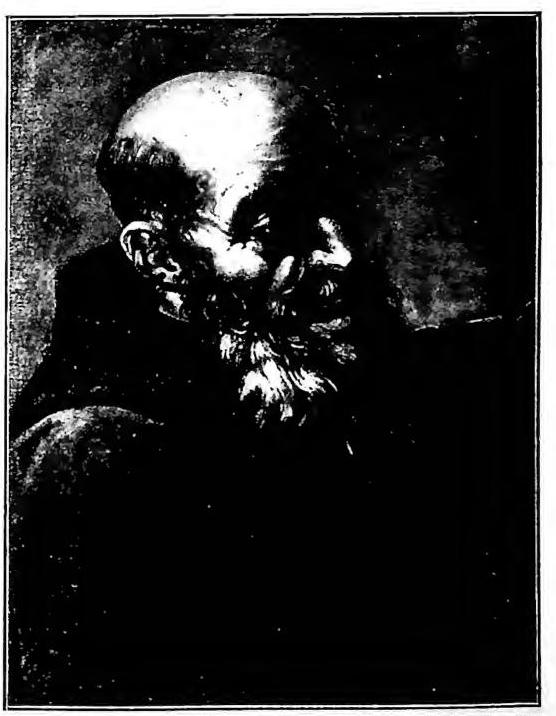
Lorenzo da Brindisi, St. — Painting by P. Labruzzi. Montughi, Capuchin Convent.