
(1st. Pont. comm. arch. sacra)
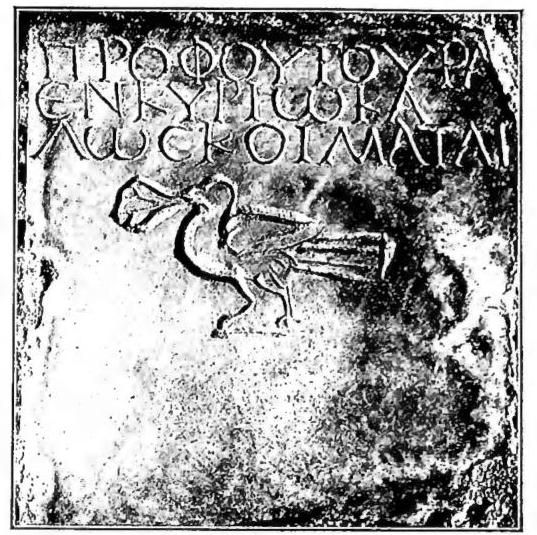
PRETESTATO, CEMETERY OF — An inscription of a Profutura — who rests well in the Lord — sepulchral slab from the end of the 3rd century. Rome, cemetery of Pretestato.
An inscription from 405 recalls a certain Superbus, so called only by name, whom the blessed saints knew to be innocent and gentle. An Aurelia Marula begs her buriers *massa calcetur*; if they do so, the Lord will hear their prayers. — See pl. CXXXVI.
PRETESTATO, VETTIUS AGORIUS (Vettius Agorius Praetextatus). — A characteristic representative of the religious syncretism among the cultured classes in the 4th century, he was, together with Nicomachus Flavianus and Symmachus, one of the most tenacious defenders of paganism in Rome. Proconsul of Achaia in 362, Prefect of Rome in 367, and Praetorian Prefect in 384, he died that same year while designated as consul.
Initiated into several mystery cults, he was also a Vestal priest and zealously promoted the cult of Vesta to such an extent that he earned a statue in the atrium of the goddess’s temple. He obtained from Valentinian the suspension of the decree that forbade nocturnal sacrifices. He took an interest in philological criticism and the revision of Greek and Latin texts. He maintained relations with Pope Damasus, who vainly sought to convert him to Christianity, and as Prefect of Rome he intervened in the disturbances stirred up by Ursinus over the election of that Pontiff. The laudatory epitaph composed by his wife shortly after his death is still preserved.
PRETI MATTIA — PRETI OF SAINT BASIL
1987
(by courtesy of the General Curia of the PRETI OF THE STIGMATA OF OUR LORD JESUS CHRIST — Missionary Institute of Ribeirão Prato (São Paulo) — Brazil.
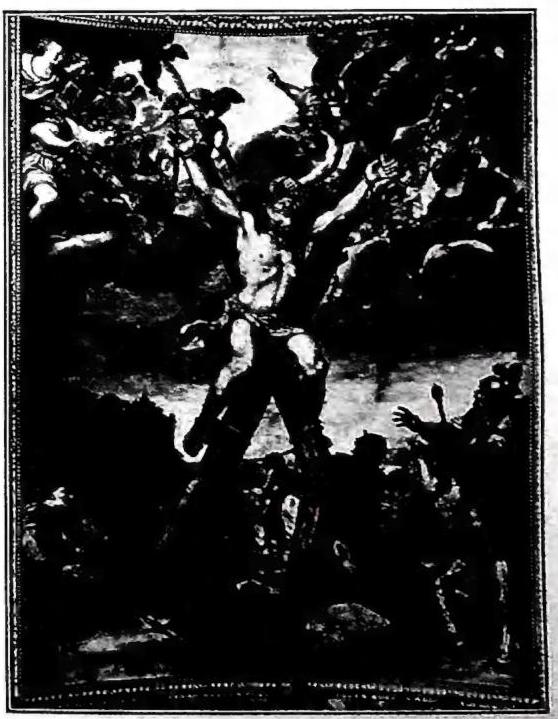
His life began with the frescoes depicting scenes of the plague on the gates of the city, now consumed by time and the elements. In the Pinacoteca remain two sketches of the Capuana and Nolana Gates, along with other designs for the frescoes of the dome of S. Domenico Soriano, also almost entirely lost. Among his other Neapolitan works are *The Prodigal Son* from the Royal Palace, *Ecce Homo* formerly in the Proto-Albaneta collection, *The Banquet* owned by Gerace and the Pinacoteca. But his masterpiece consists of the ten canvases painted for the ceiling of S. Pietro a Maiella with stories of St. Peter Celestine and St. Catherine of Alexandria. In 1660, P. left the city to decorate a hall in the Pamphili villa at Valmontone, and in 1661 he moved to Malta, where he left works in the church of S. Giovanni in Valletta and in others on the island. In 1668 he returned to his native Taverna and painted numerous canvases for the major churches there; he sent others from Malta, where he would have to return urgently around 1674. *The Lightning-Bearing Christ*, *St. Barbara*, *St. Sebastian*, and *The Baptism of Jesus* with his self-portrait in the guise of a knight below are among the finest works preserved in Taverna. During his second period in Malta he also sent works to Naples, to Siena (a *Sermon of St. Bernardino*, 1675) for the Duomo, and to Rome.