
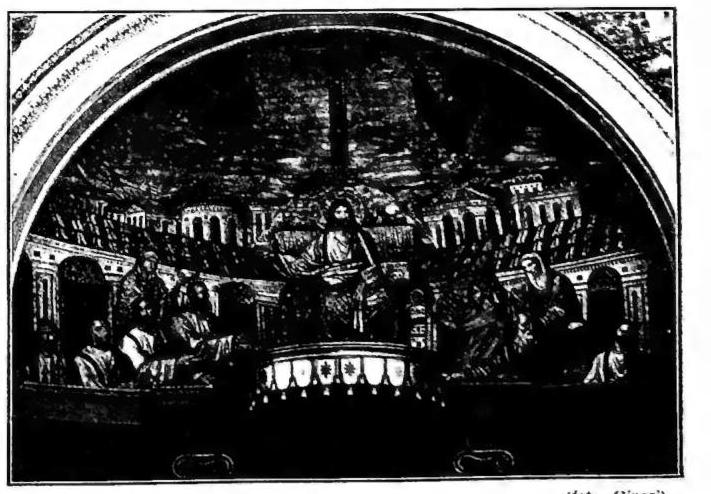
and “titulus sanctae o beatae Pudentianae” and also “Pudentis” in the life of Leo III (I, p. 508; II, pp. 11, 34, 24). Pudentiana is also called Potenciana or Potentiana in the itineraries of the 7th century (R. Valentini and G. Zucchetti, Codice topografico della città di Roma, II, Rome 1942, pp. 78, 116, 144). In a chapel of St Pudenziana scenes from the legends of St Paul, Pudens, Pudentiana and Praxedes are painted (Wilpert, op. cit., pl. 262). The two female figures in the museum of the basilica of St Pudenziana do not represent Pudentiana and Praxedes as G. B. De Rossi maintained (Mosaici cristiani, Rome 1872, sheet 9; J. P. Kirsch, Die römischen Titelkirchen im Altertum, Paderborn 1918, pp. 65-66 and Wilpert, op. cit., pp. 1066-68), but the two churches, ex gentibus and ex circumcisione (v. CHIESA, III, col. 1468).
H. Delehaye published a Vita Sancti Pastoris in which this man, instructed together with Timothy by St Paul, would have been ordained priest by the Apostle, would have lived until the time of Antoninus, and at the request of Pudens, father of Pudentiana and Praxedes, would have built a church in the vico Latericio called still titulus Pastoris at the time the life was written and remembered until the 13th century near St Clement (Étude sur le légendier romain, Brussels 1936, pp. 139, 264-66). H. Delehaye proposed to identify with the same Pastor the martyr Pimenius or Pymenius or Iouayv (op. cit., pp. 137-40), recorded in the Martyrologium Hieronymianum and in the Neapolitan marble calendar on 18 Feb., 18 March and better on 2 Dec. His Passio describes him as a presbyter of the titulus Pastoris who lived in the time of the emperor Julian (id., op. cit., pp. 259-63). The martyr Pimenius was buried in the cemetery of Ponziano, as indicated by the Notitia ecclesiarum and the De locis (R. Valentini and G. Zucchetti, Codice topografico della città di Roma, II, Rome 1942, pp. 92-107) and there represented together with the martyrs Milix and Pollio (Wilpert, Pitture, pp. 453-520 and pl. 255, 1).