
QUASI PARROCI. — These are secular or religious priests appointed over the quasi-parishes of apostolic vicariates and prefectures.
The territories of these ecclesiastical circumscriptions, which for the most part depend on the S. Congr. de Propaganda Fide (a few others on the S. Congr. Orientale), are divided into distinct sections, at least in those places where this is possible; each of these subdivisions is assigned a particular church with a group of the faithful, presided over by its own rector; this portion of territory is called a quasi-parish.
The instruction of the S. Congr. de Propaganda Fide of 25 July 1920 (Sylloge P. F., no. 82) reaffirms the obligation of dividing the territory into quasi-parishes and also gives precise norms concerning their erection, while permitting part of the quasi-diocese to remain undivided and to be governed in the form of mission stations (v.) by cooperator vicars. The same faculty is also granted for mission dioceses by the instruction of 9 Dec. 1920 (ibid., no. 85), which authorizes bishops to appoint religious to the direction of parishes when there is a lack of suitable secular priests.
The q. p. are equated with parish priests with all their rights and obligations and, in canonical legislation, are designated by the name of parish priests (can. 451 § 2). All the norms governing the institution of parish priests therefore apply to them (v. especially cann. 454 § 4; 456; 461; 1356).
There are only certain particularities concerning both the institution of the q. p. and their obligations. With regard to stability, they are considered removable parish priests, that is, they may be removed from their office without a formal administrative process. Their appointment, moreover, if they are chosen from the secular clergy, is reserved to the Ordinary of the place, with the consultative vote of the members of his own council, composed of three of the oldest and most prudent missionaries (cann. 302, 457); if they belong to the regular clergy, the norms established for the appointment of religious parish priests must be observed (can. 456). These formalities are not required for validity, but in order to prevent unsuitable persons from being chosen, whether because of a lack of solid faith or because of insufficient knowledge of the language, customs, and traditions of the place; such defects could occasion scandal and harm the mission.
Among the obligations differing from those of parish priests, that of applying the S. Mass is noteworthy. The days on which the q. p. are obliged to apply the S. Mass for their faithful are: the Nativity of Our Lord Jesus Christ, the Epiphany, Easter, the Ascension, Pentecost, Corpus Domini, the Immaculate Conception and the Assumption of the Virgin Mary, S. Joseph, SS. Apostles Peter and Paul, and All Saints. This obligation, which is real and personal like that of parish priests, differs only in the number of applications (cann. 306, 466).
The same obligations are incumbent upon the parish priests of mission dioceses to whom the same statutes governing the q. p. have been applied (cf. the decree of the S. Congr. de Prop. Fide of 9 Dec. 1920: AAS, 13 [1920], p. 17). This norm cannot be extended to parishes that have been assigned to the competence of the S. Congregazione Concistoriale (S. Congr. Concistoriale, 1 Aug. 1919: AAS, 1 [1919], p. 346).
Finally, quasi-parishes are subject to the seminary tax, even if all their income is derived solely from the offerings of the faithful (can. 1356).
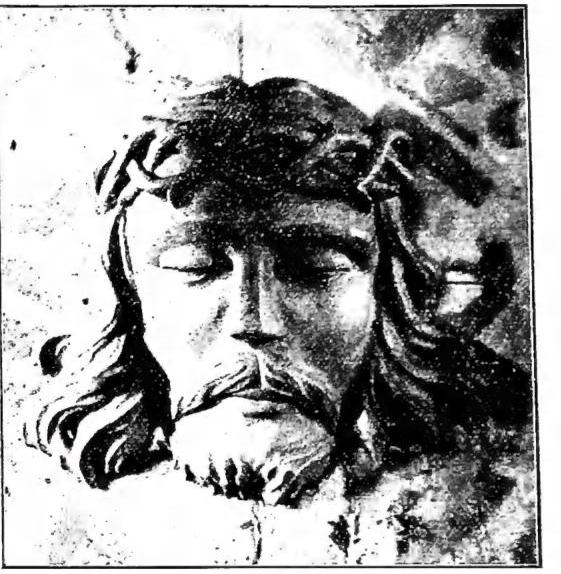
« QUAS PRIMAS ». — Encyclical of 11 Dec. 1925, by which Pius XI instituted the feast of Christ the King (AAS, 17 [1925], pp. 593–610).
After an opening in which he recalls the spiritual fruits of the Holy Year (1925), the Pope treats extensively and with particular theological clarity of the kingship of Jesus Christ. Having demonstrated from Scripture and Tradition (patristic and liturgical) the existence of this prerogative of the Redeemer, he first explains its twofold foundation (hypostatic union [*iure nativo] and redemption [iure quaesito]), then its intimate nature (it comprises the threefold power—legislative, judicial, and executive; it is predominantly spiritual in character, but extends also, in a certain manner, to temporal matters), concluding with important observations on the social kingdom of Jesus Christ; finally, he establishes that the feast of the kingship of Our Lord be celebrated throughout the Church on the last Sunday of October.