
RESIDENCE. – Etymologically (from residere), it indicates the place of a prolonged, almost permanent and definitive stay and is therefore synonymous with dwelling. In canon law it indicates the obligation incumbent upon clerics in general, and particularly upon holders of benefices, to dwell permanently in the place of the office attached to the benefice they hold. The canonical concept of residence entails, in addition to material presence, the active performance of the duties connected with the benefice, that is, the fulfilment of the officium.
Already at the Council of Nicaea (a. 325; cf. can. 6), the obligation of residence for priests, deacons, and clerics in general was enacted. Some hold that this obligation had already previously been decreed for bishops. In any event, it is certain that laws on the matter were issued for them immediately after that period as well. In the Middle Ages, penalties were also established against bishops who violated the obligation of residence. But with the introduction of vicars general, the law of residence was observed even less by bishops, and the negligence, despite the admonitions of the authorities, continued until the Council of Trent; indeed, by that time the evil had worsened because of the simultaneous possession of several benefices or several episcopal sees, which was often held by a single cleric or a single bishop. The Council of Trent acted beneficially by prohibiting the cumulatio beneficiorum and establishing new norms concerning the obligation of residence. The Tridentine legislation was subsequently taken up again, with greater specification and updating, by Popes Gregory XIII, Clement VIII, Urban VIII, and Benedict XIV. From Benedict XIV (cf. const. Ad universae of 3 Nov. 1746) until the CIC, the legislation remained almost unchanged. The current canonical discipline substantially reproduces the earlier one.
Can. 143 establishes the general principle of residence for every cleric who, following incardination in a particular diocese, remains obliged to reside there and not to leave it for a considerable period of time without the permission, at least tacit, of his Ordinary.
By virtue of can. 238 CIC, cardinals are obliged to reside in Rome: in Curia, the canon states, thereby recalling the native place of their office and consequently of their residence. Leo X, in the const. Supernae dispositionis of 5 May 1514 (cf. § 28), Paul IV, in the const. Cum venerabiles of 22 Aug. 1555 (cf. § 1), and subsequently Innocent X, in the const. Cum iusta of 12 Feb. 1646 (cf. § 1), and Pius IX, in the apostolic letter Quamquam illius of 29 Sept. 1867, had decreed and regulated the obligation of cardinals to reside permanently in Rome. According to the canon already cited, they are not permitted to leave Rome without the express permission of the Pontiff. Two exceptions are provided in this regard. The first concerns the cardinal bishops of the suburbicarian dioceses, who are not obliged to request permission from the Holy Father whenever they deem it appropriate to go to the diocese entrusted to them (can. 238 § 2). The second concerns the cardinal bishops of non-suburbicarian dioceses, who are obliged to reside in the dioceses entrusted to them; when, however, they come to Rome, they must immediately present themselves to the Pope and may not depart without his permission (can. 238 § 3).
The Church has been most vigilant in requiring bishops to observe the law of residence. At the Council of Trent the problem was discussed at length and vigorously (cf. sess. VI, cap. 1; sess. XXIII, cap. 1). The Supreme Pontiffs themselves repeatedly issued provisions on the matter (cf. the const. De salute gregis of Pius IV dated 4 Sept. 1560 and the In suprema of 25 Nov. 1564 by the same Pontiff; the const. Sancta Synodus of 12 Dec. 1634 of Urban VIII; the const. Quia Ecclesia of 26 July 1662 of Alexander VII; the Ubi primum of 3 Dec. 1740 of Benedict XIV, the Grave of 15 Aug. 1741, and the const. Ad universae of 3 Sept. 1746 of the same Pontiff). The current legislation on residence for bishops is contained in can. 338. § 1 lays down the fundamental rule of the bishop’s personal residence in the diocese entrusted to him and expressly establishes that the obligation remains even if the bishop has a coadjutor. With regard to holidays, it is established that the bishop may take at most three months each year, continuously or intermittently, provided it is first certain that his absence will cause no harm. Holidays may not be combined with other absences, even if legitimate (such as for promotion, for the ad limina visit, or for participation in councils), or with the holidays of the following year. § 3 imposes the obligation of being at the cathedral church on the days of Advent, Lent, Christmas, Easter, Pentecost, and Corpus Domini, unless serious and urgent reasons compel him to remain elsewhere. The metropolitan is obliged to report to the Holy See a suffragan bishop who has been unlawfully absent from the diocese for more than six months; if the metropolitan has fallen into the same fault, the duty of reporting him to the Holy See belongs to the suffragan senior in residence (can. 338 § 4).
Vicars and apostolic prefects are obliged, like bishops, to reside in the mission territories entrusted to them. Unlike bishops, they do not enjoy the faculty of taking a period of leave of two or three months, and when they are compelled to leave, even for a serious and just reason, they must request permission from the Holy See (can. 301 § 1).
The capitular vicar is likewise obliged to observe the law of residence, in the same manner and under the same conditions as the bishop (can. 440).
Following the Tridentine legislation (cf. sess. XXIV, cap. 12) and on the basis of the ancient and recent practice of the Roman Sacred Congregations, especially that of the Council as expressed in very numerous decisions, the CIC, in cann. 418–19, regulates the obligation of residence for members of cathedral chapters. Canons and beneficiaries are obliged to reside in the place of the benefice and may be absent from it for three months each year, continuously or intermittently, provided this is not prohibited by the capitular statutes or legitimate custom (can. 418 § 1). They are forbidden to take their holidays during Advent, Lent, and the principal feasts of the year (namely Christmas, Easter, Pentecost, and Corpus Domini; cf. can. 338 § 3), without a legitimate cause and without the special permission of the bishop; the capitular members absent at the same time must not exceed one third of the entire chapter (can. 418 § 2). A capitular member absent during the holiday period receives only the revenues of the benefice, or two thirds of the distributions if the prebend consists solely of these (can. 418 § 3). On the days when capitular members are exempt from the obligation of choir, they are not required to reside in the place of the benefice (can. 419 § 1).
The parish priest too (can. 465) must reside in his parish; the Ordinary may nevertheless permit him to dwell elsewhere, provided that the distance is not such as to prejudice pastoral activity (can. 465 § 1). He is permitted a period of absence from the parish of no more than two months, unless, for just causes, in the judgment of the Ordinary,
Ordinary, does not need a longer period or that it be shortened (can. 465 § 2). The days which the parish priest spends, even annually, on his spiritual exercises are not to be included in the two-month period (can. 465 § 3). For an absence from the parish of more than one week, the parish priest must have the written permission of his Ordinary and leave in his place a substitute approved by the Ordinary; and if the parish priest is a religious, the aforementioned permission must also be issued by the religious Superior (can. 465 § 4). If the parish priest has had to leave his residence urgently, without having been able to notify the Ordinary beforehand, he is obliged to write to him as soon as possible, informing him of the reason for his departure and the name of the substituting priest (can. 465 § 5). For any absence, even a brief one, the parish priest is obliged to provide for the spiritual needs of the faithful, especially when these are serious needs.
This legislation too, like that concerning bishops, has very ancient precedents. Besides the Council of Trent (cf. sess. VI, chap. 2; sess. VII, chap. 3; sess. XXIII, chap. 1), there have been no lack of apostolic constitutions on the matter (cf. In suprema of Pius IV, 25 November 1564, §§ 1, 2; In conferendis of St Pius V, 18 March 1567, and of the same Pope Cupientes, 13 July 1568; Ad militantis of 30 March 1742 by Benedict XIV, and of the same Pope Firmandis, 6 November 1744).
If the vicar forane holds a parish in title, he is obliged to reside in it like the parish priest; otherwise he must dwell within the territory of the vicariate or in a place not far distant, according to the provisions of the bishop (can. 448 § 2).
Parochial vicars are obliged to observe residence according to their specific status. The vicar curate, the economic vicar, and the substitute vicar are obliged to do so in the same manner as the parish priest (cann. 471 § 1, 473 § 1, 474). The co-operating vicar must reside in the parish in accordance with diocesan statutes or custom, or in accordance with what the bishop has established; and the CIC recommends that the bishop arrange—in accordance with can. 134—for the co-operating vicar to dwell in the parish house in common life with the parish priest (can. 476 § 5).
For reasons connected with their work, diocesan consultors are obliged to reside at the episcopal see or in places close to it (can. 425).
The CIC exhorts religious Superiors to have their own religious house in which they may reside permanently, and not to leave it except in accordance with the constitutions (can. 508).
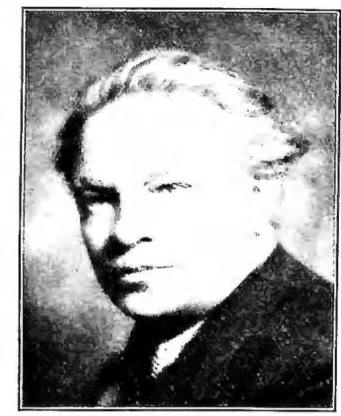
(photo by Ballerini and Fratini)
RESPIGHI, OTTORINO – Portrait.
(can. 2171–72). In the case of a removable parish priest who has not resumed residence within the prescribed time, the Ordinary may simply deprive him of the parish; if, on the other hand, the parish priest has resumed residence within the time allotted to him, the Ordinary shall enjoin upon him the obligation not to leave it again without his written permission, under penalty of deprivation of the parish (can. 2173). If, instead, the benefice is irremovable and the negligent cleric, although not resuming residence, has nevertheless put forward further grounds in his defense, the Ordinary shall examine them in the manner indicated above; and, should he find them unfounded, he shall order the cleric to resume residence within the time previously fixed, or shall set a new deadline for him, under penalty of deprivation of the benefice, to be incurred ipso facto; and he shall declare him deprived of the benefice if in fact he has not resumed residence within the established time. If, on the other hand, he has resumed residence, he shall be required to request permission whenever he wishes to leave, as in the case of a removable parish priest (can. 2174). The Ordinary may not declare any benefice vacant unless, in addition to having weighed with two examiners the reasons put forward by the non-resident cleric, he has also ascertained whether or not the cleric was in a position to request his written permission, as required (can. 2175).