
Contemporary with the leading painters of the Impressionist group (v.), R. pursued the path already begun by Rude and continued by Carpeaux toward a markedly pictorial and highly melodious rendering of plastic masses, arriving at a rapid, sometimes merely allusive, rendering of forms in movement. R. thereby achieved effects of striking efficacy in conveying the multiplicity of expressions and emotions. Yet a certain bombast, which pervades his fugues—manifest also in literary works—often reveals how his very modelling, with its violent, tumultuous contrasts of light and shadow, is sometimes related to rhetorical poses of an eccentric, excessive, theatrical temperament, and certainly too self-assured. It is nonetheless undeniable that R. possessed a most personal technique that transcended mere virtuosity. For this reason, too, the personality of this truly learned, robust, and extremely skilful artist attracted some of the leading artistic figures of his time, decisively influencing the formation of their taste.
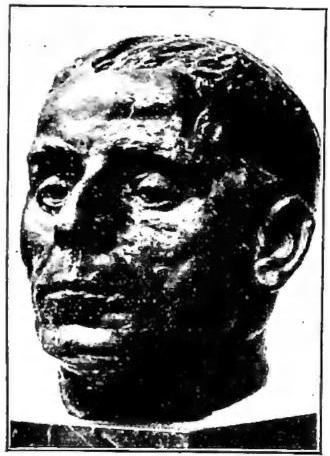
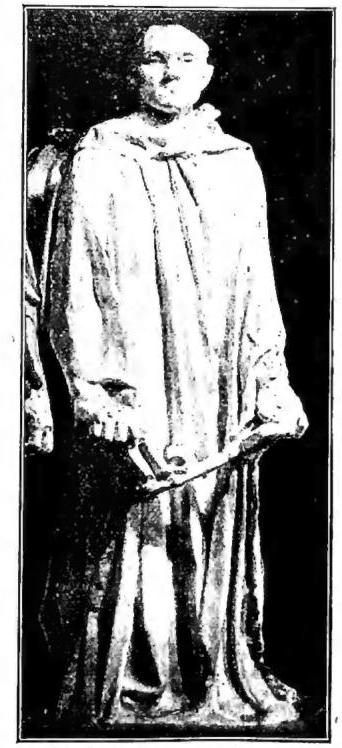
Among his early works notable for a personal style is the mask of *L'Homme au nez cassé*, exhibited at the Salon of 1864, which provoked violent controversy. This scandal was to recur thirty-four years later when, amid heated polemics, the plaster model of the monument to Balzac was exhibited—a work that, in our view, ranks among R.’s finest. Among these should also be included, rather than the too-famous group of *The Burghers of Calais*, *The Gates of Hell*, or even *The Thinker*—often replicated and much imitated—some exceptionally fine portraits and a few drawings.