
SAN SOVINO, JACOPO TATTI known as Il Sansovino. — Architect and sculptor, born in Florence on 2 July 1486, died in Venice on 27 September 1570. Pupil of Andrea Sansovino.
1823
SAN SOVINO JACOPO — HOLY ALLIANCE
The façade of San Giminiano, the design of the Scala d’Oro in the Doge’s Palace. Almost eighty years old, he completed the monument to Doge Venier in San Salvatore.
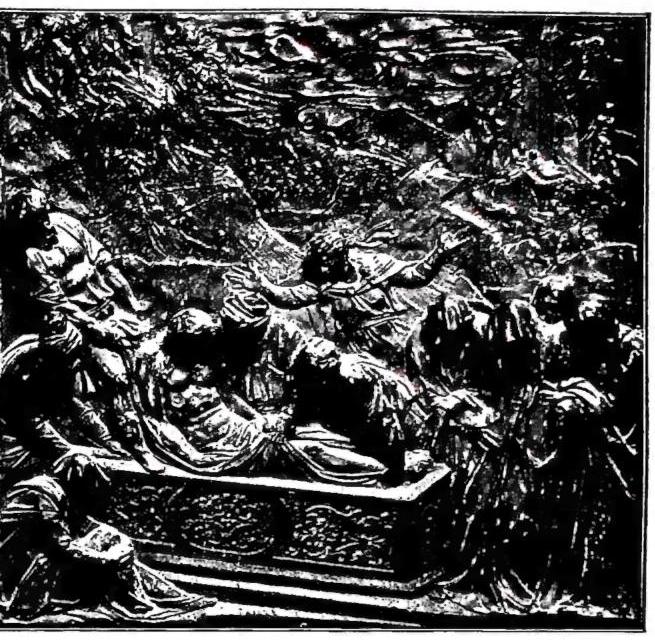
In the artistic climate of Venice, especially in contact with painters like Titian, Sansovino was able to fully express his temperament: the reliefs on the door of the sacristy of San Marco, with their Ghibelline character, are full of dramatic force, executed in an impressionistic manner and vibrant with light; remarkable, in the same church, are the statues of the Evangelists, carved with brush-like strokes akin to Tintoretto’s manner (Venturi), and the reliefs depicting the stories of Saint Mark. The dramatic intensity that also animates the statue of the Baptist in the Frari, full of nervous élan, becomes composed and solemn sweetness in the numerous images of the Madonna and Child, in relief and in the round (Arsenal, Loggetta, Museo Correr and Ca’ d’Oro in Venice; Vittorio Veneto; Bargello; Berlin; Louvre). Academic effort, however, cools the colossal Giants of the Scala d’Oro, while a Mannerist grace informs the four pagan figures on the façade of the Loggetta. Particularly successful are numerous sculptures of a decorative nature, or integrated into architectural complexes: the statue of T. Rangone in San Giuliano, the fireplace formerly in Ponte Casale, the tombs of Poccadaro in San Sebastiano and Venier in San Salvatore.
Even in the massive and austere building of the Mint, Sansovino achieves pictorial effects from the play of light and shadow, which he then employs on the ground floor of Palazzo Corner; its upper floors, with the motif of paired columns and the rich ornamentation of the window spandrels, display that search for chiaroscuro movement and solemn splendor that would find another admirable realization in the double loggia of the Library. This motif would also give rise to the grand mass of Villa Garzoni at Ponte Casale and Palazzo Dolfin. Architecture and sculpture vie with each other in rendering the bell-tower loggia picturesque and sumptuous.
Less fortunate was Sansovino in his religious buildings: the churches of San Giminiano and San Spirito in Isola were demolished, the interior of San Francesco della Vigna was altered during execution, and the façade of San Giuliano is not a success; yet we still have a typical example of his pictorial style in the completion of San Fantino. Among his numerous other works are cited: the tomb of Quignone in San Croce in Rome, the reliefs with the Ascension in San Marco and at the Barbagallo, the relief with a sacred conversation in Berlin, and the two bronze figures of Mars and Neptune in Detroit. — See pl. CXVIII.