
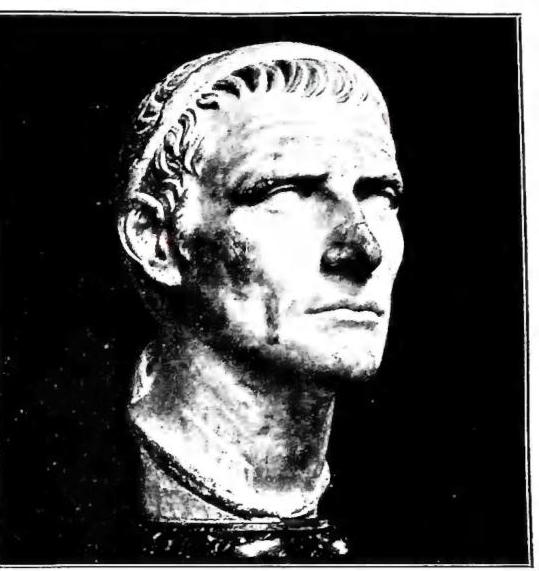
SELEUCUS I, surnamed Nicator Monophthalmus (312–280 BC), who under Alexander the Great (q.v.) commanded the cavalry, was given the governorship of Babylon. He took part in many of the wars among the Diadochi, especially against Antigonus Monophthalmus, remaining always an ally of Ptolemy. After the victory at Issus (summer 301 BC) over Antigonus, Seleucus obtained Armenia, Cappadocia, and Syria, which included by right also Coele-Syria (q.v.) with Palestine, though in fact this remained under the sovereignty of Ptolemy, son of Lagos. After eliminating the Diadoch Lysimachus by the victory at Corupedium (282–281 BC), Seleucus acquired much of his territory on this side of the Taurus. He was assassinated by Ptolemy Ceraunus in 280.
He was succeeded by his son ANTIOchus I (q.v.) surnamed Soter (280–261), who left power to his second son ANTIOchus II (q.v.). The latter, before his death, declared heir his youngest son Seleucus, whom he had already estranged by his mother Laodice, after marrying Berenice, daughter of Ptolemy II.
SELEUCUS II, surnamed Callinicus (247–226 BC), had to endure the “Third Syrian War” or “War of Laodice” (246–241), named after the mother of the combatants. Ptolemy III Euergetes I (246–221) achieved complete success, managing to conquer much of the Seleucid kingdom, including the capital.
In the peace, Seleucus not only had to recognize Lagid dominion in Palestine and Coele-Syria, but was forced to abandon many strategic points along the coast, including Seleucia (q.v.). After the Syrian war, Seleucus was engaged against his own brother Antiochus Hierax, who, with the help of their mother Laodice, aspired to establish an independent kingdom in Babylon.
Seleucus II was succeeded by his son SELEUCUS III Ceraunus, who reigned for barely three years (226–223) without accomplishing anything noteworthy. He was succeeded by his younger brother ANTIOchus III the Great (q.v.), who reigned from 223 to 187; defeated by the Romans (191) at Magnesia, he left a weakened and territorially reduced kingdom.
SELEUCUS IV Philopator (187–175) inherited these conditions from his father and neither could nor knew how to change them. Already St. Jerome (PL 25, 564 sqq.), following the Greek text of Dan. 11:20, described his reign as insignificant. To him is attributed the mission of Heliodorus to plunder the Temple of Jerusalem (2 Macc. 3:7 sqq.). The initiative is explained by his financial difficulties; yet personally Seleucus showed himself rather well-disposed toward the Jews (ibid. 3:3).
Seleucus was succeeded by his brother ANTIOchus IV (q.v.) Epiphanes, who in his reign (175–163) adopted a hostile policy toward the Jews. Against the latter’s son, ANTIOchus V Eupator (163–162), there arose the legitimate DEMETRIUS I (q.v.), son of Seleucus IV, surnamed Soter (162–150), who died fighting against the usurper Alexander Balas, proclaimed king in 153 after landing at Ptolemais. The latter in turn was overthrown by the son of Demetrius I, called DEMETRIUS II (q.v.) Nicator, who reigned twice (145–138 and 129–125), always harassed by rivals and secessionist movements in various parts of the kingdom; the first time he had to share his dominion with TRIPHO (q.v.), who at first ruled as guardian of the young ANTIOchus VI Dionysus (145–141) and then directly in his own name (141–138); Triphon was defeated by ANTIOchus VII (q.v.) Sidetes, brother of Demetrius II, who in that year fell prisoner to the Parthians. These continual civil struggles facilitated the rise of the Maccabean revolt (166 sqq.) and at the time of Simon (141 BC) Judea achieved complete independence.
After Antiochus VII (138–129) came the second reign of Demetrius II, against whom there arose, at the instigation of Ptolemy VII, a supposed son of Alexander Balas, namely Alexander Zabinas (125–123), while Cleopatra Thea killed her second son SELEUCUS V, son of Demetrius II. The latter’s brother, ANTIOchus VIII Grypus, defeated Alexander Zabinas and proclaimed himself king together with his mother; his reign (125–96) was interrupted by a revolt of his half-brother ANTIOchus IX Cyzicenus, who held out for a couple of years in Antioch (113–112) and even after being driven from the capital exercised sovereign authority (112–96) in Coele-Syria and Phoenicia from Damascus, proclaimed center of the new kingdom. Amid continual struggles, intrigues, and divisions, the kingdom grew ever weaker. Antiochus VIII was also killed by the courtier Heracleon, who proclaimed king the dead man’s son SELEUCUS VI and defeated Antiochus IX, who had hoped to unify the kingdom. Both Seleucus VI Epiphanes and Antiochus IX Cyzicenus had successors who waged continual war against one another. ANTIOchus X Eusebes (95–83), son of Cyzicenus, fought with the various successors of Seleucus VI, namely ANTIOchus XI Epiphanes Philadelphus, PHILIP I Epiphanes, DEMETRIUS III Eucaerus, and ANTIOchus XII Dionysus. This series of claimants, always ready to tear one another apart but intent on opposing the advances of foreigners and local warlords, ended in 65 BC, when Pompey the Great eliminated the last Seleucid, namely ANTIOchus XIII Asiaticus, son of Antiochus X, and declared Syria a Roman province.