
SIVANTZE, DIOCESE OF. – A suffragan diocese of Suiyūan, it is situated in the northern part of the civil province of Chagar (Mongolia), has an area of 250,000 sq. km. and a population of 1,000,000, of whom 39,356 are Catholic.
On 28 June 1840, the Apostolic Vicariate of Mongolia was detached from the Apostolic Vicariate of Manchuria; on 11 December 1883 it was divided into three vicariates: South-Western, Eastern, and Central Mongolia. The latter was, on 14 March 1922, divided into two jurisdictions: the Mission *sui iuris* of Outer Mongolia (Urga) and the Apostolic Vicariate of Tchagar, which on 3 December 1924 assumed its present name. In 1929 the territory was dismembered for the erection of the Apostolic Vicariate (now diocese) of Tsining. The Apostolic Vicariate of S. was elevated to a diocese on 11 April 1946. On 18 January 1948, by detachment from the diocese of Suanhwa, the part of the city of Kalgan lying west of the Ts’ing Choeiho River was annexed to the diocese of S.
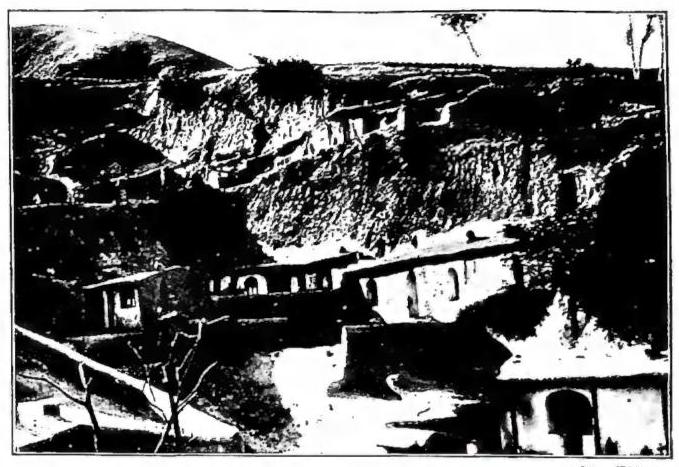
The church of S. is a large Romanesque building, dominated by two towers, and can hold about two thousand people. Adjoining the church are the mission’s works: schools, a seminary, an orphanage, dispensaries, and religious communities. Unlike the great majority of the agricultural Christian communities of this region, S. was not, as a village, founded by the Church. According to tradition, in the first year of the reign of Choent-che, i.e. 1644, a family named Tchang, originally from Moukden, came to settle in this place. Fifty years later, this hamlet already had a considerable group of Christians, who gathered in a chapel and, in a sign of their community spirit, buried their dead in a common cemetery. Later they were dangerously visited by some priests from Peking. During the persecutions of the 18th century they lived as refugees on the mountains surrounding the village of S. In 1836 the Lazarist Fathers founded the first school for boys and subsequently set up a printing press to supply school texts. On 6 December 1865 the Scheut missionaries arrived in Mongolia, led by their founder, Fr. Verbist. With the death of Mgr. Leone de Smedt, who died as a result of the sufferings endured in prison under the communist regime, on 25 October 1951, the mission passed to the Chinese secular clergy. According to statistical data prior to the present communist domination in Mongolia, the missionary personnel was as follows: priests: native 38, foreign 47; major seminarians 14; sisters: native 74, foreign 12.