
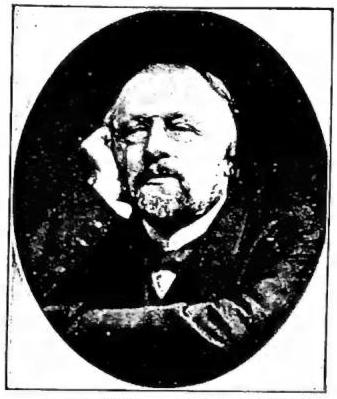
TAIN, HIPPOLYTE — Philosopher, historian, man of letters, and art critic, b. at Vanzier on 21 April 1828, d. in Paris on 5 March 1893.
Having graduated from the École Normale in Paris (1848–51), after a brief period of teaching (1852–53) cut short by philosophical disagreements, he embarked on a long and successful literary career. In 1865, the Liberal Empire called him to teach (aesthetics and the theory of fine arts) at the École Polytechnique; the Third Republic brought him to the Académie Française. In an early phase of his work, he engaged with critiques of classicism (Essai sur La Fontaine et ses fables, 1853; Essai sur Tite-Live, 1856), literature (Histoire de la littérature anglaise, 1863), and art (Philosophie de l’art, 1865–69; De l’idéal dans l’art, 1867). Meanwhile, he developed his critique of spiritualism (De personis platonici [1853]; Les philosophes classiques au XIXe siècle en France [1855–56]; Le positivisme anglais, étude sur Stuart Mill [1864]), which led him to neo-positivism with the work De l’intelligence (1870). Later, enriched by travel (Voyage aux Pyrénées [1855]; Voyage en Italie [1864]; Notes sur l’Angleterre [1872]) and polemical studies (Essais, Nouveaux essais et Derniers essais de critique et d’histoire [1858]), he produced a new critical-positivist form of political historiography, exemplified by his major work (from 1875 onward) on Les origines de la France contemporaine (Ancien régime, Révolution, Empire). Works of autobiographical value include Notes sur Paris and Vie et opinions de Thomas Grandorge (1863–65).
For Taine, consciousness is parallel to human existence as the nervous system is (psychophysical parallelism); it merges with existence into a single neuro-psychic reality. The same connection and identity must be established between knowledge and things. MARCHE (v.) Maxwell (v.) in proposing the fusion of philosophical experience—sensory, intellectual—into a single element, or mental matter, which he identified in images as energetic data capable of composing facts of consciousness and nature and spiritual relations. This analysis exerted considerable influence in psychology (James, Bergson).
According to Taine, art and poetry must be explained, within the historical-naturalistic determination from which they arise, as three orders of causes: race, the natural and social environment, and the moment. The work of art or literature is a necessary product of these causes; only style or technical form highlights dominant characteristics and individual elements, suggested by moral and emotional values and by the power to synthesize ideas and feelings.
Taine applied the same positivist method to the French Revolution, its antecedents and consequences, with great skill as an expositor and narrator, combined with scrupulous attention to gathering particular facts from documentation and weighing their causal relations; yet his syntheses and inductions, perhaps also for political reasons, are today considered arbitrary and one-sided.