
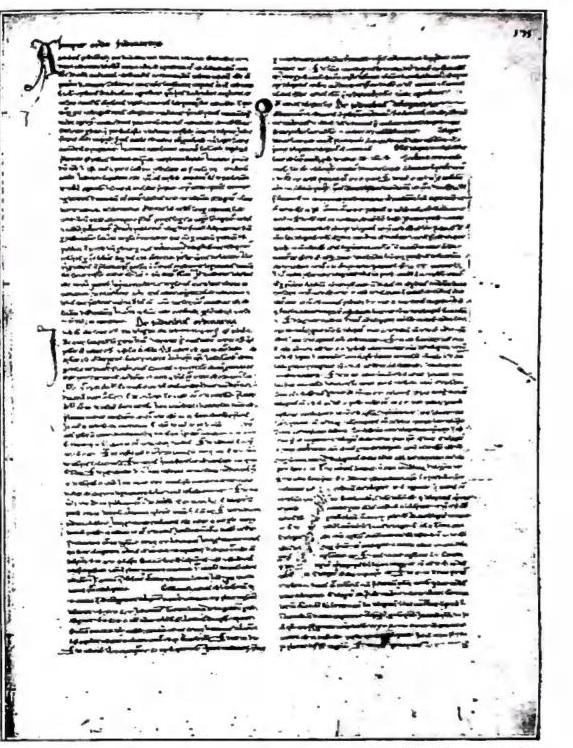
Canon and later archdeacon of Bologna (1226), he is known as a *decretorum magister* from as early as 1214; he was also Grand Chancellor of the University. In addition to teaching, he held numerous trusted assignments from the popes Innocent III, Honorius III, and Gregory IX, particularly to settle disputes and eliminate abuses (e.g., the case with the podestà of Mantua over Massa Fiscalia, the excommunication of the praetor of Florence for the privilege of the forum, the dispute between the archbishop of Ravenna and the city of Cervia, and between the abbot of Nonantola and the bishop of Pistoia). He played a role in resolving disputes within Bologna itself (monks of S. Michele against the Chapter, the bishop against the Canons Regular of S. Salvatore, Bolognese and Modenese, the bishop and the Commune); he was a member of the Commission for the canonization of St. Dominic. When Honorius III published the *Compilatio quinta*, Tancred dedicated it to him, recommending its dissemination and observance in schools and courts.
His genuine works are: *Ordo iudiciarius*, written between 1214 and 1216, reworked by Bartolomeo da Brescia in 1236 (latest ed., ed. F. Bergmann, Göttingen 1842); *Summa de matrimonio*, written between 1210 and 1214 (latest ed., ed. A. Wunderlich, Göttingen 1841); *Apparatus ad Compilationem I, II, III*: the 1st (1210–15) is included in the *Glossa ordinaria*, the 2nd (written before 1215) was revised together with the 1st after 1220, the 3rd (1220) is included in the *Glossa ordinaria*; *Glossae ad Compilationem V*; *Provinciale* (manuscripts in Bamberg and Einsiedeln).