
TUMOR. – From tumor = swelling, more properly called “neoplasm” (from the Greek = new formation), is an atypical proliferation of elements of the organism’s tissues, with autonomous and incessantly progressive development. An essential characteristic of these formations is their tendency to develop at the expense of the host organism, so that they may be regarded as true parasites.
This tendency is not, however, of equal intensity in all t.; indeed, according to their greater or lesser tendency toward this parasitism, they are distinguished into benign tumors, with limited growth, no spread to other sites (metastases), and no recurrence after removal; and malignant t., or “cancers,” endowed with particular aggressiveness toward the host organism and characterized by profound cellular atypia, so that biologically they can be compared only with monstrosities. Atypia in malignant t. is at the same time morphological (with regard to the structure of the individual cells in relation to one another) and biological-functional (since the cells possess a particular metabolism and functions that always differ from the norm). T. must therefore be clearly distinguished from phenomena of hypertrophy (an increase in the volume of cells without a simultaneous increase in their number) and hyperplasia (an increase in the number of cells rather than in their volume), since such phenomena do not always have a distinctly pathological character but may express the organism’s defense or compensation, whereas in their structure they always reproduce the morphological and functional characteristics of the mature cells of the organ or tissue concerned. Nor should the t. be regarded as a purely dysplastic phenomenon (that is, an abnormal transformation of the tissue elements), since it is a new formation rather than a dysplasia; nevertheless, it must be observed that the boundaries between these two phenomena are not absolutely clear and precise, especially with regard to benign t.
Despite the numerous studies conducted, including recently, to clarify the etiopathogenetic problem of t., it may be said that nothing precise is yet known either about the causes or about the mechanism of action of the causes themselves. Thus, alongside a group of scientists who regard the t. as a disease of a single organ or tissue, affecting the whole organism only at a later stage, there are others who consider the tumoral phenomenon a primitive disease of the entire organism, manifesting itself in one organ or another through the direct action of particular factors that are still unknown. Numerous theories have therefore been advanced to explain the genesis of t.; among these, the following should be recalled: Virchow’s irritative theory; the viral theory, that is, the ultravirus theory (which in recent times has gained many adherents); Fichera’s theory of oncogenic imbalance; Cohnheim-Durante’s theory of embryonic remnants; Hansemann’s theory of anaplasia; the hyperkalemia theory; and the theory of vital induction. The discovery that experimental cancers could be produced by bringing the organism into contact with certain substances (dibenzopyrene), and the observation of the existence of occupational cancers (e.g., lung cancer among miners) or voluntary cancers (cancer of the lips or tongue among smokers), had raised hopes that this or that substance capable of determining the onset of t. had been identified. Subsequent studies, however, moderated the initial enthusiasm, especially because of the impossibility of explaining the problem through the exclusive intervention of exogenous factors, and led various authors to regard t. as a disease due to particular predisposing genetic factors (the familial occurrence of cancer is well known), upon which the t. would become established at a given moment in life through the action of particular exogenous factors not yet identified (chemical, physical, parasitic, viral, or dietary). Thus arises the problem of the heredity of cancer. Only certain forms of t. (e.g., glioma of the retina) appear frequently within the same family and demonstrate considerable heritability. In general, it is held that in the case of the other t., although a similar recurrence of the disease among members of the same family does not occur, a predisposing “quid” is nevertheless inherited; some authors thus even speak of a “neoplastic diathesis,” basing themselves principally on certain statistical considerations of undeniable importance: cancer of the stomach would show a preference for the Alpine and Nordic constitutions (according to Nicoforo and Pittard), while others (Benecke and Benedetti) are said to have observed a certain predilection of t. for paracentral individuals (normolinear subjects, slightly macro- or microsplanchnic), with a certain antagonism appearing between tbc and t. A special humoral terrain proper to this diathesis has also been identified: the preneoplastic state or precancerous terrain, characterized by increased cholesterol in the blood and tissues, relative alkalosis, and inversion of the albumin-globulin ratio. N. Pende holds that certain temperaments (v.) are particularly predisposed to t. (the hyperthyroid parasympathicotonic and the hyperpituitary temperament in women).
It should also be recalled that the hypothesis of a certain heritability of cancer has found further confirmation in the numerous investigations conducted especially on cancers in mice. The most probable hypothesis is therefore that some degree of familial predisposition to cancer exists, varying according to the family, sex, and organ affected.
From the epidemiological point of view, it must be observed that no certain fact supports the contagiousness of cancer under ordinary living conditions. At one time people spoke of “cancer houses,” but these are now rejected by almost everyone.
As regards its distribution, cancer must today be considered a ubiquitous disease affecting every race and every age of life, although showing a certain predilection for old age (55–56) years. The W.H.O. (World Health Organization) recently declared that in recent years there had been an increase in mortality, especially from lung cancer. In Italy, recent statistics report that in 1944, 37,495 individuals died of cancer, whereas in 1950 the number of deaths rose to 49,607. Statistics conducted in recent years in the Anglo-Saxon countries have shown that t. are not rare even in childhood. In England, from 1945 to 1947, there were 2,260 deaths from cancer among children under 15, making cancer the second cause of death, after tuberculosis (with 6,075 deaths). In New York, from 1942 to 1948, mortality from t. among children was higher than that from any other cause.
The organs most frequently affected are the lung and stomach in males, and the uterus and breast in females; but it may be said that no organ or system is entirely immune from this disease, apart from the spleen, which, according to most authors, seems to possess oncolytic properties (that is, the capacity to destroy cancerous elements), and therefore would not permit the implantation and development of the neoplasm.
Given the multiplicity of the organs involved, the variety of the macroscopic and microscopic appearance, and the clinical course that this disease may assume—so little known in its intrinsic nature—it is natural that numerous classifications should have been proposed, all, however, more or less incomplete. In addition to the distinction between benign and malignant t., already mentioned above and based principally on the clinical course, t. are classified as vegetating,
plaque-like and ulcerative according to their macroscopic appearance, whereas depending on the tissue affected there may be epithelial, glandular, connective-tissue, endothelial, nervous, muscular, and osseous tumors. The most precise and currently accepted classification, however, is that which employs histological and embryogenetic criteria, based on the derivation of the cells of the various tumors from one or another of the various embryonic germ layers. According to this classification, tumors are divided into: 1) ectodermal tumors, derived from the embryonic ectoderm properly so called; 2) mesodermal tumors, arising from the epithelia of the kidney, adrenal cortex, ovary, uterus, and prostate; from the endothelia of the serous membranes; and from striated muscle fibers; 3) ectodermal tumors of the integumentary and glandular epithelia of the respiratory and digestive systems, tumors of the thymus and thyroid, and of the urinary bladder; 4) mesenchymal tumors, arising from the supporting connective tissues, the vascular and blood-forming tissues, smooth muscle tissue, and undifferentiated mesenchymal remnants; 5) tumors arising from complex embryonic remnants.
At present, certain systemic diseases affecting the blood and hematopoietic organs (leukemias, erythremias) are also included in the large group of tumors, being interpreted as tumors of the bone marrow. The diagnosis of the various tumoral forms is extremely difficult, given the necessity of making it at the first onset of the disease, when the therapeutic means available to medicine today may still be effective. Most malignant tumors, however, apart from those located on the skin and mucous membranes directly accessible to the human eye, produce no characteristic clinical sign until they have reached such a degree of development and dissemination as to render every therapeutic aid useless. This fact today leads physicians and the specialists of the various bodies established, under State auspices, in all nations for the fight against tumors, to detect and combat the so-called “precancerous states,” that is, those chronic alterations with a hyperplastic and dysplastic character, but not yet neoplastic, which often constitute the base upon which, at a given moment, the tumor in the strict sense becomes implanted. Included in this group are certain chronic suppurations, oral leukoplakia, gastric ulcers, warts and verrucae, and cutaneous moles. At the present time, however, the certain diagnosis of a more or less suspected tumoral form can be made only by biopsy, that is, by the histological examination of a fragment of the suspected mass removed directly from the patient.
The problem of tumors cannot in any way be said to have been resolved from the therapeutic point of view. An index published by the National Institute at Bethesda (U.S.A.) and compiled by Dyer reports that, by the end of 1948, more than 5,000 substances had already been tested in the fight against tumors, with results that were more or less negligible. Current therapy is based principally on: 1) physico-chemical means (röntgen or radium irradiation, iontophoresis, diathermy, electrophoresis, fulguration, electrocoagulation); 2) surgical means (early, radical, demolitive intervention, carried out before the tumor has produced metastases); 3) medical treatment; in addition to the ordinary palliative and symptomatic treatments intended to alleviate the organism’s suffering and support the individual, various substances with a cancerolytic and antimitotic action (nitrogen mustards, aminopterins, urethane, sodium cyanate, triplaflavine, atebrine) have recently been tested, though with modest and for the most part temporary results; nor have the attempts made with organ lysates, or by stimulating the spleen with X-rays to produce antiblastic substances, yielded better results.
At the present time, therefore, the problem of cancer must still be considered unresolved, despite the undoubted practical results that have been achieved. A statistic by Smiles (U.S.A.) reports, in fact, that the average survival of cancer patients rose from 60 years (in 1920) to 64 (in 1940). This fact is all the more significant when one considers that cancer affects individuals over 65 years of age in only 0.83 per thousand of cases.
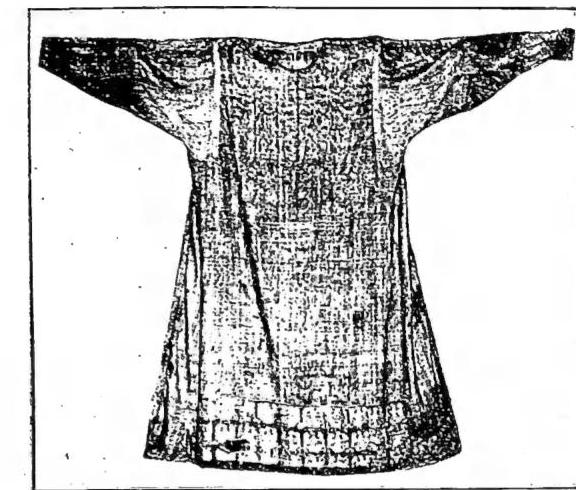
(from J. Braun, Die liturgische Gewandung, Friburgo in Br. 1897, fig. 131)
TUNICELLA — T. of the 14th century, preserved in the parish of Castel S. Elia.
gener., Rome 1949; M. Bufano, Tratt. di patol. spec. med. e terapia, Milan 1949; C. H. Andrews, The bearing of recent works on the virus theory of cancer, in Brit. Med. Journ., 4645 (14 January 1950), p. 81 ff.; G. Vernoni, s. V. ENOCH. Ital., XXXIV, pp. 474–81 and in App., II, pp. 1030–34. Alessandro Marolla