
WENCESLAUS, Saint, Martyr. — Duke of Bohemia, of the Přemyslid family, born c. 907, died at Stará Boleslav on 28 Sept. 935.
Educated in the Catholic faith by his grandmother Ludmila, he took control of the government of Bohemia c. 925; but from the outset he encountered strong hostility from the anti-German party, which was favoured by his mother Drahomíra. Since the spread of Christianity among a people attached to their pagan practices was impossible without the aid of Bavarian or Swabian missionaries, a smouldering hatred grew and developed among the nobles against the young prince. The animosity of the subjects increased further when King Henry I of Germany appeared before the walls of Prague (929) with a powerful army and imposed recognition of his authority. The Germanophobe faction then decided upon the death of the duke, whom they regarded as unpatriotic. Boleslaus, Wenceslaus’s younger brother, invited him to the castle of Stará Boleslav and there contrived his assassination on 28 Sept. 935. Subsequently the unfortunate victim was venerated as a martyr. Feast, 28 Sept.
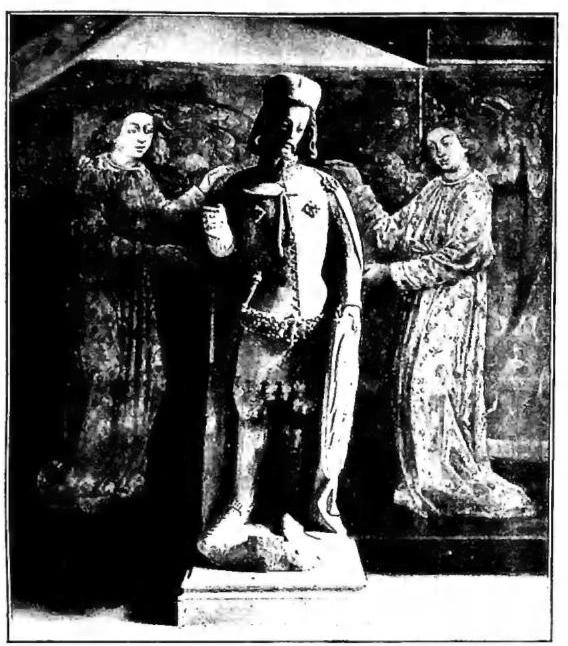
Wenceslaus, Saint, Martyr — Statue of St Wenceslaus by Peter Parler (1373) — Prague, Cathedral of St Vitus.
Urban II, who visited V. from 19 Feb. to 3 Mar. 1098, consecrated on 26 Feb. the altar beneath the Crucifix at the entrance to the choir. The abbey adopted the Maurist reform in 1621. On 9 Dec. 1790 everything was dispersed by the Revolution.