
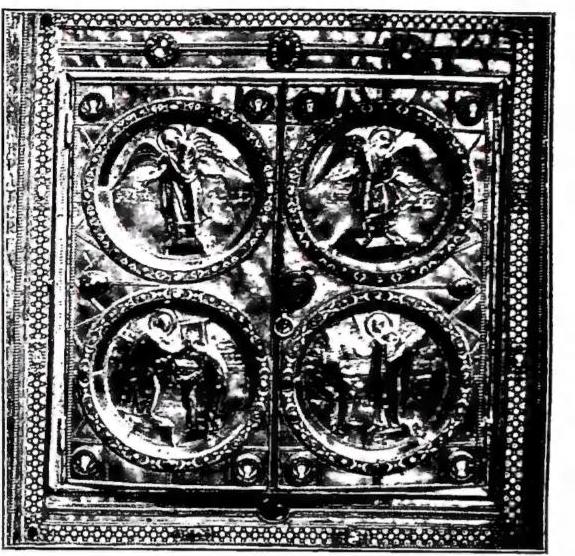
VULVINIO (VOLVINIO). — A goldsmith active in the first half of the 9th century, author of the golden altar, a masterpiece of Carolingian goldwork, offered by Archbishop Angilberto II (824-59) to St. Ambrose of Milan.
This is the four-sided revetment of the high altar, composed of gold and gilded silver plates worked in repoussé and chasing, adorned with enamels, precious stones, pearls, and filigree. On the front side is depicted Christ in majesty between the symbols of the Evangelists and the twelve Apostles, along with twelve scenes from His life; on the rear side are twelve scenes from the life of St. Ambrose and four medallions with the archangels Michael and Gabriel, St. Ambrose crowning the donor, Angilberto, and the author VOLVINI (us) MAGIST (er) FABER, as well as the dedicatory inscription, which has been retouched in places; on the sides, the Cross adored by Angels and Saints. The panels of the Resurrection, Ascension, and Pentecost, removed around 1588, were remade around 1598-99; there are records of other alterations in 1235 and 1337, despite the strict precautions taken for the custody of the altar. While the attempt to date the work to the 12th century can be dismissed outright, the hypothesis that the front may be a later Ottonian (second half of the 10th century) remake, based on suggestive iconographic comparisons, deserves consideration.