
WASHINGTON, ERICH. - Jesuit, entomologist and naturalist, b. at Merano (Tyrol) 29 May 1859, d. at Valkenburg (Holland) 27 Feb. 1931.
Admitted to the Order in 1875, he was forced by tuberculosis to spend long periods in the countryside, where he devoted himself to the study of the life of ants and termites, their colonies, instincts and parasites. Ordained priest in 1888 and attached to *Stimmen aus Maria Laach* as biology editor, he lived from 1892 at Exaeten, from 1899 at Luxembourg, from 1912 at Valkenburg, ever more immersed in his biological studies. The fruit of these labors, besides numerous articles for both popular and scientific journals, included: *Vergleichende Studien über die Seelen der Ameisen und der höheren Tiere*, Freiburg im Br. 1897; *Instinkt und Intelligenz im Tierreich*, 1897; *Die psychischen Fähigkeiten der Ameisen*, Stuttgart 1890; *Die Gastpflege der Ameisen, ihre biologischen und philosophischen Probleme*, Freiburg im Br. 1920; *Die Ameisenmimikry*, 1924. In addition to the scientific merits he acquired in this field, his name is linked to the struggle against anthropological evolutionism and monistic materialism. The work *Die moderne Biologie und die Entwicklungsschule* (1914) caused a great stir; E. Häeckel attempted to refute it in lectures at Berlin in 1915, to which W. replied in further lectures with discussions in Berlin and Freiburg in 1907, not only against evolution and the animal origin of man, but also to demonstrate the harmony between science and faith (cf. M. Wasmann, *Der Kampf um das Entwicklungsproblem in Berlin 1907* [1917]; L. Plata, *Ultramontane Weltanschauung und moderne Lebenskunde* [1917]). The Berlin lectures aroused wide discussion among scientists and exerted a salutary influence not only on Catholics but also on many Protestants, who acclaimed W. as equal to his adversaries in science but far superior in logic. W. granted, it is true, a broad evolution from species to species within the animal kingdom according to its own internal laws; but with regard to the human body he declared Haeckel’s evidence for its animal derivation insufficient, while as regards the spirituality of the human soul he excluded any dependence or connection with matter or with any animal species, however highly evolved. A member of numerous academies and scientific societies, W. was a pioneer in his entomological field and merits the credit of having struck a mortal blow at Haeckelian monism. His printed works number about 750, of which 435 are on entomology.
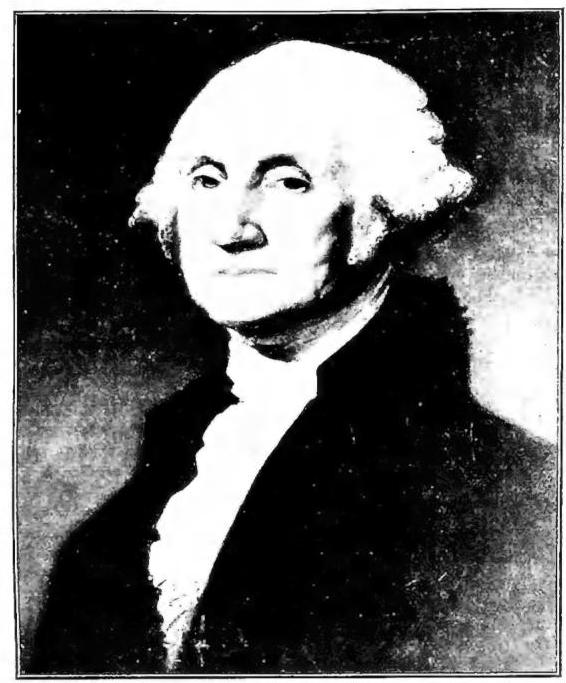
WASHINGTON, George - Portrait, painting by Edward Savage (1790) - Boston, Harvard College.