
ARBITRATO. - 1. CONCEPT
By arbitrato (arbitration) is meant the procedure by which a legal dispute is resolved in an obligatory manner by one or more persons to whom the interested parties have granted the power to resolve II.
In the modern conception of the State, every dispute concerning rights or interests (whether belonging to individuals, moral entities, or de facto associations) is devolved to the competence of ordinary courts or administrative jurisdictions (e.g., the Consiglio di Stato), which issue decisions in accordance with the rules of law contained in the codes or other laws.
The interested parties, however, may agree to entrust the resolution of their dispute to one or more private individuals, known as arbitri (arbitrators), thereby removing the matter from the jurisdiction of the magistrate.
Arbitration allows the parties to resolve the dispute in a swift, rapid, and economical manner with the assistance of arbitrators particularly expert in the subject matter of the controversy, and with the advantage of the confidentiality of the proceedings. This explains why it is frequently resorted to in commercial, industrial, labor disputes, etc., and why it is particularly suited to the resolution of disputes arising in international relations.
2. STATUTORY LAW
In statutory law, there are various forms of arbitration that must be briefly indicated: a) ritual arbitration; b) free arbitration; c) compulsory arbitration.
Ritual arbitration, that is, arbitration conducted in accordance with the norms of the Code of Civil Procedure, must be established by the parties through the stipulation of an act having special formal and substantive requirements, known as a compromesso (arbitration agreement). The procedural norms must then be observed to reach the issuance of the arbitral award, called the lodo (award). This concludes the arbitration, but it cannot take effect unless it is homologated by the judicial authority. The compromesso, the lodo, and the homologation thus constitute the three phases of this form of arbitration envisaged by the Code.
A. FREE ARBITRATION. Alongside the aforementioned strictly ritual form of arbitration, another is recognized in which the arbitrators are empowered to decide the dispute without observing the rules of the Code of Civil Procedure and without the need for homologation of the award by the judicial authority. This form of arbitration is often carried out by delivering to the arbitrator a blank sheet signed by the parties, on which the third party will write their decision. In the event that the free award is not executed by one party, the other may turn to the ordinary judge.
As is easily understood, this form of arbitration, freed from the procedural forms prescribed by law, has developed considerably in recent times, and it is resorted to by broad social categories. In essence, free arbitration, according to the most accredited doctrine, constitutes a judgment based on equity.
A. necessary. In certain cases the law obliges a dispute to be entrusted to arbitrators, thereby removing it from the normal jurisdiction of the magistrate.
This generally concerns disputes in which it is necessary to reach a rapid solution in order to resolve issues of an urgent nature. Indeed, wartime legislation in many cases provided for this form of arbitration, to the extent that it often appeared almost as a form of special jurisdiction.
3. A. IN LABOR DISPUTES. In labor disputes, as well as in matters concerning compulsory social security and assistance, it often happens that the law establishes a prior attempt at conciliation or entrusts the decision to arbitrators chosen from among persons of particular expertise; this may be very appropriate given the technical knowledge required to decide such disputes.
It is well known in particular that the exercise of the right to strike is not infrequently linked to the possibility of resolving labor disputes through special arbitration procedures. Political currents adhering to Catholic social doctrine hold that such procedures should be established by law and that the parties may resort to them for the resolution of collective disputes. They also demand that arbitration procedures be made compulsory when the dispute concerns the interpretation and application of existing legal or contractual norms. This is so that workers may be assured that, once a labor contract is stipulated, its exact interpretation will be given by an impartial body.
4. CANON LAW. The custom of resorting to arbitration in disputes among Christians, derived from the Jews, is found in the apostolic writings (1 Cor., 6, 1-9). The Christian emperors sanctioned the right to resort to the arbitration of bishops in civil cases (1,7, Cod. I, 4; Nov. 123, c. 21); moreover, strictly ecclesiastical causes were very often decided by arbitration rather than by formal judgment (cc. 33, 34, C. II, q. 6, etc.). The Church, accepting this institution from Roman law, also adopted its regulations, sometimes correcting and adapting them to its own spirit (cf. c. 2 de arbitris, I, 21, in 6°; c. 2 de appell., II, 15 in 6°). Canonical legislation on arbitrators remained unchanged from Boniface VIII onward and was substantially reproduced in the Code of Canon Law; thus, the law of the Decretals constitutes the best part of the interpretation of current norms (can. 6, 2°, 3°).
L'a., except in cases imposed by law, takes place only when the persons interested in a matter refer the decision of their dispute to one or more persons other than the judge; compromissio or compromissum in arbitros. Since, however, the compromise is an act that often involves alienation, only those who have free power over the things in dispute can compromise (c. 5, X, de arbitris, I, 43).
Under the legislation in force before the Code, arbiters could be one or more, preferably an odd number (c. 1, X, de arbitris, I, 43); but not all causes could be compromised, nor could anyone serve as an arbiter. Excluded from a. were, in addition to criminal causes: those of nullity of marriage, and of separation of spouses; controversies over benefice titles without the superior's permission; those of restitution in integrum, except in the case of incidence; causes on which judgment had been given; and finally those reserved to the Pope or to other superiors. Moreover, lovers, the insane, the mute, the deaf, wards, minors under twenty years of age, women, and laymen in spiritual causes (except in the
arbitrators or papal mandatories), religious could act only for the utility of their own monastery and with the permission of their superiors, those under canonical interdict, and, naturally, anyone with an interest in the case. The nature of the power belonging to arbitrators chosen by compromise does not appear perfectly clear. Some liken it to the power of delegated judges, but without any true jurisdictional character; it must be noted, in any case, that this power is always limited by the terms of the compromise. Unless otherwise stipulated, arbitrators are bound to follow judicial norms in hearing and deciding the case; but once the sentence is issued, they cannot correct it or execute it, since correction and execution belong to the Ordinary (c. 7, X, de arbitris, I, 43). The arbitral decision was called arbitrium, arbitratum, rarely sentenza, commonly laudum. Acceptance of the compromise by the arbitrators imposed on them the obligation to decide the controversy within the term established by the compromise itself or by common law, while the parties, for their part, were generally bound to respect the award issued. If a special pact or oath had intervened in this regard, acceptance was always obligatory; if instead a penalty had been stipulated for failure to accept, the obligation became alternative, so that, after paying the penalty, the party was no longer bound to accept the award. In any case, however, the mere compromise meant that the recusing party was held ad interesse, i.e., to reimburse the other for expenses incurred or to be incurred because of the compromise. Against the sentence of necessary arbitrators (i.e., those imposed by law) an appeal was allowed (c. 11, diff. ind., I, 14, in 6ᵒ); not so against the award of arbitrators chosen by compromise (cc. 33, 34 C. II, q. 6). If, however, the decision had not been expressly or tacitly accepted by the parties within ten days and appeared gravely prejudicial to one of them, it could be submitted to the ordinary judge for reform according to the advice of a prudent man. Likewise, in cases of enormous lesion or nullity, nothing prevented the parties from asking the ordinary for a declaration to that effect (c. 2, X, de arbitris, I, 43; c. 9, X, de rev. perm., III, 19).
Alongside arbitrators, the Decretals also mention arbitratores, i.e., honest persons freely chosen by the parties to resolve more particularly contractual questions, who pronounce their sentence (arbitramentum) according to the dictates of equity, ex bono et aequo, without being bound to any procedural formalities. And it is precisely in this that the difference between arbitrators and arbitrators consists.
l'obbligo arbitrale le questioni concernenti l'indipendenza, l'onore nazionale, gli interessi vitali, ecc., e che in tempi più recenti si sono andate sempre più restringendo, ma non sono mai scomparse del tutto. L'a. può essere istituito anche da un trattato multilaterale, come il Protocollo di Ginevra del 1924 per il regolamento pacifico delle controversie internazionali, che ha istituito la procedura arbitrale obbligatoria per tutte le controversie di carattere giuridico fra gli Stati contraenti, salvo alcune eccezioni. L'a. può essere istituito anche da un trattato regionale, come il Trattato di Locarno del 1925, che ha istituito una procedura arbitrale per le controversie fra gli Stati contraenti. L'a. può essere istituito anche da un trattato bilaterale, come il Trattato di arbitrato e conciliazione fra l'Italia e la Svizzera del 1924. L'a. può essere istituito anche da un accordo ad hoc, come il compromesso stipulato fra gli Stati Uniti e la Gran Bretagna nel 1903 per la controversia relativa al confine dell'Alaska. L'a. può essere istituito anche da un accordo successivo a una controversia sorta fra due Stati, come il compromesso stipulato fra la Francia e la Germania nel 1921 per la controversia relativa alle riparazioni di guerra. L'a. può essere istituito anche da un accordo successivo a una controversia sorta fra uno Stato e un privato, come il compromesso stipulato fra gli Stati Uniti e il Messico nel 1923 per la controversia relativa ai danni subiti dai cittadini statunitensi in Messico. L'a. può essere istituito anche da un accordo successivo a una controversia sorta fra uno Stato e una società commerciale, come il compromesso stipulato fra la Gran Bretagna e la Persia nel 1933 per la controversia relativa alla Anglo-Persian Oil Company. L'a. può essere
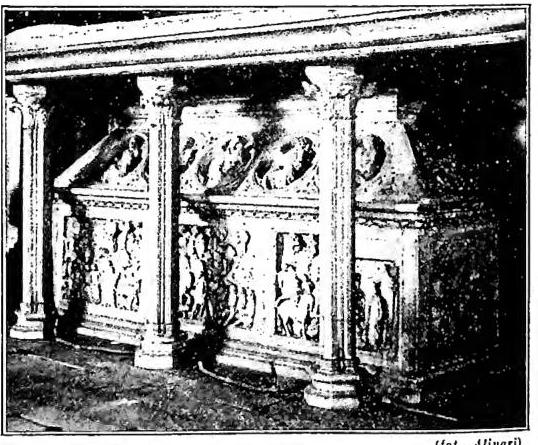
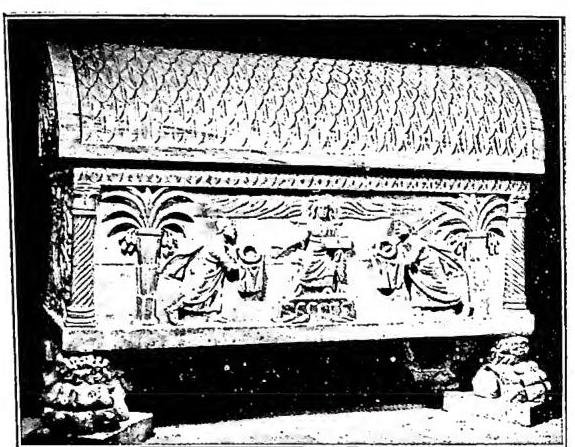
ARK - A. of St. Cerbone, by Goro di Gregorio (14th century). Massa Marittima, Cathedral.
(Int. Gab. fol. naz.)
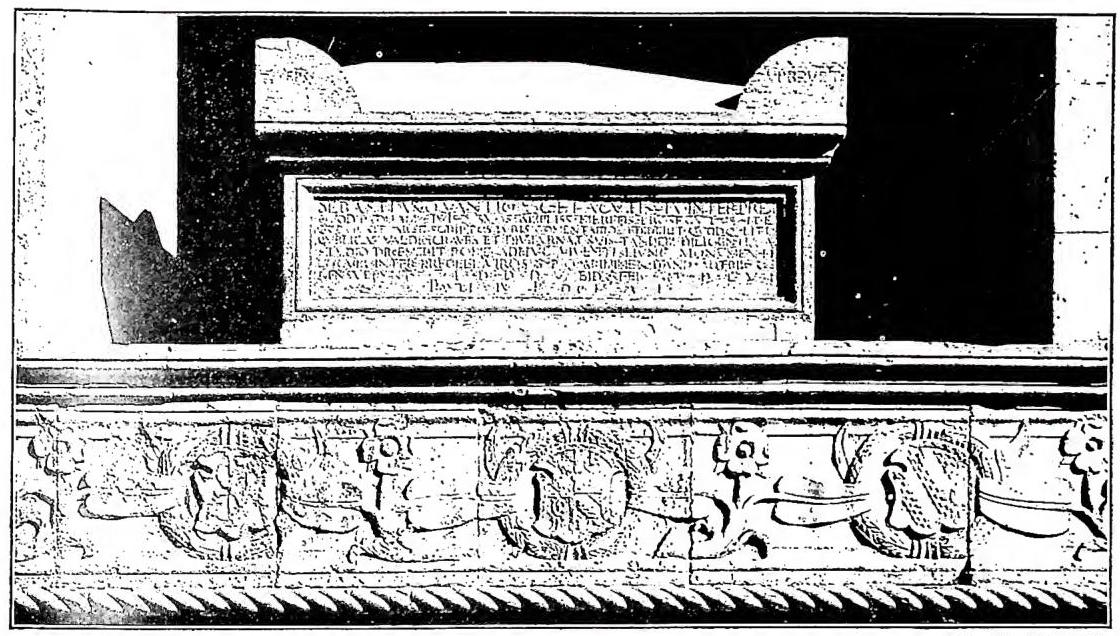
ARCA - A. used in 1556 for the ashes of Sebastiano Vanzi, bishop of Orvieto, but belonging to the 15th century. Rimini, Tempio Malatestiano.
arbitration — The institution of arbitration is based on the idea that the parties to a dispute submit their controversy to a third party, who is placed above them by their mutual consent. The normal task of arbitrators is to settle disputes on the basis of general and particular international law in force, unless the parties themselves indicate the rules to which they must adhere or, as happens in political disputes, request an award based on equity (dispositive judgment). In addition to substantive law, the parties also establish procedural rules (adversarial process, oral debate, representation of the parties, publicity, time limits), the requirements for the award (voting, reasoning), etc. It is not uncommon for the validity of the award to be contested. This usually occurs when the arbitrators have exceeded the limits of the mandate received or have not judged according to the substantive and procedural rules established by the parties (excess of power). The possibility of reviewing the award is frequently provided for in arbitration agreements.