
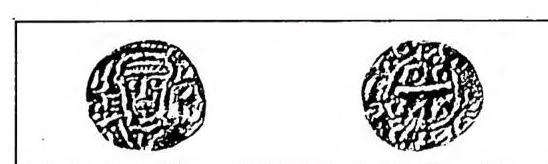
BENEDICT VIII, POPE. — The death of Sergius IV (12 May 1012) provided the opportunity for the two factions that dominated the Roman nobility to test their strength: the Crescentii, who for twenty years had controlled papal elections and imposed or favored Gregory, and the counts of Tusculum, their antagonists who now relied on imperial support and succeeded on the 18th in having one of their own, Theophylactus, the third son of Count Gregory the Prefect of the Fleet, proclaimed pope. The dispute was brought before Emperor Henry II; he gave favorable words to the legates of the Gregorian faction, but Theophylactus, with the help of his supporters, had already established his authority in Rome and assumed the name Benedict VIII. He thus remained the de facto legitimate pope. Henry II entered Italy in late 1013, and together with his wife Cunegonde was crowned emperor by Benedict VIII in Rome on 14 February 1014; on this occasion Henry issued a document to the pope similar to that granted by Emperor Otto, later confirmed in 1020. A synod was also held at this time, but nothing is known about its decisions. Henry returned to Germany; the pope, for his part, led a successful naval and land expedition in 1016 against the Saracens who had seized Luni. As for the rest, it is known that the government of Rome was in the hands of his brother Romanus, "senator omnium Romanorum," and another brother, Alberic.
Benedict was present at a council held in Pavia on 19 August 1018 (Hefele-Leclercq, IV, p. 919), where decrees were issued to reform clerical celibacy; these decrees were later promulgated in Germany as well. At the invitation of Henry II, Benedict traveled to Germany and arrived in Bamberg on 14 April, consecrating the church of St. Stephen there on the 24th. In return, he received lordship over the city and the newly established bishopric. In late 1021, Henry II again descended into Italy, and Benedict accompanied him to Benevento on 3 March 1021, following him in the campaign conducted in southern Italy, where he himself had long supported national claims against Greek rule. The campaign, however, met with little success; Henry returned to Germany, and the pope died in Rome on 7 April 1024.