
DIACONESSA. — The d. were Christian widows to whom, in the primitive Church, liturgical and charitable duties were entrusted.
Already St. Paul (Rom. 16:1) mentions a d., Phoebe di Cenere, whose office is probably also recalled in I Tim. 3:11. I Tim. 5:9–16 seems to enumerate, among the widows deserving honor, the qualities required of a d. (one marriage, 60 years of age). St. Ignatius (Smyrn., 13), in addition to widows, also knows of virgins admitted to the office of d.; later, married women were admitted as well, though they lived in continence and enjoyed high esteem (Epiphanius, Expos. fidei, 21). Toward the end of the 3rd century, the Didascalia, III, reduced the prescribed age from 60 to 50; the Council of Chalcedon (451) and the Council in Trullo (692) required only 40. Widows who had subsequently entered into a second marriage always remained excluded from the office.
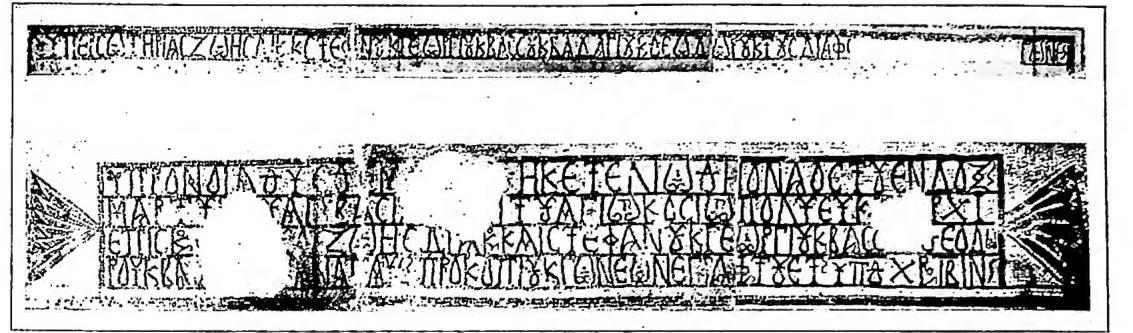
(du M. Al-Yanoh, in The quarterly of the Department of Antiquies in Palestine, II [1917], pp. 63–69)
DIACONESSA - Due iscrizioni musive pavimentali relative ad una d. di nome Zoe; la seconda è datata marzo-ao, 594 e ricorda il concorso della facoltosa d. Zoe per la costruzione della chiesa del martire s. Basilio - Rihāb Hilāl al-'Alī.
lo Spirito Santo «ad digne perficiendum munus sibi commissum». La benedizione, ricordata già nella Traditio Apostolica di s. Ippolito e nelle Constitutiones Apostolorum, 8, 19, era uno dei sacramentali, ma non un sacramento (Concilio di Nicea I, can. 19). Negli antichi rituali della Chiesa greca, la benedizione delle d., come quella dei diaconi, è chiamata cheirotonia. Come i diaconi esse ricevevano la stola e il calice, col quale potevano comunicarsi all'altare e riporlo sul medesimo (J. Morinus, De sucrii Eccl. Ordinationibus, Parigi 1655, pp. 182-92, specialmente pp. 69, 80, 99).
La legislazione degli imperatori cristiani annoverava le d. fra il clero, ma ciononostante la Chiesa orientale ha sempre ritenuto che la benedizione della d. non conferisse una potestà spirituale (così, ad es., la Costituzione della Chiesa egiziana, capp. 37 e 47; la Didascalia sira, capp. 14 e 15; il Concilio di Laodicea, cap. 11; Epifanio, Adv. haer., 79, 3; Const. Apost., III, 9, 3; Ambrosiaster, In I Tim., 3, 11; PL 17, 470).
Gli uffici e servizi delle d. erano in parte estraturgici. Esse prestavano aiuto nella catechesi prebattesimale delle donne e nel loro Battesimo, vigilavano all'ingresso delle chiese dalla parte delle donne, trasmettevano gli ordini del vescovo ai membri femminili della comunità, curavano specialmente le povere, le ammalate, le carcerate, compivano gli obblighi della visita nelle case. I doveri differivano nelle singole Chiese. Presso i Siri e i nestoriani ebbero anche il privilegio di distribuire l'Eucaristia a donne e fanciulli. I loro rapporti con le vedove cristiane non sono ancora bene chiariti. In origine, sembra che fossero una istituzione ascetico-caritativa della Chiesa, però già nel sec. III, prima in Siria, poi nella Chiesa orientale, diventarono due diversi istituti. Quando nell'Occidente il periodo missionario e il Battesimo degli adulti cessarono, anche l'istituto delle d. scomparve.
Per le d. protestanti, V. DIACONIA e DIACONESSA (protestanti).