
DRUIDS and DRUIDISM. – From the Celtic *druis* (dru- augmentative and *tids* "seer": "he who is very wise"); cf. Irish *sui*, Welsh *syc* in the same sense), according to some; from the Celtic *trùa* ("to have confidence," "to believe"), according to others; or, again, from the Indo-European root for "oak" (cf. Greek δοῦς): a Celtic priestly body based on co-optation and training through initiatory practices of an esoteric nature (Caesar, *De bello Gallico*, VI, 14), entrusted with presiding over relations between the people and the deities. To the original esoteric characteristic, which gradually faded, druidism added functions of a social and civil order.
As for the origin of druidism, S. Reinach, M. Pokorny, A. Grenier and others believe they see in it the development of a priesthood among the indigenous populations of Gaul, Britain, Scotland and Ireland, to whom the megalithic constructions are traced; Hubert, Dumézil and others, noting instead in druidism very close contacts with similar Indo-European priesthoods, and that it would be difficult to assert a supremacy of the indigenous peoples in matters of religion uniformly across Gaul, Britain and Ireland, tend rather to place it within the framework of Indo-European religiosity. To these two extreme theses must be added that of D’Arbois de Jubainville, who holds that druidism was brought to England by those first Celts, known as the Goidels and Picts, who settled on the island between 1300 and 800 B.C. The druidic doctrine would thus have found its elaboration in the course of the 10th millennium B.C., from the union of the beliefs of the indigenous peoples with those of the Celts, and would have reached Gaul in the 3rd century B.C., brought by the Belgae, who, driven from their original seats by the advance of the Germans, had arrived, through Gaul, in England and eastern Ireland, whence they would later have brought back to the continent the doctrine learned there.
Gaul in the 3rd century B.C., brought by those Belgae, who, driven from their original seats by the advance of the Germans, had arrived, through Gaul, in England and eastern Ireland, whence they would later have brought back to the continent the doctrine learned there.
Support for this thesis comes from the fact that druidism appears only among the western Celts, and not among those who, before 200 B.C., spread throughout Europe, having as their point of departure the west. The only testimony to the presence of a Celtic priestly body in Cisalpine Gaul before the 3rd century (Livy, XXIII, 24), a priestly body interpreted by some as druidic, would not invalidate the thesis, since relations between the two shores of the Channel must have been frequent even before the settlement of the Belgae. Moreover, it should be noted that the presence of druidism among those bands that, probably starting from the 5th century, began, followed by others throughout the 3rd century B.C., to invade the Balkan peninsula, is to be excluded: the *druidnemeton*, an assembly entrusted with judging murder cases (Strabo, VIII, 5, 1), despite the phonetic affinity and the identity of juridical function, would not, for philosophical reasons, be connected with the druidic institution. And, in any case, it seems logical that such a priesthood must have originated in one place only: either in Britain (*disciplina in Britannia reperta atque in Galliam translata esse existimatur*) (Caesar, *De bello Gallico*, VI, 13), whence the Celts would later have spread it; or in the indefinable cradle of the Celtic race, admitting also, for the second hypothesis, a European center from which the diaspora of the doctrine would have begun.
Literary sources for the knowledge of druidism are classical Greek and Latin authors and the writings of the evangelizers of Ireland. Both groups provide incomplete information; but while the first is valuable as contemporary with druidism and represents a compendium of historical information and an honest attempt at interpretation, the second, both because of the diminished importance of druidism at the time of the spread of Christianity and because of the understandable hostility of the evangelizers, abounds in distortions and inaccuracies, so that it can serve at most as a term of comparison.
Apart from a treatise on magic, already attributed to Aristotle, and the *Succession of the Philosophers* by Sotion (in Diogenes Laertius), discredited for lack of reliability, only Caesar, Diodorus Siculus and Strabo provide trustworthy testimonies. To these (who also drew on the information of Posidonius of Apamea, who had stayed around 100 B.C. in Marseilles and in Gallia Narbonensis) must be added Ammianus Marcellinus, who, though writing in the 4th century, drew on Timagenes (also dependent on Posidonius), author of a history of Gaul written in 14 A.D., and many others.
The course of druidic training lasted twenty years (Pomponius Mela, III, 2, 19). The druids also exercised a teaching office in which the entire youth of the privileged Gallic classes participated. The institution was organized into classes, based on different degrees of culture, dignity and, it may be believed, of initiation. Diodorus Siculus (V, 31) distinguishes the druids into bards, druids and seers: the same subdivision is attested by Strabo (IV, 4, cap. 197, 4), who however speaks of vates instead of seers, Ammianus Marcellinus (XV, 9, 8) and Irish sources. Over the entire complex "one presides" (Caesar, *De bello Gallico*, VI, 13; cf. the *Tripartite Life of St. Patrick*), who, presumably, presided over the general assembly of the Carnutes, when, at a certain time of the year, the druids gathered in a place considered sacred (Caesar, *De bello Gallico*, VI, 13). Such a gathering may have taken place in a forest (Pomponius Mela, III, 2, 19; Lucan, *Pharsalia*, 447-48; Pliny, *Nat. hist.*, XVI, 249), which moderns have identified as that of Orléans on the Loire, or at Dreux, or at Chartres.
Even in Caesar’s time the druids represented a privileged class (*De bello Gallico*, VI, 14): they were exempt from military service and from the payment of taxes. The exemption from military service, rather than as a religious prohibition present also in other priestly bodies, as among the Brahmins, for example, may appear as recognition of the druids’ intertribal function, which made them strangers to internal strife and enabled them, if necessary, to judge a given people, or to intervene in the midst of a battle to separate the combatants (Caesar, *De bello Gallico*, VI, 13; Strabo, IV, 4, 4; Diodorus Siculus, V, 31, 5).
The druids also had judicial functions in disputes, in cases of murder, inheritance, and boundaries. Those who did not respect their sentence were interdicted from sacrifices, a penalty that entailed exclusion from society (in Ireland the exercise of justice fell to the *fili*, corresponding to the vates of Gaul). Moreover, they had the power to appoint the king or other magistrates (Caesar, *De bello Gallico*, VII, 33).
As a distinctly religious activity, the druids attended sacrifices (Diodorus Si
cult, V. V, 31, 3; Strabo IV, 4, cap. 198), practiced with a view to securing larger harvests: an agrarian motive to which the military custom was not unrelated, for the Celts tended to destroy with fire, iron or water all the spoils of war. Caesar (De bello Gallico, VI, 16) and Strabo (IV, 4, 189) speak of a colossus woven from grass and hay, stuffed with men and set on fire. Criminals were the victims of this sacrifice, but in their absence recourse was had to the innocent, perhaps war captives. Before being sacrificed, the victims were kept alive for five years: either to allow their relatives to raise the necessary sum for ransom or because the sacrifices were quinquennial. The immolations were also carried out by shooting the victims with arrows or crucifying them (Strabo, IV, 4, 198). The sacrifices also served a divinatory purpose through the convulsions of the human victims or the manner in which the blood flowed (Diodorus Siculus, V, 31, 2-5; Strabo, IV, 4, 198). Sacrifices were also made to avert death in battle (Caesar, De bello Gallico, VI, 16). In time, the sacrifices for divination were replaced by a rite in which a few drops of blood were drawn from the supposed victim (Pomponius Mela, III, 2, 18).
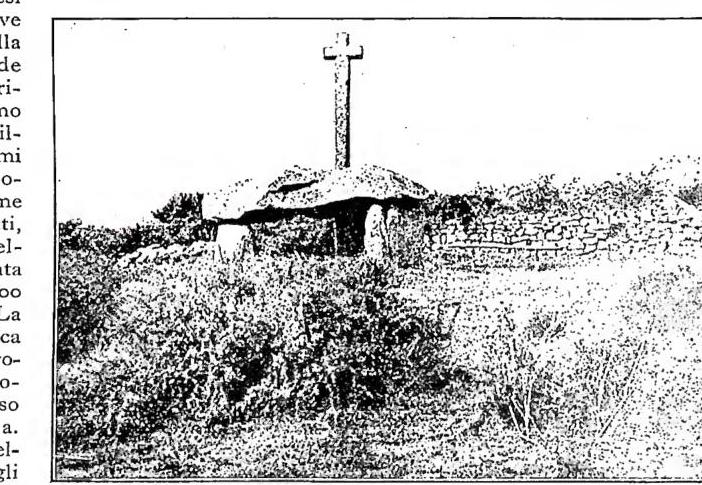
The druids also gathered mistletoe from oak trees (Pliny, Nat. hist., XVI, 249), samolus, selago and other plants whose therapeutic virtues they knew (id., op. cit. XXIV, 103-104). The cult of megaliths, particularly menhirs, also seems attested; the Gauls would have continued to worship them due to the druids’ prohibition against giving anthropomorphic form to the deities. Even in the medieval period in Gaul, the cult of stones persisted in syncretism with Christianity; a cult against which the Councils of Arles (452), Tours (567), Nantes (658) and a capitulary of Charlemagne (789) pronounced.
Among the heritage of beliefs, the most elevated was certainly that in the immortality of the soul (Caesar, De bello Gallico, VI, 14), which reveals a longing for the continuation of life after death and is connected to the theory that even the megalithic monuments were the fruit of a conception of the soul’s survival. Linked to this belief was the Celtic custom of cremating whatever might serve the dead in the next world (Caesar, op. cit., 19; Pomponius Mela, III, 2, 19), the practice of casting letters onto the pyre so that the dead might carry them to those who had preceded him into the beyond (Diodorus Siculus, V, 28, 6) and the lending of money repayable in the next world (Valerius Maximus, II, 6, 10; Pomponius Mela, III, 2, 19). All shared this certainty of immortal life until the day when fire and water would destroy all things (Strabo, IV, 4, 197, 4). Closely connected to this doctrine of immortality was the Gallic belief that they had descended from Dis Pater, the god of the dead, from whom all things begin and to whom all return.
The fortunes of druidism declined with the Roman conquest of Gaul; given the role of national leaders that the druids might have assumed, the Roman state sought to relegate them as far as possible into obscurity. To this end, Augustus, according to Suetonius, forbade Roman citizens from practicing druidism, and Tiberius first, and Claudius later (Suetonius, Claudius, XXV), abolished it entirely. The institution persisted much longer in Britain, where it strenuously opposed the introduction of Christianity.