
JOSEPH
in heaven. In this way the Saint continues in the Church his lofty office as head of the Holy Family, and in the Mystical Body of Christ he carries forward that mission which he fulfilled, together with Mary, in relation to the person of the Saviour. Because of his universality, this patronage has analogies with the spiritual maternity of Mary and her universal mediation in the distribution of graces. Through this exaltation, St. Joseph is also presented as a sublime model of virtue to all men, of every land and condition (cf. the encyclical *Quamquam pluries* of Leo XIII).
**
Popular biographies: S. Giovanni Bosco, *S. Giuseppe, deced.*, Turin 1911; M. Meschler, *Der hl. Joseph*, 3rd ed., Freiburg in Br. 1910 (Italian trans. Rome 1910); J. J. Ouwendijk, *Josef Vater von Jesus*, Utrecht 1940; M. G. Dore, *Giuseppe di Nazareth*, Brescia 1943. See also biblical commentaries on Mt 1-2; Lk 1-2; 3:21 ff. (Knabenbauer, Fillion, Lagrange, etc.), as well as monographs and dissertations on the infancy, genealogies, the “brothers of the Lord,” etc., and mariological treatises on the questions of the Annunciation and of Mary’s marriage to St. Joseph.
**Special questions:** Fr. Patritius, *De prima Angeli legato ad Josephum commentatio*, Rome 1876; O. Bardenhewer, *Maria Verkündigung* (*Bibl. Studien*, 10, v), Freiburg in Br. 1905 (on the marriage of St. Joseph, cf. pp. 120-53); O. Michael, *Dogmatische Abhandlung über die Josephs-Ehe*, in *Theol. prakt. Quartalschr.*, 60 (1907), pp. 319-32; H. Rett, *Die Josephs-Ehe in ihrem Original u. ihrer Nachahmung*, in *Zeitschr. f. kath. Theol.*, 32 (1908), pp. 590-96; E. F. Sutcliffe, *S. Joseph faber lignarius*, in *Verb. Dom.*, 5 (1925), pp. 74-79; id., *Jesus Christus s. Joseph in labore socius*, ibid., pp. 104-109; I. M. Bover, *De cultu s. Joseph amplificando*, Barcelona 1926; R. Petrone, *La paternità divina di s. Giuseppe*, in *Divus Thomas*, 31 (1928), pp. 29-49 (article censured by the Holy Office, cf. *La scuola catt.*, 1928, p. 202 f.); M.-J. Vosté, *Conceptione virginali Christi*, Rome 1933; G. Breynat, *Paternité de St Joseph, 7 Joseph père vierge de Jésus*, in *Rev. univ. d'Ottana*, 6 (1936), pp. 73-80; 8 (1938), pp. 81-111; G. M. Perrella, *B. M. V., cum caelestem accepit nuntium, sancto Joseph sponsalibus solis non vero munitis iuncta erat*, in *Divus Thomas*, 35 (Piacenza 1923), pp. 378-98, 519-31; U. Holzmeister, *Cur Joseph iter hebetumictum susceperit...*, in *Verb. Dom.*, 22 (1942), pp. 263-70; id., *St Joseph père vierge de Jésus*, Montreal 1944; R. Garrigou-Lagrange, *De paternitate s. Joseph*, in *Angelicum*, 22 (1945), pp. 105-15; P. De Ambroggi, *Paternità verginale di s. Giuseppe*, in *La scuola catt.*, 1946, pp. 125-31; D. Frangipane, *Utrum B. V. Maria salutata iam in domo Joseph ut coniux fuerit*, in *Verb. Dom.*, 27 (1947), pp. 99-111; U. Holzmeister, *De nuntii s. Joseph*, ibid., pp. 145-49.
IV. IN LITURGY
The public and liturgical cult of St. Joseph is relatively recent, whereas devotion and veneration toward him are of very ancient origin. The Eastern Church preceded the West in this cult. In the West, from the 9th century the cult was local and private; only from the 15th century did it become public and liturgical.
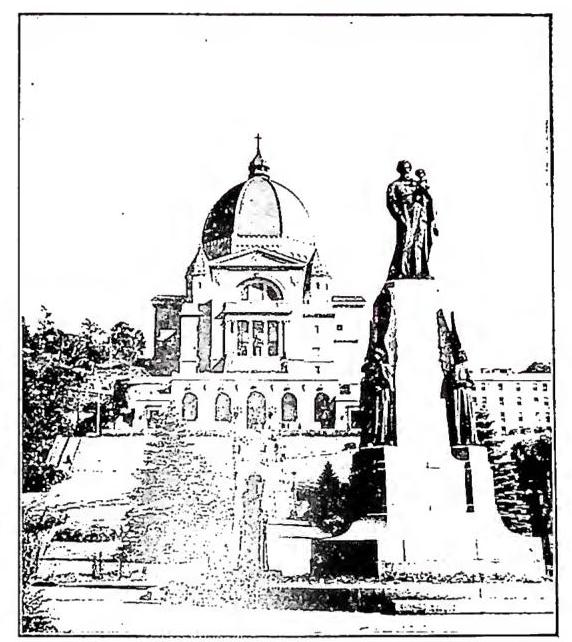
In the East, the earliest trace is found in Egypt. The apocryphal *History of Joseph the Carpenter* of the 4th century (translated from Greek into Coptic-Bohairic, Sahidic, and Arabic; cf. *Évangiles apocryphes*, I [Textes et documents, ed. H. Hemmer and F. Ley], 2nd ed., Paris 1924, pp. 231-232) notes, in chapter 26, 20 June as a day of commemoration; this is also found in Coptic calendars (*Acta SS. Martii*, III, Paris 1865, p. 7, n. 11; cf. A. Mai, *Script. vet. novae coll.*, IV, Rome 1828, p. 15 ff.). Thereafter the sources fall silent until the 11th century, when the *Menologion* of Basil II (976-1025) celebrates St. Joseph on 25 December together with the Three Magi (*Acta SS. Martii*, III, Paris 1865, p. 6), while other synaxaria and calendars commemorate him on 26 December or on the Sunday before or after Christmas, always together with other saints (David, etc.) connected with the birth of Jesus (*Synaxarium*, etc.; Constantinople, *Propyl. ad Acta SS. Novembris*, Brussels 1902, pp. x, 344).
In the West, the abbreviated local martyrologies of the 9th century, for example those of Reichenau (827-42), Rheims, and Trier, list the name of St. Joseph on 19 March (*Martyrologium Hieronymianum*, diplomatic ed. G. B. De Rossi and L. Duchesne; *Acta SS. Novembris*, II, Brussels 1894, Prolegomena, XXIV, nn. 31-34, XXXVII, n. 38, and *Martyrologium Hieronymianum*, p. 152); the same is found in martyrologies of later centuries (Stablo, Verdun, Mantua: *PL* 138, 1195, 1205-1259; Verona, Bibl. Capit., cod. 87, vol. I; B. Mehler, *Der hl. Wolfgang, Bischof von Regensburg*, Ratisbon 1894, p. 163; A. Ebner, *Das Sakrament der hl. Wolfgang in Verona*, p. 173). The Crusades later favoured the spread of the cult of St. Joseph. At Nazareth, the Crusaders erected a basilica in his honour; other churches arose at Bologna (1129), at Alcester in England (1140); in France the church of St. Lawrence at Joinville became a centre of veneration of St. Joseph (1244). His cult spread through the efforts of great saints and theologians, such as Rupert of Deutz (d. 1133), St. Bernard of Clairvaux (d. 1153); and especially in the 14th and 15th centuries with St. Bridget of Sweden (d. 1375), in Spain with St. Vincent Ferrer (d. 1419), in France with Cardinal Pierre d’Ailly (d. 1425) and the celebrated Cardinal Jean Gerson (d. 1429), in Italy with St. Bernardino of Siena (d. 1444), Bernardino of Feltre (d. 1429), P. Bernardino de Bustis (d. 1500), and finally in Spain with St. Teresa of Jesus (d. 1582). At this time, various religious orders inserted the feast of St. Joseph into their calendars: the Carmelites, the Servites (1324), the Franciscans (1399); followed by the Dominicans and the Premonstratensians, while the feast is lacking in the Carthusians, Cistercians, and Cluniacs. All this, however, was still a matter of private cult. But under Sixtus IV (1471-84), the feast of St. Joseph was inserted into the Roman Breviary, printed in 1479 in Venice, as a simple rite, elevated in 1482 to a double rite with nine lessons; the Breviary of 1499 contains a proper Office. Slowly, the feast of St. Joseph was accepted throughout the Church, especially as a consequence of the Tridentine Reform. In 1621 (by decree of 8 May) Gregory XV made it a holy day of obligation. Clement X (1670-76) raised it to a double rite of the second class, and Clement XI (1700-21) ordered (3 Feb. 1714) a new Office, the one currently in use; the three hymns *Te Joseph*, *Caelitum Joseph*, *Iste quem laeti*, were composed by Juan Escalar, a Spanish Carmelite. Then, together with the proclamation of St. Joseph as patron of the universal Church, the feast of 19 March was raised to a double rite of the first class by Pius IX (1870), and the *Codex Iuris Canonici* (can. 1247 § 1) lists it among the holy days of obligation.
In the 17th century a new feast spread, that of the patronage of St. JOSEPH. Many religious orders and many confraternities, for example, of carpenters, chose St. Joseph as their special patron. In 1680 the Carmelites of Italy and Spain were granted the feast of the patronage of St. Joseph on the third Sunday after Easter; the Augustinians followed. In 1721, among the Dominicans, the feast was already endowed with an octave. Princes, emperors, and kings declared St. Joseph patron of their territories: Louis XIV for France, Ferdinand III and Leopold I for Bohemia (1655) and for Austria (1675), Charles II (1665–1700) for Spain and Belgium; the prince-bishops did the same for their dioceses and territories.
The cult of St. Joseph held special importance for the Foreign Missions; for example, for Canada (Urban VIII, 1637; cf. E.-L. Couanier de Launay, *Histoire des religieuses Hospitalières de St-Joseph*, I, Paris 1887, pp. 218–220) St. Joseph was the territorial patron and his feast was the national feast; the same was true for Paraguay, for Madura, for the Mariana Islands, and for China. The 18th century was a century of special devotion to St. Joseph; Pius VII granted the feast of the patronage to the Roman clergy in 1809; Pius IX crowned all this devotion by extending (10 Sept. 1847) the feast of the patronage of St. Joseph to the whole Church (8 Dec. 1870) and declaring St. Joseph “patron of the universal Church.” Pius X (28 Oct. 1913) fixed the date of the feast of the patronage on the Wednesday of the second Sunday after Easter, instead of the Sunday itself, with an octave, having already replaced (24 July 1911) the word “patronage” with “solemnity of St. Joseph, spouse of the Blessed Virgin Mary, confessor, patron of the universal Church.”
A third feast in honor of St. Joseph is the feast of the Espousals of the Blessed Virgin and St. Joseph, commemorated at Chartres at the beginning of the 15th century, recommended by Gerson, adopted and spread by the Friars Minor and the Dominicans on 22 January under Paul III (1537), and moved to 23 January by indult of Benedict XIII (22 Aug. 1725; cf. G. Mercati, *Per la storia della festa dello sposalizio*, in *Rassegna gregoriana*, 5 [1906], pp. 253–58).
Then Benedict XIII (19 Dec. 1726) inserted the name of St. Joseph in the Litany of the Saints; under Pius VII (17 Sept. 1815) the name of St. Joseph was added to the prayer *A cunctis*. Pius X enriched the Litany of St. Joseph with indulgences (18 March 1909); Benedict XV (9 April 1919) honored him with a proper preface (*AAS*, 11 [1913], p. 191), and on 23 Feb. 1921 added his invocation to the “God be blessed,” on the occasion of the 50th anniversary of his proclamation as patron of the Church (ibid., 13 [1921], p. 158).
Pietro Siffrin
V. In iconography
St. Joseph is depicted in the triumphal arch of Santa Maria Maggiore as a bearded man in tunic and pallium; the angel is shown reassuring him according to the text of St. Matthew (1:19–22; Wilpert, *Mosaiken*, pl. 55); he appears again in the scene of the Presentation in the Temple (ibid., op. cit., pls. 57–60); then in the episode of his meeting with King Aphrodisius (ibid., op. cit., pls. 66–68). In the ivory chair of Maximian at Ravenna, St. Joseph is always shown in tunic and pallium, both in the trial of the bitter waters and in the dream, on the journey to Bethlehem, and in the Adoration of the Magi; he was also depicted in the Vatican sacellum of John VII (705–707) in the Nativity, in the Adoration of the Magi, and in the Presentation in the Temple. In the East St. Joseph appears followed by his servants in the representation of the census of Quirinius in the museums of Kahré-djami in Constantinople (Chora monastery; 14th cent.); in the frescoes of Mistra Peribleptos (14th cent.) St. Joseph receives the flowering staff from the High Priest. In the columns of the ciborium of St. Mark he is shown as an old man protecting the Virgin, holding the flowering rod. Of particular interest are the representations of St. Joseph by Giotto in Padua, Taddeo Gaddi in the Baroncelli chapel in Santa Croce, Nicola and Giovanni Pisano in the pulpits of Siena, Pisa, and Pistoia, and Arnolfo in the Nativity scene of Santa Maria Maggiore in Rome. In the cathedral of Limburg (13th cent.) St. Joseph is depicted as the gardener of the divine vineyard.Only in Michelangelo’s “Tondo Doni” in the Uffizi does one find a powerfully expressive depiction of the type in which St. Joseph assumes the character of the head of the household called by God to so sublime a task. At the same time in Germany woodcarvers spread devotional images of the Saint due to Dürer and to the sculptors of the wooden statues of Dottighofen and Brandenburg (1459). By the end of the 17th century a whole series of paintings appears in Spain (Bartolomé González’s *Rest on the Flight into Egypt*, Roelas’s *Circumcision*, Zurbarán’s *Holy Family*) that present St. Joseph almost in the guise of a patriarch of the New Testament with the precise duty of protecting and educating the divine child. At the same time the attributes of the saw and the axe become more clearly defined. This depiction reaches its full form in Herrera’s painting, which shows St. Joseph seated with the child on his lap, and in the numerous works of Murillo, in which the Saint holds the child by the hand or accompanies him. In the large painting in the church of the Capuchins in Cadiz St. Joseph supports the already grown child. In L. G. Carlier’s painting St. Joseph is even crowned by the child. In later depictions, such as those by Tiepolo, the Saint is shown as an intercessor before the Redeemer or as a symbol of human labor duly acknowledged.
VI. IN FOLKLORE
In popular tradition, the spouse of Mary is above all the saintly protector of the poor. The episode that has most struck the popular imagination is that of the holy couple of spouses who, taken unawares in a foreign land as the birth of their child approaches, asks for lodging and is turned away. As a psychological reaction, popular expressions of devotion re-enact the episode in dramatic form, with an ending that soothes the charitable sentiments of the popular soul. In many towns of Sicily, the “banquet” or “invitation of St. Joseph” is customary on 19 March, in which well-to-do families invite the poor to a meal, three of whom represent the Holy Family: a priest, and after him the Child, blesses the table, while the poor are served by the master of the house. In some towns, the banquet takes place in church, and two priests serve while a third preaches. The scene takes on the characteristics and forms of a sacred representation in various localities, not only in Sicily but also in Abruzzo and Apulia. As a symbol of chastity, St. Joseph is also invoked for the protection of unmarried girls. Many graceful lyric-narrative songs evoke the figure of St. Joseph in more or less legendary episodes imagined around the Holy Family. A legend belonging to popular storytelling aims to highlight the great power of St. Joseph in granting graces, but whose method of demonstration (a thief who nonetheless obtains entry into Paradise) is a typical product of the imagination of the common people. The legendary motif is connected to the *Débat du Paradis*, which enjoyed great success in the Middle Ages. St. Joseph is also the patron of carpenters, and the guilds of woodworkers of past centuries were the principal promoters and cultivators of his feast. This feast presents two typical manifestations: bonfires and fritters. In many places, the very ancient custom of March fires coincides with the feast of St. Joseph. Huge piles of wood are collected out of devotion and lit at crossroads and in the squares of towns, especially by boys who, when the bonfires are about to die down, jump over the flames: a reminder of ancient agrarian rites of purification and prophylaxis. The custom of fritters is widespread and not only in Rome, where, however, the feast takes on an exceptional colour and fervour: the bustle centres on the stalls of the fritter-sellers, who have original advertising ideas, including the use of the “sonnet” also mentioned by G. G. Belli.Some customs indicate the feast of St. Joseph as the beginning of the spring season: such, for example, is the custom of Sicilian fishermen who on this day burn their oldest boat, or of the boys of Irti (Littoria) who set fire to the tow of old distaffs while the grandmothers spin around the bonfires. — See pl. LVIII.