
LA MENAIS (from 1834: LAMENNAIS), FÉLICITÉ-ROBERT de. – French publicist and philosopher, b. at St-Malo on 19 June 1782, about two years after his brother Jean-Marie, d. in Paris on 27 Feb. 1854.
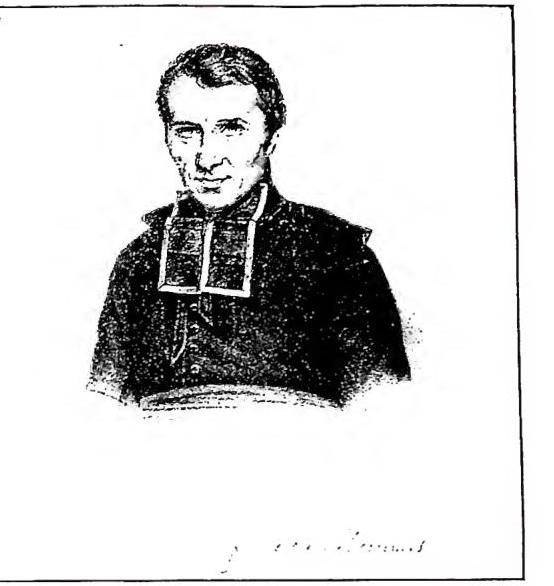
I. LIFE AND WORKS
Having lost his mother in 1787, he was cared for by his aunt, the demoiselle des Saudrais. The circumstances of his early upbringing were marked by the revolutionary disturbances and his own frail health. Moreover, imprudent reading seems to have shaken the faith of his early years. His life then became uncertain and almost unsettled, until in 1804 he was converted through the efforts of his brother Jean-Marie.For the next ten years he worked in collaboration with him, both at the Seminary of St-Malo as a teacher of mathematics and at the estate of La Chesnaie in translating the *Guida spirituale*, and in composing the works *Réflexions sur l'état de l'Église en France pendant le XVIIIe siècle* (1808) and *Tradition de l'Église sur l'institution des évêques* (1814).
To escape the reprisals of Napoleon, who was opposed to him in the *Tradition*, L. M. took refuge in England during the Hundred Days, placing himself under the guidance of the exiled Abbot Carron. The latter exercised a notable influence over him and, shortly after his return (1815), persuaded him to be ordained subdeacon. With a hesitant spirit, he received the diaconate and priesthood in 1816. Then, yielding to the impulse of his genius, he undertook the *Essai sur l'indifférence en matière de religion*, whose first volume (1817), written in dark hours of distress yet powerfully inspired and pervaded with conquering faith, deeply moved the literary and philosophical world.
In the second volume of the *Essai* (1820), he opposed to the philosophy of private judgment his own doctrine of common sense. The book and its apologetic provoked lively opposition, led by the Sulpicians and the Jesuits. Failing to silence criticism through his *Défense de l'Essai* (1821), and anxious to forestall any possible censure, he submitted the work to Rome. The favorable judgment of three examiners and the *imprimatur* granted by the Master of the Apostolic Palace deluded L. M. into thinking that the work was solid and its ideas orthodox. Relying on these approvals, he developed his thesis in vols. III and IV of the *Essai* (1823 and 1825). He attacked “reform,” the Revolution, liberal institutions, and the *Université*. Then, turning to action with a view to “propagating his doctrine and working for the advent of a new Christendom” (Fonck), he employed every means: pamphlets, books, journals, schools, religious congregations. Having been removed from *Le Drapeau blanc*, he collaborated in the *Mémorial catholique* (1824) and circulated in the seminaries the little booklet: *In quattuor articulos declarationis anno 1682 editae aphorismata ad iuniores theologos* (1826); he published in two parts (1825 and 1826) *De la religion considérée dans ses rapports avec l'ordre politique et civil*, a book described by Frayssinous as “terrible in its talent,” soon followed by another entitled *Des progrès de la Révolution et de la lutte contre l'Église*. The government and the Gallican episcopate united to curb his boldness. He was condemned to pay a fine, and the work *De la religion* was confiscated and destroyed; the apologist was then censured in the declaration of 3 April 1826, signed, at the instigation of Mgr. Frayssinous, by fourteen bishops assembled in Paris. The opposition exacerbated L. M.’s ultramontanism. His new platform, after the *Mémorial catholique*, became *L’Avenir* (q.v.), the banner of French Catholic liberalism that had matured with the July Revolution and was inspired by the motto “God and liberty.” Yet during the thirteen months of the newspaper’s existence, L. M. was more than once warned that he would incur the censures of Rome if *L’Avenir* did not modify its ideas, especially regarding popular sovereignty and insurrection against sovereigns. He then consented, though without enthusiasm, to go to Rome “to consult the Lord in Shiloh” (1831). Gregory XVI, in reply to the memorandum presented by L. M., Lacordaire, and Montalembert, announced that he would have their doctrines examined and at the same time advised them to return to France. A little later he received them kindly but wished that during the audience no allusion should be made to the reason for their journey. L. M. remained in expectation, unaware that what was expected of him before speaking was his departure from Rome. On his return journey, at Munich, he was handed the encyclical *Mirari vos*, together with a letter from Cardinal Pacca listing the principal charges against *L’Avenir*: 1) the editors had arrogated to themselves the right to treat and decide publicly on most delicate questions concerning the government of the Church, which were the exclusive competence of the Holy See; 2) their ideas on civil and political liberty, disapproved by the Pope, were such as to foment the spirit of revolt and sedition; 3) on the freedom of worship and of the press the editors professed opinions not only blameworthy but contrary to the teaching and practice of the Church; 4) they had gone beyond all bounds in the grief of the Holy Father by proposing the “Act of Union” to all who hoped for the freedom of the world and wished to bring it about. The papal document had, by way of defense, named neither L. M. nor *L’Avenir*. Yet this is no reason to diminish the force of the encyclical, which condemned and censured heterodox doctrines rather than merely reproving imprudent actions.
On his return to France, L. M. hastened to announce that the editors of *L’Avenir*, “respectfully submitting to the supreme authority of the Vicar of Christ, were withdrawing from the lists and urgently inviting their friends to give a like example of Christian obedience” (10 Sept. 1832). Thus began a period of crisis lasting two years. After the act of submission came hesitations, distinctions that seemed to cast doubt on the exact interpretation of the encyclical, the first religious doubts, the publication of *Paroles d’un croyant*, the shipwreck of his faith, and, as a fatal conclusion, apostasy.
May the sincerity of the declaration of 10 Sept. 1832 be doubted? Indeed, many opponents of L. M. voiced suspicions, so that in *Affaires de Rome* he wrote: “Scarcely had our declaration been published when murmurs of mistrust and discontent were heard on all sides. It was not sufficiently complete or explicit; it too much recalled the respectful silence of the Jansenists. Intrigues were fomented, calumnies spread, timorous souls were disturbed by charitable falsehoods uttered in tones of sorrow. Then came direct provocations, insults, and public outrages.” Gregory XVI himself, misled by well-meaning reporters, declared in his brief of 5 Oct. 1833 to the Bishop of Rennes: “We have received a letter from the same L. M., published in the newspapers (*Journal de la Haye*, 22 Feb. 1833, no. 16), which has necessarily gone beyond the measure of our affection, since it is clear proof that he still retains and upholds the ideas he had hoped he had forever abandoned.” Yet the letter to which reference is here made, recently discovered in the manuscript office of the Royal Library of Brussels (ms. II, 5488, vol. V, no. 117), was written at Rome on 10 July 1832, that is, six weeks before the encyclical *Mirari vos*, seventy-two days before the editors of *L’Avenir* adhered to it; it is therefore impossible to regard it as contradicting the act of submission of 10 Sept., or to use it to reproach L. M. with obstinacy in error.
After the censure of Toulouse and the brief to Mgr. d’Astros (8 May 1833), L. M. notified the Pope that he would in future remain entirely aloof from ecclesiastical affairs.
(4 Aug. 1833). Following the brief of 5 Oct. to the Bishop of Rennes, he delimited the scope within which he intended to restrict his obedience. Finally, on 11 Dec. 1833, he subscribed to a fourth and final declaration, the text of which had been proposed on 5 Oct. At the same time, he decided to suspend all priestly activity.
The following year, specifically on 30 Apr. 1834, when his faith—long wavering in his soul—was flickering its last embers, he published a book “of small size but immense perversity” (Gregory XVI) entitled *Paroles d’un croyant*.
The encyclical *Singulari nos* of 15 July 1834 condemned the pamphlet, the system of common sense, and—once again—the liberal doctrines of L. M. As he refused to submit, he left the Church and aligned himself with its adversaries. From then on, he also altered his surname, adopting the plebeian form *Lamennais*. He thus began a new life, chiefly political, dominated by sociological concerns, and marked by some literary and philosophical expressions.
L. M. responded, during the summer of 1834, to the criticisms aroused by *Paroles d’un croyant* with the article *De l’absolutisme et de la liberté*, included in the *Revue des deux mondes*. In 1835 he published *Trois-sèmes mélanges*, prefaced by an elaborate introduction which, reprinted in the complete edition (1844) under the title *Du catholicisme dans ses rapports avec la société politique*, was regarded as the public and definitive act of his schism—not only from the Church but also from Catholicism.
In 1836–37 he issued *Affaires de Rome*, a literary masterpiece of self-defense, containing some pages of rare naturalness and grace. Therein he recounts his conflicts with the Holy See regarding *L’Avenir* and *Paroles d’un croyant*; he wished “this brief writing to be considered as intended to close the series of those published over the last twenty-five years.”
From this point onward, L. M. became nothing more than the moralist, philosopher, and polemicist of democracy. In 1838 he published *Le Livre du peuple*, a treatise on morality or catechism taught by a priest who, according to Mazzini, had preserved intact only his faith in Christian morality; and *Politique à l’usage du peuple*, which gathered articles written for the newspaper *Le monde*. In 1839, *L’Esclavage moderne*, a vehement Catilinarian denunciation of the proletariat’s subjugation to an unjust society; in 1840, *Le pays et le gouvernement*, a harsh satire of the July Monarchy, for which he was fined 2,000 francs and sentenced to twelve months in prison. While imprisoned, he collected and published *Discussions critiques*, inspired by resentment toward his conviction and directed chiefly against the Church. Upon release, he issued two pamphlets: *De la religion*, a collection of brief formulas presumably intended by the author to become the catechism of the future, and *Du passé et de l’avenir du peuple*, which sets forth his spiritualist theory of progress—“as imagined by L. M., constant and indefinite, of which Christianity is but a single phase.”
*Esquisse d’une philosophie*, an undertaking of primary importance in L. M.’s intentions (planned as six volumes; four appeared: three in 1840 and the fourth in 1846), was judged by Abbé Boutard as “the impotent struggle of a great mind adrift after his faith had foundered” (quoting Scripture: “his faith hath suffered shipwreck”) (*Œuvres complètes*, III, p. 317), while Jules Simon saw it as “the effort of a great spirit to systematize doctrines whose radical impotence no stylistic decorum can conceal” (*ibid.*, p. 316).
L. M. remained preoccupied with social questions until the end; this concern is evident throughout *Amischaspands et Darvands* (1843) and even in the notes and reflections appended to his translation of the Gospels (1846).
The Revolution of 1848, which he had foretold as inevitable, brought him bitter disillusionment. Though elected deputy for Paris and a member of the council charged with drafting a new constitution, his advice was rejected and his social-organization projects shelved. L. M. expressed his disillusionment in the newspaper he edited, and after the coup d’état of 2 Dec. 1851...
(through the courtesy of Brother Ippolito Vittorio) *La Mennais, Félicité-Robert de* “Esaltazione del papato, conclusione autografa della *Tradition de l’Église sur l’institution des évêques*,” III, Liège–Paris 1814, pp. 407–409 – Jersey, Archive of the Brothers of Ploërmel.
L. M. fell ill on 16 Jan. 1854. His circle, dominated by a certain Auguste Barbet, vigilantly prevented any contact between the patient and the priests who attempted to visit him. He died without showing the slightest sign of repentance. His body was interred in a common grave at the Père-Lachaise cemetery. When asked whether a cross should be placed on the grave, Barbet replied: “No!”
**Philosophical and Theological Doctrines.** — 1844 marks, in L. M.’s life, the year of his secession, which sharply divides the works and doctrines of the Catholic priest from those that followed in his unfaithful period. Before 1844, L. M. was: 1) an apologist, 2) an opponent of the doctrine of common sense, 3) an Ultramontane, 4) a liberal, 5) a leader of social Catholicism; after 1844, he became: 6) a democratic spiritualist and then a socialist, 7) a rationalist and pantheist.
L. M. reproached traditional theology for confining itself to the conventional proofs of Christianity, which, in his view, were meant merely “to impress minds,” and he established the principle: “Since reason has declared itself sovereign, it must be confronted directly upon its throne and forced to bow—under penalty of death—before the reason of God.” In this way he overturned the foundations of apologetics: no longer was it a matter of reaching faith through reason, but rather of reaching reason through faith. On this basis, L. M. attempted to ground Christianity in the universal beliefs of humanity. Meanwhile, he attacked systematic indifference, holding it responsible for social unrest; seeing in it not an affirmation but a negation of doctrine, he grouped dogmatic indifferentists into three categories: those who do not believe religion necessary for the people; those who admit the need for a religion for all mankind but reject Revelation; and those who, while acknowledging the necessity of a revealed religion, accept only its fundamental articles while allowing the denial of others. L. M. warned all such indifferentists—who, to justify their stance, proclaim truth inaccessible: “There is no peace for the intellect unless it is certain of possessing the truth; there is no peace among peoples unless they are conscious of obeying order.” In this way he implied that, for him, the problem of certainty underlay both the religious and the social question. But on what foundation was this certainty to be established?
2. — On Common Sense, that is, the unanimous testimony of the human race. L. M. first “decomposes” individual reason, finding in it three main elements: the senses, the feelings, and the rational faculty; he then describes, in his own way, their functioning and value, observing that they are imperfect instruments, but since their imperfections vary from individual to individual, their consensus on a point constitutes a more or less relevant proof of truth depending on the number of testimonies. Isolated, the testimony offers only a simple probability; innumerable, it determines instead an absolute certainty. It cannot, in truth, deceive when expressed by the voice of the human race, assuming a universal character. Thus, considered individually, man cannot know with certainty; but considered collectively, he can know something; that is, individual reason is powerless, not so the common, general, universal reason. Hence the name “doctrine of common sense” or “of universal consensus” given to this singular system, in which two terms so distinct as *sensus* and *consensus* are confused. L. M. has taken the effect for the cause and vice versa: “There are truths on which all agree; therefore the consensus of all is for each the sole criterion of certainty.” Here lies the error in its full extent, Balmès points out. Had he delved deeper into the subject, L. M. would not have fallen into this grave mistake. The certainty of the individual does not derive from general consensus; rather, the consensus is general because each individual succeeds in expressing II.
3. — In *La Tradition de l'Église sur l'institution des évêques*, L. M. outlines his ultramontane thesis on the prerogatives of the Holy See, the indefectibility of the Roman Church, and the infallibility of the Pope; yet while basing the foundation of papal jurisdiction on authority, he sets a limit to it, for he does not yet believe in the indirect power of the popes over kings in temporal matters. He thus engages in and sustains a struggle against Gallicanism, of which he will become the “gravedigger” (P. Lasserre).
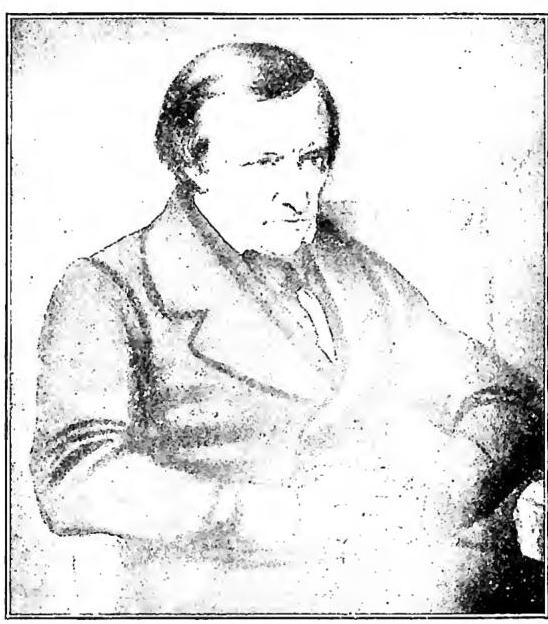
A passionate, ardent struggle, accelerating within the Church of France the return to Roman doctrines. He boldly combats the Declaration of the Four Articles of 1682, rejects in 1824 the limitation to the indirect power of the popes previously formulated; then he defends, with a sometimes excessive inflexibility of principles, the doctrinal thesis that upholds the convenience and necessity of the union of Church and State: “Without the Pope, no Church; without Church, no Christianity; without Christianity, no religion for all the people who were Christian, and thus no society; so much so that the very life of nations derives from pontifical power.”
4. — L. M.’s slide toward liberalism was evident in 1829. In the work *Des progrès de la Révolution*, he advocates “the union of order and freedom”; once spiritual unity is cracked and the unity of faith shattered, the tolerance of opinions appears an evident social necessity. It would be “folly” to claim to be able to “bind the spirit in chains” and gag thought. Only a regime of freedom can ensure the desired security for Catholics. And since L. M. is convinced that the Revolution will consummate the split between State and Church, he hopes that the latter, separated from the State, will draw near to and go to the people. “The true support of the Church is the trust of the weak whom it protects; its power, their love.” He was announcing, if not invoking, the disappearance of institutions which, “once the breath that animated them at the origin has expired, now diverge from the true interests of the people.”
5. — After the July days of 1830, L. M. founds *L'Avenir* with the motto “God and Liberty,” becoming the first exponent of liberal Catholicism in France. He opines that the Church, like civil society, undergoes transformations which, while not altering the divine element inherent in it, indicate that it must adapt to the genius of peoples as well as to the necessities of the times. Indeed, every decisive turn of humanity is determined by an evolution of the Church. Its hour has come to free itself; but it cannot be free before having separated from the State: a separation moreover already begun by the State itself. It is therefore urgent to claim religious freedom, freedom of education, that of persons and goods, that is, the enjoyment of rights without which society cannot even be conceived: claims which presuppose freedom of the press. Then, amidst the chaos established by the subversion of the ancient order, Christianity “will raise up another society, which will still and always be nothing other than the expression of the stage to which humanity has attained through progressive evolution under its influence; this development being intellectual and moral, which brings and necessitates an adequate progress of freedom” (*L'Avenir*, Dec. 20, 1830). Within these lines, in embryo, lies the entire theory of liberal Catholicism.
6. The condemnation of *L'Avenir* determines the crisis that was to overwhelm L. M.’s faith. “I believe that the Church cannot remain as it is, that what is human and divine in it has never been clearly distinguished, and that everything is preparing for its transformation” (letter to Montalembert, Jan. 1, 1834). He therefore abandons it with the pretense of reconstructing, but always through Christianity, the spiritual unity of the human race; then, estranged from the Roman Church, though still a member of that “eternal Church whose earthly life is not bound to a single form,” he devotes himself to the education of “spiritualist democracy,” sustained by the thought that the total sacrifice of himself will not be in vain for the progress of humanity. At first he incites the people to revolt. Should one object that this was not L. M.’s intent when writing *Paroles d'un croyant*, one need only reflect, with Bellessort, on how dangerous it is to divide humanity into two classes: “those who possess everything and have all the vices; those who possess nothing and have all the virtues.” Finally, L. M.’s thought culminates in socialism, the end of his politico-religious evolution, which is logical, since he had always admitted that a certain popular sovereignty emanates from that essential sovereignty of God.
When the encyclical *Singulari nos* denounced as rash and dangerous the philosophy of "common sense," L. M., stung to the quick, re-examined his traditionalist ideas and moved over to rationalism. Formerly he had denied all value to individual reason; now he openly professes that reason alone has the right to judge, and it is no longer possible to defend the faith. On analyzing it, he discovers two fundamental prejudices: "the idea instilled early that one could not, without offending conscience, doubt the teaching imparted by an authority deemed infallible; and the opinion, accepted by ignorance and developed by clerical culture, of a really existing otherworldly order. Neither prejudice withstands the test of reason, since the authority consulted 'dies if it answers'; and the very notion of the supernatural vanishes and disappears as soon as man, having deeply investigated the laws of nature, recognizes that such a notion does not and cannot correspond to any reality." (G. Boutard [V. BIBLICA.], III, p. 141). He declares the hypothesis of a supernatural Revolution to be illusory, even useless; is not reason sufficient unto itself for all it needs to know? He does not even trouble to examine the fact on which, ultimately, Catholic faith rests; and yet he declares himself to believe in God, in the immortality of the soul, in future sanctions: nothing more, or almost nothing. Should we exclude belief in the divinity of Jesus Christ on L. M.'s part? His *Esquisse d'une philosophie*, an unfinished work, is permeated by the idea of the Trinity and that of evolution. There is a continual concern to harmonize theological conceptions with personal observations. The author denies the existence of evil and rejects the thesis of original sin, the Incarnation, the Redemption, and Grace. If, in antithesis to pantheism, he appeals to the theological dogma of creation, he interprets it in such a way as to fall into the very error he claims to refute. Two attractions then contend for the author's soul: logic drives him to absolute rationalism; sentiment holds him back in a pious pantheism.