
MONTE FELTRO, DIOCESE OF. - Suffragan of Urbino; since 1563 the episcopal see has been at Pennabilli, in the province of Pesaro.
The diocese covers 800 sq. km. with a population of 70,000 inhabitants, all Catholic, distributed among 123 parishes served by 125 diocesan priests and 32 regular clergy; it has a seminary, 10 male religious communities and 20 female ones (1949).
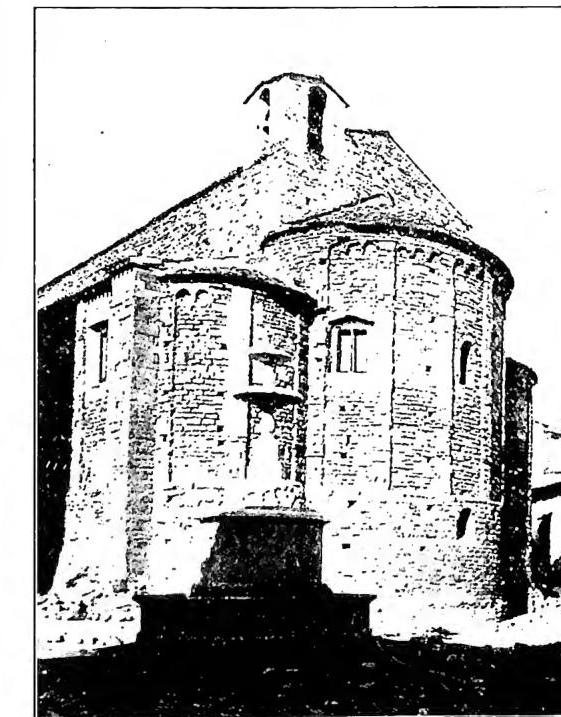
The region designated by this historic name does not correspond to any civil administrative district, since it comprises parts of the Marches, Romagna, and the Republic of San Marino; more precisely, it corresponds to the territory of the present diocese, known precisely as the diocese of Montefeltro.
According to the legendary lives of SS. Leo and Marinus, the former is said to have founded a church and monastery in Montefeltro, the latter on Mount Titano. While it is not easy to trace the origins of these two sanctuary-monasteries to the 4th century, the foundation on Mount Titano (San Marino) is certainly from the 5th century (Eugippius, *Vita Severini*, I, MGH, *Auct. antig.*, I, 1), while the earliest records of the monastery of St Leo date from the 9th century. The latter was mistakenly identified as the see in the *Life of St Mercurialis* (BHL, 5932), a late 11th-century document; in reality, the first certain bishops of Montefeltro do not predate the 9th century. Made suffragan of Ravenna by Pope Gregory V in 997 (Jaffé-Wattenbach, 3878), they resided at San Leo, where they had the cathedral dedicated to the same saint erected. Later the see was transferred to other centres, as is evident from various episcopal charters: Valle S. Anastasio (S. Anastasius de Valle) and Talamello; here they remained for more than a century, and Bishop Giovanni Sclani (1413–44) built a residence and an artistic oratory, frescoed by Antonio da Ferrara (15th century) and still preserved (O. F. Tenacioli, *La cella dipinta da A. da Ferrara a Talamello nel M.*, in *Urbium*, 2 [1928], pp. 171–84). During the episcopate of G. F. Sormani (1565–1601), Gregory XIII, by the bull *Aequum reputamus* of 23 May 1572, transferred the see to Pennabilli, erecting the collegiate church of St Bartholomew as the cathedral and uniting it in perpetuity with the ancient cathedral of San Leo. Sormani is remembered for his zealous implementation of the decrees of the Council of Trent, for the diocesan synods held at Pennabilli, San Marino, Macerata Feltria, and the abbey of Valle S. Anastasio, and for founding the seminary. A Franciscan of this land, Matteo da Bascio (1495–1537), gave the first impulse to the religious reform of the Capuchins.
At the first establishment of the Papal States, the *castellum* of San Marino belonged to it (756); in the 11th century the emperors recognized Montefeltro as belonging to the Roman Church. The subsequent political history of the region is closely bound up with that of the notable family that took its name: the Montefeltros. Descended from a branch of the older family of Carpegna, the counts of Montefeltro were independent by the 12th century and occupied San Leo and Urbino in the 13th. In the struggles between Ghibellines and Guelphs they sided with the Ghibellines (cf. Dante, *Purgatorio*, V, 85–129). After being reconciled with the Church, they were recognized as lords in the reorganization of the Papal States by Albornoz (1355), and the region of Montefeltro retained its parliament and administrative autonomy. In the 15th century the lordship attained great splendour under Federico, who became Duke of Urbino (1474), but Montefeltro shared the sad vicissitudes of war and political change characteristic of that period (15th–16th centuries). With the extinction of the Montefeltro dynasty upon the death of F. Maria della Rovere (1508), Montefeltro followed the fortunes of the Duchy of Urbino, which definitively reverted to the Holy See in 1631. In this latter period San Leo became notorious as the state prison where, among others, Count Giuseppe Balsamo (Cagliostro, d. 1796) was imprisoned and died.
MONASTERIES: ancient is that of the Holy Trinity; S. Agata del Monte Ercole, founded in 997 and passed to the Camaldolese in 1153; S. Anastasio de Valle, transferred in commendam in the 15th century to the bishops of Montefeltro, who assumed its title; S. Salvatore (9th century); S. Severino, annexed to the episcopal table in the 12th century.
MONUMENTS: the ancient parish church of San Leo, dedicated to the Assumption of the Blessed Virgin Mary, enriched by the munificence of Duke Orso, housed the body of St Leo and was perhaps the ancient cathedral. It was built and completed in the years 881–82, as attested by an inscription from the remains of the ciborium erected by «Ursus peccator dux» in the time of Charles the Fat (881–87) and John VIII (872–82). The exterior, well preserved, displays a decoration of pilasters on the sides, arches and pilasters in the three apses. Typical are the capitals of the ciborium, with two orders of volutes, which are the finest examples of their kind.
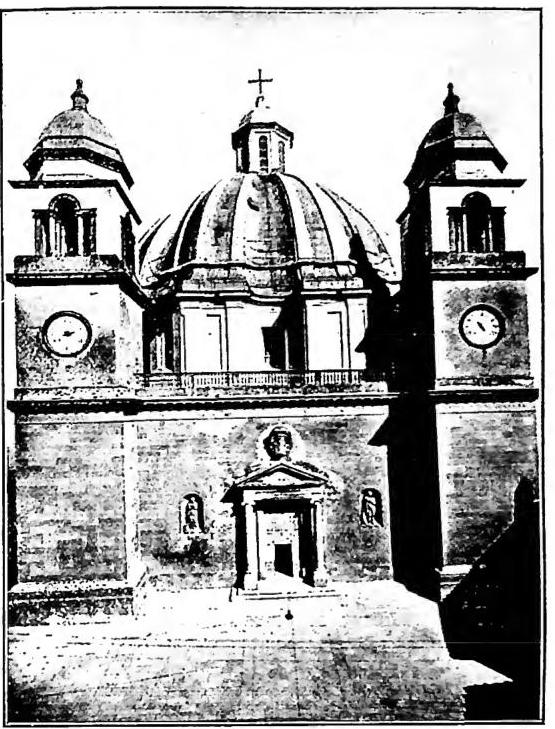
Continuous discoveries have attested that where Montefeltro stands there was an Etruscan city not yet identified. Nor has the etymology of Montefeltro been precisely determined; it ranges from a derivation of the highest classical antiquity to a prosaic allusion to the flasks of its renowned wine. In the Middle Ages the settlement developed more extensively in the lower part, adjacent to the Via Cassia, around the church of St Flavian, whose Romanesque parts date from the 12th century. Its interior, recently restored with great success by the Superintendency of Monuments of Lazio, consists of two superimposed churches and is of high architectural interest.
The earliest notice concerning Montefiascone is a privilege of Leo IV to Bishop Virbonus of Tuscania, dated 852, which Innocent III inserted in a letter of 12 October 1207 (PL 215, 1234).
Urban IV (1261–64) built the fortress for his residence, which was also cared for by his successors, and during the Avignon exile it served as the seat of the rector of the Patrimony of St Peter.
Until 1369 Montefiascone belonged to the diocese of Bagnoregio, when Urban V, on 30 August of that year, by the bull *Cum illius*, erected the diocese of Montefiascone, taking territory from the surrounding dioceses of Castro, Viterbo, Tuscania, and Bagnoregio. The first bishop, however, was not appointed until seven years later, in 1376, owing to the precarious conditions of the Holy See in Italy. It was the Augustinian Pietro Arzensi, who had the misfortune to follow the antipope Clement VII and was therefore deposed by Urban VI two years later. In 1436, Eugene IV, by separating the city of Corneto from the dioceses of Viterbo and Tuscania, revived the ancient episcopal see of Tarquinia and united it with Montefiascone. This union lasted until 1854, when Pius IX united Corneto (Tarquinia) with Civitavecchia.
Among the bishops of Montefiascone, the figure of Cardinal Marcantonio Barbarigo (1687–1706) stands out; he founded the celebrated seminary «Barbarigo» and promoted the Institute of Schools for poor girls. Montefiascone is immediately subject to the Holy See. - See pl. XCIII.