
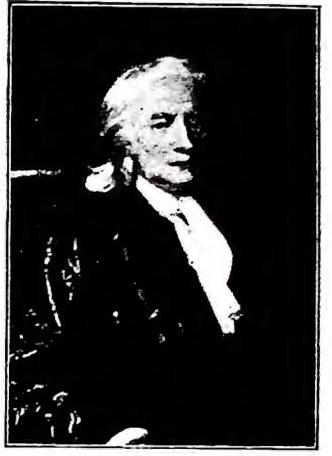
NEWTON, ISAAC. - Scientist, born at Woolsthorpe, county of Lincoln, England, on 25 Dec. 1642 (Jan. 1643 according to the Gregorian calendar). He displayed, from a very young age, particular aptitude for the study of natural phenomena, as well as for the construction of ingenious mechanisms and sundials; consequently, his mother allowed him to devote himself to the sciences and to prepare for admission to the renowned Trinity College, Cambridge. He entered by competitive examination in June 1661, and the noted J. Barron, professor of mathematics, encouraged him in his studies for eight years and in 1669 secured for him the appointment as “Lucasian Professor of Mathematics,” yielding his own position to him. Newton, who had already before this time published several notable studies, including the famous binomial theorem for any exponent, was thus able to devote himself without further concerns to his preferred studies.
The twenty-year period between 1667, the year in which he obtained the degree of “Fellow” at Trinity College, and 1687, in which he published *Philosophiae naturalis principia mathematica*, was undoubtedly the time of Newton’s most intense and fruitful work. He alternated theoretical studies and optical experiments, which he presented in his lectures, with fundamental studies on general mechanics and the gravitation of bodies, and he also devoted himself to studies in mathematics and geometry; however, little is known about their distribution throughout that period. Those who lived with Newton at the time recall him as constantly absorbed in his meditations, often forgetful of food and sleep, averse to any pastime but always steadfast in religious practices and acts of charity. It is well known, however, that in the early years of that period Newton invented his reflecting telescope, which is still constructed today in enormous examples, and this earned him in January 1672 the appointment as a fellow of the Royal Society of London, although he was not spared the usual criticisms from the envious. Of exceptional importance among his other discoveries are two: the establishment of the foundations of mechanics and the discovery of the law of universal gravitation, both expounded at length in the *Principia*. These discoveries, by their very concomitance, placed Newton squarely among the greatest geniuses. Although one often speaks of “Newtonian dynamics,” it must not be forgotten that the general concept of it is due to the application of Galileo’s experimental criterion. The first of his laws, that of inertia, is certainly due to Leonardo da Vinci and Galileo; the second, concerning the action of forces on material bodies, is fundamentally due to Galileo, who extensively applied it and recognized its great significance; Newton merely formulated it axiomatically so as to make it serve for further systematic developments. Since, however, the application of forces (actions) on a given body necessarily implies the intervention of another body, for a complete consideration of the dynamic phenomenon it was also necessary to consider the effects that it underwent: hence the third axiomatic law, ordinarily called that of action and reaction, entirely due to Newton. On the basis of these three laws and a few definitions of fundamental concepts, he succeeded in systematically constructing dynamics, which still satisfies most of the requirements of physics today.
The discovery of universal gravitation (v. GRAVITAZIONE), or rather of its law—inasmuch as the general notion was already known—cost Newton alternating hopes and disappointments. The first and perhaps still somewhat vague investigations date to 1665, and a legend attributes them to the fortuitous fall of an apple from a tree and to the thought that the force acting on the apple and compelling it to fall with uniformly accelerated motion toward the earth must be of a nature identical to that which kept the moon in its orbit around the earth. These investigations were resumed fourteen years later and then abandoned again because, when the value assigned to the diameter of the earth based on Snellius’s measurements was introduced into the calculations, some numerical discrepancies were found. Finally, in 1683, using for the diameter of the earth the more precise measurements of the meridian arc made by Picard, Newton achieved the hoped-for result, namely the well-known universal law, which he expressed in the third book of the *Principia*. In the following year, the celebrated astronomer Halley, visiting Cambridge, was informed of the situation and reported it to the Royal Society of London, which at once commissioned him to obtain the communication of the distinguished work, which was presented to it on 28 Apr. 1685. The authoritative society took the work under its patronage, and its publication occurred in 1687. Subsequently, for more than a century, the triumphs of celestial mechanics induced physics to consider it ideal to develop its theories in the sense of hypothetical action at a distance of the Newtonian type, not excluding new electrical, magnetic, and electromagnetic theories of the first half of the 19th century, forgetting that Newton himself had openly manifested his repugnance to attribute any character of reality to those actions. Only the reaction of Faraday and Maxwell later modified that tendency.
In the immediately following years, Newton, somewhat exhausted by the immense labor, devoted himself mainly to the refinement and publication of his previous studies, almost all of which had already been presented in his lectures. From 1695, appointed warden and then director of the Mint, he became embroiled in the unpleasant controversies regarding his contributions to the creation of the infinitesimal calculus in comparison with Leibniz. Surrounded by consideration such as no other scientist enjoyed, in an eminent financial situation, Newton devoted his last years to biblical studies, the fruit of which were a commentary on the Apocalypse and a work on the prophet Daniel. He died on 31 March 1727 and was buried, with the highest honors, in Westminster Abbey.