
HOSPITALLERS OF ST JOHN OF GOD (FATEBENEFRATELLI). – A religious order founded by St John of God, who in 1537 established a hospital for the poor in Granada and gathered companions for his apostolate. After the saint’s death (1550), the institute grew in numbers and, having founded hospitals in Spain and Italy, was approved as a Congregation by St Pius V in 1571 (bull Licet ex debito) under the Rule of St Augustine with its own constitutions and the faculty to include some priestly members. In addition to the three common vows, the Fatebenefratelli take a vow of hospitality. In 1586 Sixtus V (bull Etsi pro debito) raised the Congregation to the status of an Order, but it was reduced again to a simple Congregation by Clement VIII in 1592 (bull Ex omnibus), and then elevated once more to an Order by Paul V in 1611 and 1617 (brief Romanus Pontifex). From 1608 to 1867 the Order was divided into two distinct congregations, one for Spain and one for Italy, each with its own constitutions and superiors general.
The Order spread rapidly to all continents: after a century it already counted 16 religious provinces, 2,595 brothers, and 262 hospitals with 6,893 beds, in which 113,345 patients were treated annually. In Italy there were six provinces and 86 hospitals.
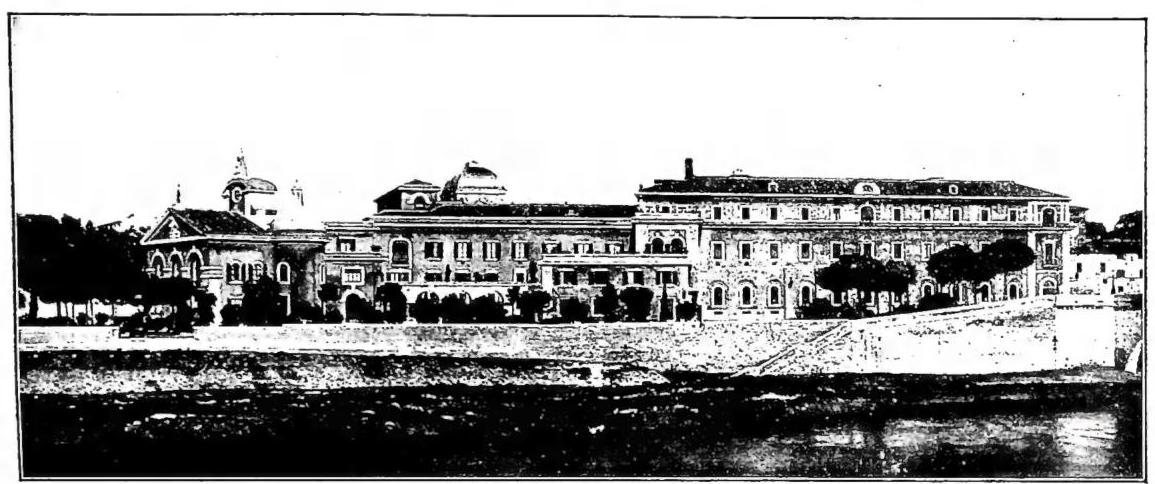
Brothers of eminent virtue and outstanding charity, with great skill in nursing, medicine, surgery, chemistry, and also in missionary work, elevated the Order to high prestige, rendering it greatly meritorious both for the care of the sick in their own hospitals and for that provided to poor populations in villages and rural areas. During 12 epidemics in Spain from 1581 to 1832, 200 brothers died as victims of their apostolate. In the Spanish navy and army, the Hospitallers constituted almost a corps of military medical personnel, officially appointed as physicians, surgeons, and nurses in various fortified positions. From 1580 to about 1779, approximately 300 brothers served as medical personnel on 33 expeditions to the Americas. In Italy, France, Austria, Germany, and other nations including those outside Europe, they everywhere provided fraternal assistance to wounded soldiers in wartime and to those afflicted during epidemics. With their methods of care, they made a notable contribution to the progress of hospital care, especially in the treatment of the mentally ill and of children suffering from rickets, scrofula, and similar ailments.
The French Revolution, political and military upheavals, the suppressions of the last century in Europe and America, the Spanish Revolution of 1936–39, and the Second World War caused the Order to suffer many losses of personnel and hospitals. Soon, however, it regained its former vigour, resumed its expansion, founded new hospitals, and launched new works under leaders tempered by virtue and sacrifice, such as Giovanni di Dio de Magallon in France, Benedetto Menni (v.) in Spain, Portugal, and Mexico, and Giovanni Maria Alfieri, the driving force behind the Order’s restoration. Likewise, in Eastern Europe many houses were lost due to hostile attitudes and legislation toward the Church. In 1951 the Order numbered 2,055 professed members, divided into 16 religious provinces and 5 vice-provinces, with 155 houses in Europe, 27 in America, 3 in Africa, 1 in Asia, and 2 in Australia. Recently the Fatebenefratelli have also gone to Japan and Indochina.
Their activity is carried out in hospitals, clinics, asylums, leper hospitals, homes for blind children, the physically and mentally handicapped, old-age homes, institutes for epileptics and for intellectually disabled adults, night shelters for the poor and homeless workers, rehabilitation centres for minors, and homes for orphaned child workers.