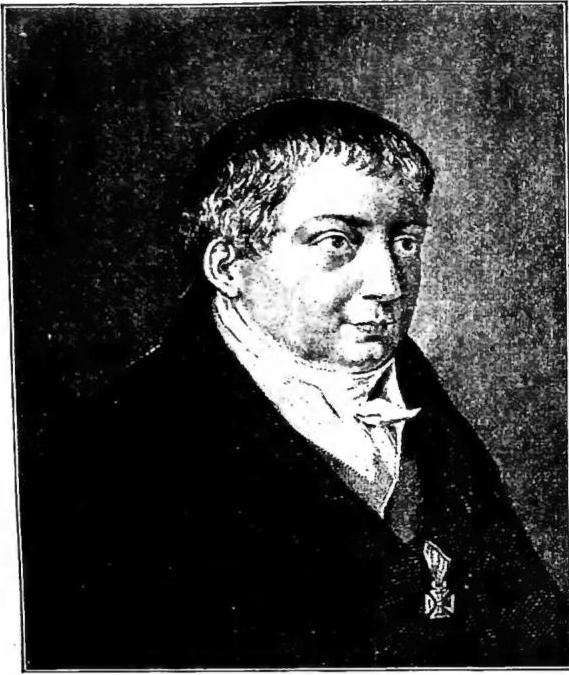
SCHIZOPHRENIA. – Under the term “dementia praecox,” Kraepelin (1893) grouped the forms of the so-called “catatonia” of Kahlbaum, Hecker’s “hebephrenia,” and the “paranoid” forms, sharing as a common characteristic “a particular alteration of the intimate unity of the personality, with disturbances predominantly affecting affective life and the will.”
Bleuler, on the other hand, saw at the basis of the aforementioned psychopathy a loosening of intrapsychic associations, almost a fissuring of consciousness, whence the name s. (1908; σχίζω = I separate, divide, and φρήν = spirit, mind); foreign constituents would thus easily gain entry and wedge themselves into consciousness, causing its dissociation. Bleuler, from a psychoanalytic standpoint, views these foreign constituents as psychic formations developing on the basis of intense affective experiences, especially sexual ones, or psychic traumas occurring in childhood which, banished into the unconscious, could be reactivated under any circumstances through the recall of one of their constituent parts. Moreover, because of their intense affective tone, they influence the subject’s conduct so intrusively as to override all logical reflection.
Bumke considers schizophrenic symptoms rather as a particular reactive form of the brain to exogenous agents or various forms of damage.
The Heidelberg school, on the other hand, considers s. a form of cerebral disease developing on the basis of a special hereditary disposition (dimer-recessive), with the predominant and progressive destruction of the subject’s active social personality; within it, forms that are hebephrenic-like, hebephrenic, catatonic, and paranoid could be distinguished, although never sharply.
Dide and Guiraud, instead, speak of “hebephrenia,” which they clinically characterize as a “progressive and precocious weakening of the instinctive sources of mental life, originating directly from the autonomic nervous system.” The clinical study of hebephrenic patients would in fact demonstrate that the weakening of vital impetus, interest, and affectivity constitutes the necessary and sufficient element for characterizing the disease. This primitive defect is called by the same authors athymormia, thereby linking it to the concept of horme of V. Monakov. For a long time, the intellectual abnormality would consist in a disorder, an impasse, and a contradictory orientation of psychic processes, without their definitive destruction; true dementia would occur only in the terminal period, without being a necessary element of the disease.
U. Cerletti, following a similar approach and on the basis of the new data provided to clinical practice by shock therapies (v. SHOCK-TERAPIA), especially electroshock, invented by the author himself, has grouped under the heading of “dysthymias” both s., which he considers an “athymia,” and manic-depressive psychosis, which he considers a “hyperthymia.” For Cerletti, therefore, at the basis of the schizophrenic process would be a progressive and fatal decline of the emotional-affective sphere, whereby all the subject’s volitional and intellectual activity, no longer sustained and coordinated by the affective or emotional factor, would assume that highly distinctive appearance of bizarre and foolish behavior. The serious disorder of sensory activity could also be attributed to this disappearance of the personality’s nucleus, since sensory activity would become easy prey to the intrusion of abnormal mechanisms, producing hallucinations and pseudohallucinations.
Depending on the various authors, the symptom complex of s. has been divided at times into primary symptoms (a feeling of strangeness leading subsequently to autism) and secondary symptoms (delusions and hallucinations); at times into essential symptoms (autism, weakening of the active social personality, especially in the volitional and affective spheres, psychic dissociation) and accessory symptoms (motor phenomena, delusions, illusions); and at times into characteristic symptoms (negativism, dyspraxic disturbances such as mannerism and schizophasia) and nonspecific symptoms (hallucinations, delusions, mental deficits).
I. CLINICAL PICTURE
Schizophrenia is a disease of youth and adolescence and generally appears between the ages of 15 and 25. At times it occurs earlier (De Sanctis’s very early dementia), appearing at 10 or 12 years of age; at times it is later, that is, between 30 and 35 years. Its onset is polymorphous and may assume various forms, which have been clinically distinguished as the psychasthenic type, neurasthenic type, hysterical type, manic type, and melancholic type.1. Fundamental symptoms
Disinterest: whereas normal adolescence is the period of great hopes and concerns for one’s individual and social future, the patients instead gradually become indifferent to their own situation; interest in studies, play, sport, and even all important family and social events ceases. Inertia: this is the consequence and manifestation of disinterest, whereby the patient remains immobile and inactive for entire days; every initiative has disappeared, as has the very sense of the struggle for life. Such inertia may extend even to the most elementary bodily needs, so that patients no longer care for their personal cleanliness or clothing, do not eat or drink, and may even go so far as to retain urine and feces or soil themselves with them. Affective weakening: at first it may be concealed beneath the appearance of good manners, but soon acquaintances, friends, and relatives become indifferent to the patient; at times, owing to the feeling of estrangement that afflicts him, he goes so far as to adopt a hostile attitude toward the family in which he feels isolated. Such a state of affectivity-loss may reach the point of “autism,” since these patients find social life difficult to tolerate, as it appears to them not only foreign but hostile; they therefore often isolate themselves for long periods in a room, leaving it only for indispensable needs. Ambivalence: this is the tendency to experience psychological phenomena simultaneously in their positive and negative aspects. It may be considered in relation to disinterest, insofar as every thought, every action, and every feeling appears devoid of any value and therefore indifferently equal to its opposite. Painful feeling of estrangement: owing to the weakening of instinctive-affective tendencies, there is a deficit in the intuition of the Ego and in the feeling of one’s own personality, so that the patient is often led to continually verify himself, spending long hours before the mirror observing himself; for the same reason, the patients have a painful feeling of unreality, not only concerning everything around them, but also concerning their own activity and, above all, their own thought, which they experience as illusory, cold, and foreign.2. Accessory symptoms
For the most part these are consequences of the symptoms described above and are chiefly attributable to disinterest and the loss of affective value in every mental representation. Disorders of “self-conduct” (Toulouse and Mignard) thus appear. The external world is perceived correctly, and orientation in time and space is often normal; but all this occurs without any personal interest, so that every activity is easily interrupted or diverted by parasitic ideas or abnormal sensations.Thus, as regards memory, events unfold before the subject without arousing any interest in him; consequently, their fixation and preservation as mnemonic facts appear weak and, on the other hand, their recall, unsupported by any interest or affective factor, occurs with difficulty, but above all in a disordered manner and with the strangest associations among the memories themselves. For the same reasons, the course of ideation also proceeds bizarrely, expressing the more or less distinct randomness of the associations, so that verbalism and incoherence appear in speech.
Other anomalies in the course of thought are represented by the presence in speech of sudden interruptions (barrage among French authors), or by a “stagnation” of thought that results in verbal “drift,” whereby speech lingers around the same idea in sentences that add nothing. At other times, the fragility of ideation, unsupported by interest, causes speech to be diverted toward subjects entirely different from those of its initial purpose; or there may even be a mixture of two different ideas whose expression occurs simultaneously and is therefore incongruous and incomprehensible. Naturally, it is easy to understand how, along this path, the patient readily becomes prey during speech to verbal automatisms, such as the enumeration of verbal series, for example, names of animals, plants, etc.; verbal associations by contiguity or assonance; verbal distortions and neologisms resulting from perseverations or syllabic assonances; verbigeration, verbal stereotypies, word salad, and echolalia.
On the basis of the feeling of estrangement and dissolution of the physical and mental personality, the schizophrenic’s delusions originate, sharing the common character of a mysterious assault upon his physical and psychic personality: ideas of negation, destruction of organs, introduction of foreign persons or animals into the organism, influence over thought, magnetism, and transmission of thought.
In the sphere of motor activity, one may observe, in the catatonic form (v. CATATONIA) of schizophrenia, disorders characterized chiefly by immobility or delay in carrying out actions commanded or desired by the subject himself; once begun, these actions may also be abruptly interrupted, sometimes as though by a counter-command (ambivalence), at other times because the energy required to execute the act fades away (the patient’s disinterest in the act itself). For the same reason, catalepsy (v.) may occur, whereby the patient for a long time maintains postures passively imposed upon him, even when wholly incongruous and uncomfortable. In this syndrome of motor arrest or torpor, the so-called impulses (v. IMPULSIVITY) may suddenly appear, whereby the subject, abruptly emerging from his inertia and without any apparent reason, sometimes under the stimulus of an auditory hallucination, strikes a nearby person with his fist, throws an object, or tears off his clothes, only to return perhaps to the immobility of a few moments earlier.
In addition to De Sanctis’s form of very early dementia, which affects children, clinical practice has distinguished the simple form (characterized chiefly by indifference and inertia, without delusions or motor disorders), the catatonic form (with strongly accentuated motor signs), the delusional or paranoid form (with predominance of delusional phenomena), and the heboidophrenic form (which would represent a mild form of it, in which inertia and apathy concern only the desire to provide for one’s own needs through regular and productive employment, as well as familial and social affectivity; consequently, such patients live by expedients, terrorizing their families in order to obtain money or committing thefts or acts of violence).
Per la cura della s., V. PSICOTERAPIA CHIRURGICA; SHOCKTERAPIA.
II. MORAL EVALUATION
From the moral standpoint, manifest s., even mental illness (v.), because of the serious alterations it produces in the individual’s mind, depriving it of the faculty of correctly understanding and willing according to reasonable motives, completely deprives the patient of responsibility for his acts and of the validity of his consent. In the initial stages of the illness, the partial disturbance of the mental faculties, sometimes not easily ascertainable by an examination that is not highly specialized, may give the appearance of complete normality of thought and actions; even in such a case, however, complete responsibility cannot be admitted; this must be assessed particularly, in the light of subsequent episodes, in the historical judgment of the individual’s acts, as already more or less impaired, in proportion to the degree to which the faculties were impaired and to the speed and severity with which complete imbalance was reached.In relation to the therapy administered, the process in s. may be arrested and may even regress, to the point of appearing to produce complete normality; in a high percentage of cases, however, the illness resumes its course, until, through the succession of stages, it reaches the most complete disintegration of the personality. During periods in which the illness is arrested or improves, the determination of whether there have been genuine returns to normality with a full recovery of the mental faculties (“lucid intervals”), or merely periods of “masked quiet,” and, correspondingly, the determination of the degree of the patient’s moral responsibility and the validity of his consent, constitute questions that are often extremely difficult and controversial, entrusted to the work of expert witnesses. See, in this regard, some decisions of the S. Rota: