
decoration of Palazzo Labia, in which, collaborating with Mengozzi-Colonna, he marvelously frescoed the Meeting of Antony and Cleopatra and the Banquet of Cleopatra, along with other minor scenes in the central hall: an unsurpassable example of joyful and solar pictorial illusionism. During this period, T. left Venice only in 1743, to fresco Villa Cordellina at Montecchio Maggiore near Vicenza with scenes of the Generosity of Scipio and the Family of Darius; unfortunately, these are in poor condition and have been left by the owners of the villa in complete neglect (the ceiling was transported in 1919 to the Museo di Vicenza because of the Villa’s deplorable condition).
Repeatedly urged to decorate the Residenza di Würzburg, T. arrived with his sons Domenico (twenty-three years old) and Lorenzo (fourteen years old) on 12 December 1750 in the capital of Franconia, where he was splendidly received by the prince-bishop Carlo Filippo di Greifenklau. During the three years of his German sojourn, T., showered with honors, created with his frescoes in the imperial hall (Kaisersaal)—where on the ceiling he depicted Apollo Leading the Bride to Barbarossa, and on the walls the Marriage of Barbarossa and the Investiture of Bishop Aroldo—as well as on the ceiling of the immense grand staircase a staggering Apotheosis of Olympus, the most monumental complex of frescoes in existence, and perhaps his absolute masterpiece: certainly one of the most solemn artistic creations of the age. He also painted the two large altarpieces for the chapel of the Residenza itself (1752) and the Epiphany (1753) for the church of Schwarzach (now in the Pinacoteca of Monaco di B.). Returning to Venice at the end of 1753, T., now greatly assisted by the work of his sons, resumed his feverish activity; and it was certainly during this period, and perhaps somewhat earlier, that he frescoed Villa Soderini at Nervesa (destroyed in the war in 1917).
In June 1754 the ceiling frescoes of the Chiesa della Pietà were begun, and in August 1755 they were completed: one of the artist’s most golden, luminous, and musical creations. In the autumn of 1755 or in the spring of 1756, he frescoed Villa Contarini alla Mira, depicting there, among other things, a Reception of Henry III, now in the Musée Jacquemart-André in Paris. In 1757 he was in Vicenza, where, assisted by his son Domenico, he frescoed the delightful complex of Villa Valmarana (the frescoes having already been erroneously regarded as all by T.’s hand, and as twenty years older); as well as the ceiling
A very rich body of drawings accompanied T.’s pictorial activity. Almost every stage of his career is documented by preparatory studies in red chalk as well as charcoal, in pen as well as in washed sepia; more than a thousand sheets are known—a small part of what the volcanic artist produced. Substantial groups are held by the Museo Correr in Venice, the Museo Horne in Florence, the Victoria and Albert Museum in London, the Morgan Library and the Metropolitan Museum
in New York; while the largest group is that formerly belonging to Baron Sartorio, now in the Museo civico of Trieste. T. was also responsible for several series of engravings, among the most exquisite works of the period, both for the freshness and luminosity of their line and for the spirit of their inventions: ten Capricci in all, twenty-three scherzi di fantasia, an Epiphany, a S. Joseph, and two or three other disputed pieces, in addition to a few illustrations and vignettes for books.
It is impossible to list here all the works painted by T.; in addition to those mentioned above, the principal ones are recalled: Hamburg, Kunsthalle: Prayer in the Garden and Crowning with Thorns; Angers, Museum: Sketch for the ceiling of the Villa Pisani (1760); Arkhangelsk, U.S.S.R.: Meeting of Antony and Cleopatra and Banquet of Cleopatra; Bergamo, Duomo: Martyrdom of s. John the Bishop (1743); Berlin, Museum: Martyrdom of s. Agatha; Burano, church of S. Martino: Crucifixion; Castelgomberto, Count da Schio collection: Ulysses Discovers Achilles (and two lateral paintings), formerly in the Palazzo Sandi in Venice; Chicago, Art Institute: four canvases with stories of Rinaldo and Armida; Dresden, Gallery: The Child Mary Presented to the Father Eternal, 1759, formerly in Cividale; Bolzano, parish church: Baptism of the Emperor Constantine, 1759; Frankfurt, Staedel Institute: The Saints of the Crotta Family, 1754; Leningrad, Hermitage: Maecenas Presents the Arts to Augustus; London, National Gallery: S. Maximus and s. Oswald; S. Augustine and other saints; The Marriage of Barbarossa; Count Seilern: four sketches for the altarpieces of Aranjuez; Lugano, Thyssen collection: Death of Hyacinthus; Madrid, Prado: Immaculate Conception; Melbourne (Australia), National Gallery: Banquet of Cleopatra, formerly in the Hermitage; Milan, Brera: Our Lady of Carmel; M. Crespi collection: The Family of Darius before Alexander, sketch for the Villa Cordellina, 1743; Rasini collection: Repudiation of Hagar (1717 or ’19, the first known signed and dated work); Treccani collection: Preaching of the Baptist; Mirano, parish church: Miracle of s. Anthony of Padua; Munich, Pinakothek: Rinaldo and Armida and Rinaldo Abandons Armida; Montréal (Canada), Museum: Alexander and Campaspe in the Studio of Apelles; New York, Metropolitan Museum: S. Tecla (sketch for Este); Apotheosis of the Spanish Monarchy (sketch for Madrid); Oranienbaum (U.S.S.R.), Castle: Mars with the Graces, ceiling; Padua, Basilica del Santo: Martyrdom of s. Agatha, 1737; Paris, Louvre: Last Supper; Apollo and Daphne; Cognacq-Jay Museum: Banquet of Nabal and Abigail; Parma, Pinacoteca: S. Fidelis of Sigmaringen; Philadelphia (U.S.A.), Johnson Collection: Venus and Vulcan; Rovetta, parish church: Altarpiece of All Saints, 1734; Stuttgart, Gallery: Apollo, sketch for Würzburg; Stockholm, Museum: Magnanimity of Scipio, sketch for the Villa Cordellina, 1743; University Museum: Danaë; Turin, Pinacoteca: Triumph of Aurelian; Udine, Museum: Consilium in arena (in collaboration with Domenico), 1748–50; Venice, Accademia: four canvases with mythological subjects, ca. 1720–22; Transport of the Holy House of Loreto, sketch for the Scalzi, 1743; Invention of the Cross, formerly in the church of the Cappuccine; Querini-Stampalia Gallery: Portrait of Procurator Querini; church of the Gesuati: Madonna and three Saints; church of S. Stae: Martyrdom of s. Bartholomew, ca. 1721; Palazzo Ducale: Neptune Offers Venice the Gifts of the Sea; Vicenza, Pinacoteca: Immaculate Conception, Allegory of Fame (from the Villa Cordellina), Time Unveiling Truth; Vienna, Academy: Phaethon and Apollo, sketch for the Palazzo Clerici in Milan, 1731; Washington, National Gallery: Timoclea and the Commander (formerly in the Palazzo Barbaro in Venice), Apollo and Daphne; Apotheosis of Spain, 1762, sketch for Madrid; Würzburg, University: Family of Darius and Mucius Scaevola.
T.’s importance in eighteenth-century European art was considerable: he had numerous pupils and imitators not only in Italy, but also in southern Germany and Austria, and even in Spain, if one thinks of Goya, who certainly saw his works and admired his Capricci and Scherzi di fantasia. Neoclassicism eclipsed T.’s fame, but only for a short time; for it revived with the Romanticism of Delacroix and above all with the Impressionists, who saw in T.’s luminosity and in the fanciful darting of his improvisations one of the most lively and brilliant precedents. Berenson’s judgment (1894) remains valid: «T. does not seem the last of the great masters so much as the first of the new ones; the works he left in Spain explain to a large extent the revival of Spanish painting in Goya; who, in turn, had a great influence on many of the finest modern French artists».
The art criticism of recent decades has rediscovered a new chapter concerning T.’s youth, clarified the chronology of his works, distinguished the role played by his son Domenico, and brought to light the latter’s highly interesting personality as a painter.
GIAN DOMENICO. – Painter, born in Venice on 30 August 1727 and died there on 3 March 1804. He was trained in the art by his father, Giov. Battista, and remained his most faithful collaborator until the latter’s death.
Today, unlike in the past, D. is recognized as a clearly identifiable personality who, at a certain point, succeeded in producing a more popular kind of painting, directed toward the changing taste of the times and, one may say, less aristocratic than that of his father. He early showed his sympathy for the illustrative, or genre, current in Venetian painting; but in his collaboration with his father he had to submit to translating into fresco (and more rarely onto canvas) his cartoons or “modelli.” As early as the Würzburg period, at the age of twenty-three, he produced works in which his keen modern inspiration is already evident: in the Villa Valmarana; in the Spanish period; and above all after his father’s death. Endowed with inexhaustible inventive spirit, his engravings and his hundreds upon hundreds of drawings alone—sometimes sarcastic or dramatic, or simply imaginative—would suffice to make him a figure of singular prominence. After his stays in Germany (1751–53) and Spain (1762–70), he settled in Venice; in 1783 he was called to Genoa to fresco the ceiling of the Palazzo Ducale; he then returned to his native city and remained there until his death.
Shortly after 1745 he frescoed the church of SS. Faustino e Giovita in Brescia and the nearby Canonica; in ’47 he supplied fourteen stations of the Via Crucis for the church of S. Polo in Venice; in ’49 he painted in the Villa di Zianigo (where he would fresco again in 1771, 1791, and ’93); in Würzburg he supplied three overdoors for the Residenz; in 1757 he signed and dated the carnival scenes in the Foresteria of the Villa Valmarana at Vicenza, where he decorated other rooms as well; in 1759 he frescoed the monochrome frieze in the church of the Purità at Udine; he is recorded in the painters’ guild in 1761 and 1775; on 20 October 1776 he married Margherita Moscheni in Venice, by whom he had two sons; from 1780 to ’83 he was President of the Academy.
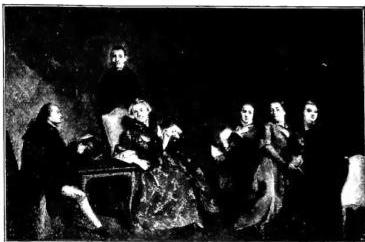
(photograph: Agenzia fotografica industriale)