
RAVENNA, ARCHDIOCESE of — Veil for liturgical offerings with scriptural phrases woven into II. Silk fabric from the end of the 7th century, originating from S. Apollinare in Classe, found in a sarcophagus in 1949 — Ravenna. Archiepiscopal Museum.
Zattoni, it was always a close-fought struggle, alternating between submission and rebellion according to the bishop in office; it lasted for centuries and can be understood and expressed only through the testament of Mauro himself, echoed in the words written on his tomb: « Liberavit ecclesiam suam de jugo Romanorum servitutis ». The 8th century, which witnessed the total destruction of Classe, has particular importance for the history of the Church of Ravenna. Once the Exarchate had fallen, government became concentrated, as has been said, in the hands of the archbishops. In this century, a monastic community can also be documented at the basilica of S. Apollinare in Classe. It was toward the end of the century that Grazioso, a distinctive bishop whose simplicity would remain proverbial, welcomed into R. Charlemagne, who had come to strip the Palace of Theodoric of its marbles and finest ornaments in order to adorn his buildings at Aachen. In the 9Agnello (v.) is a fully qualified witness to rebellions against Rome and to the anti-Roman spirit, through his Liber pontificalis Ecclesiae Ravennatis. In the same century the Benedictines established themselves at S. Vitale and S. Giovanni Ev.; in the following century they are also found at S. Apollinare Nuovo. Under the Ottonians, the importance of the see was reaffirmed. These were the years in which Romualdo degli Onesti, after his conversion, became a monk of Classe and carried out an extensive reform in the abbey. These were the years in which the Saint withdrew to the Perèo and began his eremitical reform. From this hermitage, situated about 15 km from the city, whose church was one of the first dedicated to the martyr St. Adalbert of Prague, came the first group of Camaldolese missionaries, led by St. Bruno of Querfurt. In the two-year period 998–99 the Church of R. was governed by that Gerberto of Aurillac who was to ascend the throne of Peter under the name of Sylvester II. After the year 1000, St. Stephen of Hungary founded in the territory of the diocese the abbey of S. Pietro in Vincoli, to serve as a stopping place for pilgrims from his nation; its church was consecrated by St. Gerardo. In the first half of the 11th century, a fierce struggle took place between R. and Milan over the right of precedence; the question was settled in 1047 in favor of R., and its prelate was therefore recognized as having the right to sit at the Pope’s right when the Emperor was absent, and at his left when he was present.
Then the latent antagonism with Rome once again made itself openly felt and culminated in the saddest episode, when its archbishop, Guiberto, was elected antipope under the name of Clement III and drew R. into the schism. These were the years of the tireless work of St. Pier Damiano, who died at Faenza in 1072, returning from a conciliatory mission between Rome and R. Fidelity to Rome led, in the early years of the 12th century, to the foundation of the Portuense canonry, in which the Order of the Regular Canons had a highly important center of reform and whose Rule spread throughout Italy and beyond. Its founder and reformer was Pietro chierico, a figure intimately and dearly connected with the history of R., often confused with St. Pier Damiano because of their shared epithet of « Peccatore », and whom it is still impossible to identify more precisely. Then, just as the city began to decline, so the Church of R. returned to the common sphere. In the first centuries after the year 1000, however, it attained the greatest extent of its metropolitan jurisdiction, comprising all the dioceses of Emilia, from Piacenza to Rimini and as far beyond the Po as Adria.
In the 13th century the figure of Archbishop Filippo emerges. A man of great energy, he was imprisoned by Ezzelino da Romano; a reformer and scourge of the corrupt morals widespread among clergy and people, he introduced the Friars Minor of St. Francis into R. in 1261, granting them the ancient basilica of S. Pietro Maggiore. At the beginning of the following century came Rainaldo da Concorrezzo, venerated as a blessed. He was Dante’s archbishop and died not even a month before the Poet, on 18 August 1321. The spirit of Catholic reform found in R., already in the first half of the 16th century, a prepared environment, to which the work of two women, the bb. Margherita da Russi and Gentile Giusti, must have contributed. Under the inspiration of the former, the ven. Gerolamo Malucelli founded that congregation of the Regular Priests of the Buon Gesù, which was among the very earliest families of regular clerics in the Church. It had a purely local existence and was suppressed in 1651 by a bull of Innocent X. With the episcopate of Cardinal Giulio Feltrio della Rovere (1566–78), the succession of reforming bishops began, in accordance with the spirit of the Council of Trent. In 1567 he founded the Seminary; he provided for the reform of the Cathedral clergy, suppressing the two Chapters of cardinal-canons and singing-canons in order to form a single chapter of choral beneficiaries. Under him, as the contemporary historian Girolamo Rossi records, every surviving trace of non-Roman rites disappeared from the liturgical books of Ravenna: the sole certain testimony is this evidence of the survival in R. of prayers and rites in the Greek language, but this does not authorize the belief that the ancient liturgy of Ravenna was in that language. Every epigraphic and documentary testimony assures us that in the 6th century Latin was the liturgical language of the Church of R. Only later, with the establishment of the Exarchate, could non-Latin usages and customs enter the liturgy. It is certain, however, that by 1454 the Roman Missal was in use in the Ursian Basilica (a codex from that year in the Ravenna Capitular Archive). With Della Rovere, the records of the Holy Visitation of the diocese began; they continued during the pontificate of his successor, Cristoforo Boncompagni (1578–1604), during which a modest women’s congregation arose in R., according to the spirit of St. Filippo Neri: the Pious Tertiaries living in community, founded by Sister Adriana Tavella, a community that still exists today. Under Pietro Aldobrandini the reform continued energetically, and the records of his visitations provided, for the first time, a complete overview. At the same time, however, the first mutilations of the metropolitan jurisdiction began, with the separation of Bologna, which was subsequently itself constituted as a metropolitan see, with suffragan churches previously subject to R.
The French revolutionary laws, at the end of the 18th century, annihilated all the religious communities that had been formed over the centuries. Eleven male religious families were suppressed. Among them were the great abbeys that had played such an important part in the life of R. That of the Black Benedictines of S. Vitale disappeared after almost a thousand years of existence. So too did the community formed in the shadow of the Placidian basilica of S. Giovanni Evangelista, in which, in 1459, the commendatory cardinal Bessarion had introduced the Regular Canons, and in which he ended his days on 18 November 1472. The abbey of Classe, a center of culture, shared the common fate. From S. Apollinare in Classe, the Camaldolese monks had moved into the city in 1515. Likewise, following a decision of the Venetian Republic, at the beginning of the 16th century the Portuense canonry had moved into the city from its ancient seat on the Adriatic shore; it was raised to the rank of abbey in 1566. It was the only one of the four to be reopened after the Restoration, and it led a precarious existence until the suppressive laws of the Kingdom of Italy. Among the numerous women’s communities, the Benedictine monastery of S. Andrea Maggiore and the Dominican monastery of S. Stefano de Ulivis were brought by the French to an end after more than a century of existence; Beatrice, Dante’s daughter, had been a nun within the latter’s walls.
The Napoleonic storm found as archbishop a man of broad views and a great heart: Antonio II Codronchi. His attitude toward the new monarch may be debated: as a sworn bishop, grand almoner of the court, knight of the Iron Crown, and present at the baptism of the King of Rome, he seemed to some entirely subservient to the Emperor. Yet during his forty years of episcopate (1785–1826) he carried out a varied, astute, prudent, and constructive program. He saved from ruin and profanation all, or nearly all, the conventual churches of historical and artistic importance, transferring parish seats to them. Having purchased with his own money the cloisters of the former abbey of S. Giovanni Evangelista, he moved there the old hospital of S. Maria delle Croci, which he endowed with numerous revenues.
He was succeeded by the Roman C. Falconieri-Mellini, who since his youth had been bound in friendship to Pius IX, whom he welcomed in R. on his final journey through the Legations. Created cardinal in 1834, he died on 22 August 1850; a few months earlier, pontifical government had ceased in R. From that time began the period of the most blatant anticlericalism and of the de-Christianization of Romagna. After the dismay of the early years and the disorientation, including among the clergy, recovery showed promise from the beginning of our century. In 1904 the Milanese Pasquale Morganti became archbishop, a characteristic figure of the contemporary episcopate. The author of ascetical writings for the clergy (Sic oredetis, Vos divi omicos), he prepared the diocese’s renewal amid suffering and humiliation. His administration concluded with the truly worthy celebration held by Catholics in honor of Dante, on the six-hundredth anniversary of the Poet’s death (1921).
II. MONUMENTS
Of Roman R., whose extent and form are known with precision, there remains part of the walls with which it was already surrounded in A.D. 45, as well as the miserable remains in situ of the Porta Aurea, opened at that time by the Emperor Claudius. In the National Museum are the two paterae and some other marble elements from that same gate: classiarii stelae, the Augustan frieze, and little else. Of the port of Classe, no trace remains above ground. Nor has anything survived of the buildings that constituted the «castrum classis».The imperial palaces, the Theoderician, exarchal, and Ottonian civil buildings having disappeared, R. is today famous throughout the world for a singular group of early Christian monuments. Before the fifth century there is only the memory of the ancient cathedral of Classe, built outside the walls of the «castrum classis», whose form and precise location are unknown; the only fixed architectural point is the quadriporticus, which it did not possess before the age of Maximian. The early Christian monuments of R. fall into three principal groups, corresponding to three specific periods of political life and development, which must be taken into account in assessing them. The fifth century began with the construction of the new intramural Basilica of Bishop Orso and the adjoining baptistery. With five naves and fifty-six marble columns, it survived until the threshold of the modern age. Demolished in 1733, it is known through the drawings made at that time, which art historians and critics have trusted too much. In fact, nothing certain can now be said about its original features, since it reached the eighteenth century after many alterations, not least that of the tenth century, which gave it its crypt, still existing beneath the apse of the present eighteenth-century Basilica, which preserves the ancient building’s dimensions and dedication. The Baptistery, fortunately, has survived to our own day. Built from its foundations by Orso, it presents itself to us in the splendid mosaic decoration bestowed upon it by Bishop Neone in the second half of the fifth century. Octagonal in plan, with four small apses alternating along its sides, it now appears distorted in its proportions, especially inside, because of the accumulation of approximately three metres of earth. After the Ursian complex came the Honorian-Placidian one. To it belonged that singular group of buildings which the historian Agnellus calls «monasteria»; unfortunately, it disappeared centuries ago. The only surviving example is the small chapel, which continues erroneously to be called
(phot. Trapani)
RAVENNA, ARCIDIOCESI DI – Daniel among the lions, Byzantine pluteus brought to light in 1951 – Ravenna, basilica of S. Apollinare Nuovo.
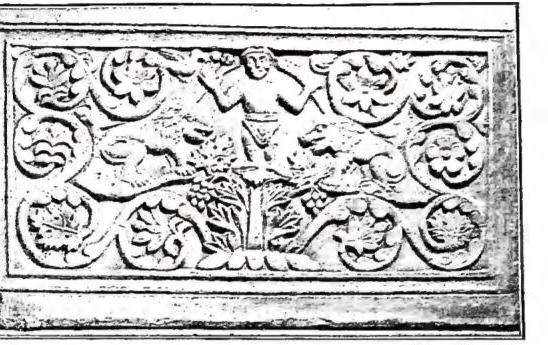
For the second period, one must await the reign of Theodoric. The Goth perhaps wished to rival the ancient emperors; he wanted «his» R. to have nothing to envy in the earlier city. It was a period of only a few decades, but sacred buildings multiplied: all of them Arian. For the Catholic Church of Ravenna, by contrast, it was a period of stagnation: its only monument was the episcopal chapel. A characteristic building of three stories, with a Greek-cross plan, it has the cross as the common architectural element of the three principal rooms. On the upper floor was the «monasterium S. Andreae» of Tricoli, with an apse and preceded by a small atrium. It was built by Pietro II (494–510). Of the Arian complex, the ancient Palatine Basilica has survived, with three naves, dedicated to the name of Jesus and now known as S. Apollinare Nuovo. Stripped of every ornament, the smaller basilica of the Arian Anastasis (church of the Holy Spirit) still stands; adjoining it is its baptistery, whose form reproduces that of the Ursiana. Solemn, mighty, almost a Roman work, standing where the northern suburb once lay, with the dwellings, churches and episcopal residences of the Goths, the «Rotonda», the King’s mausoleum, still remains: the only one among the ancient buildings not made of brick, crowned by the immense monolith of Istrian stone, weighing 300,000 kg, which serves as its dome.
The Byzantine phase was more sumptuous. Associated with it is the name of Giuliano Argentario, a figure whose functions remain mysterious, but one intimately connected with the major monuments of the second quarter of the sixth century. With him, the Ravenna basilicas have handed down the name of Massimiano, who governed the Church of R. during the first years of Byzantine rule: the basilica of S. Vitale, which, in its centralized plan, differs from all the others in R.; and the contemporary basilica of S. Apollinare in Classe, in which the triumph of the founder of the Church of Ravenna reaches its apogee. Others from this period have fallen: S. Stefano Maggiore, S. Andrea Maggiore, and S. Michele in Africisco. Others have reached us more or less transformed: S. Maria Maggiore, S. Agata Maggiore, and SS. Giovanni e Paolo. But the survivors were and
RAVENNA, ARCIDIOCESI di – Façade of the church of S. Apollinare Nuovo (6th century) – Ravenna.
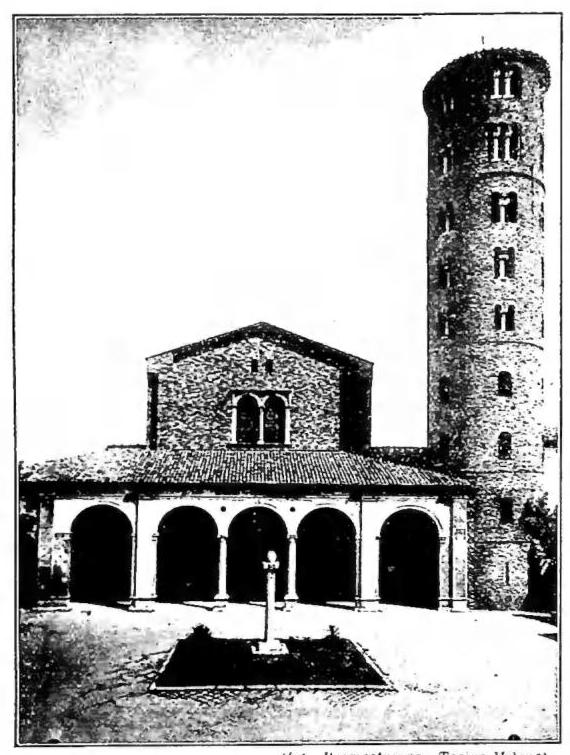
The Ravenna mosaic ensembles likewise follow chronologically the various building phases and reflect the influence of their respective periods. Those belonging to the earliest period, and more restrained in composition and coloration, are those of the mausoleum called that of Galla Placidia and of the Ursiana baptistery. The compositions of the Arian baptistery and the greater part of those ...
of S. Apollinare Nuovo, with the upper Gospel panels, the solemn Virgin Enthroned, the representation of the cities of R. and Classe, the figures of the Prophets between the windows, and Christ enthroned (although largely redone). Those of the Archbishop’s Chapel too, with the clipei of the saints (perhaps those of the ancient Ravenna canon), possess a serenity of colour and a beauty of form that would not be found later. Particularly interesting here are the oldest image of s. Cecilia transmitted by Christian art, the head of s. Paul, and the characteristic one of s. Andrew. Meanwhile, the figure of Christ the Warrior in the atrium recalls the oldest stucco work of the nearby baptistery. In S. Vitale and in Classe, in the Julian mosaics, drawing yields to colour. Gold and chromatic splendour reign so absolutely that defects of drawing appear negligible. Yet even in these two Basilicas the artists’ hand is always guided by a preconceived idea, which is not an end in itself. Thus in S. Vitale, in the two great historical panels of Justinian and Theodora and in the representations of the sacrifices. Thus in S. Apollinare in Classe, where the figure of the eponymous Saint dominates, within the prevailing conception of the Good Shepherd, of whom Christ, transfigured and represented at the centre of the great jewelled Cross, is the type and example, and Apollinare the imitator. R. is par excellence the city of mosaic, of the most beautiful mosaic, which by its colour can strike the human eye. Yet even in assessing this distinction of hers, there are contrasts and disagreements. Certainly closer to the spirit of Rome and to that which animated the mosaicists of Naples and Milan are our fifth-century works, especially the Placidian representations of the Good Shepherd and of s. Lorenzo in the Mausoleum. Those of the Theodoric period are already a prelude to a new spirit: a new spirit that is fully manifested in the mosaics of the mid-sixth century and, almost still more, in the two processions of saints and saintly women with which Agnello, successor to Massimiano, decorated the walls of S. Apollinare Nuovo when he consecrated the Arian palace church to Catholic worship and to the name of s. Martino of Tours. This was an art that endured through the centuries, the art of the Ravenna mosaicists; later it was able to produce some replacement or restoration representations; it spread through the upper Adriatic and in R. produced its last works, not unworthy of the past, in the great cycle of the renewed Ursiana Basilica, in the time of Archbishop Geremia (1112). This representation is now known only through sixteenth-century drawings and the texts left by its destroyers (the Orans Virgin and saints’ heads in the Archbishop’s Museum).
Besides its mosaics, R. possesses a distinctive body of sculpture, whose major pieces consist of an unusual number of sarcophagi in Greek marble, which, iconographically, differ from the early Christian sarcophagi of Rome. If there have been, and will continue to be, discussions concerning the mosaics and basilicas, disagreements and theories are no fewer with regard to the sculptural works. For the sarcophagi, a secure point of reference is lacking. Even the pieces to which it is possible to assign a date are of such a nature that they are of no use for comparison. From reused Roman-pagan examples, to Christian ones with a simple scheme, featuring Christ seated in a cathedra or standing and giving the law, and then to others divided into small aedicules, but always with human figures, one proceeds to chests in which symbolism alone and always predominates, right up to the latest, certainly from the eighth century, of crude, almost childlike workmanship. They are scattered throughout R.; in its basilicas and amid the greenery of the Dante district and the meadow surrounding S. Vitale; a few specimens are in the National Museum. In S. Vitale there is the one known as that of Isacio, in which the cemetery themes are still visible; in Bracciforte, the enormous one formerly presumed to be the tomb of the prophet Eliseus, in which Christ is seated in a cathedra, with a lion and dragon, while on the sides are two Marian scenes: the Visitation and the Annunciation. At Porto fuori, recovered from among the ruins of the Basilica, is the beautiful sarcophagus of Pietro peccatore, and in S. Francesco there are two, divided into small aedicules, which are among the most important. In the Metropolitana there is a group of four (one concealed within the high altar), including two of enormous size and exceptionally rich ornamentation. In S. Apollinare in Classe is the most noteworthy group, among which is the one known as that of Teodoro, which in its ornamentation comes so close, even in small details, to another important Ravenna monument certainly attributable to the sixth century: the ivory cathedra of Massimiano, a piece unique of its kind. Other sculptures include the two ambons of the sixth century: the mutilated one from the Cathedral, bearing the name of Archbishop Agnello (d. 569), and the front portion of that from SS. Giovanni e Paolo, from the final years of the century. The conception guiding the two artists is the same, but how different the execution! Animals are represented in panels, from fish to lambs and birds.
Until 1000–1100, in addition to its mosaics, the art of R. continued also in those sacred buildings, more widespread in the countryside, which all have a general plan, and whose naves are divided no longer by columns but by pillars, often with beak-like appendages. This is what has been called Deutero-Byzantine or Proto-Romanesque architecture, an architecture whose first products are the bell towers that, around 900, began to rise at the sides of the ancient basilicas and the new churches. Such towers are so characteristic in their cylindrical form, the most widespread, that they give the city of R. a distinctive note.
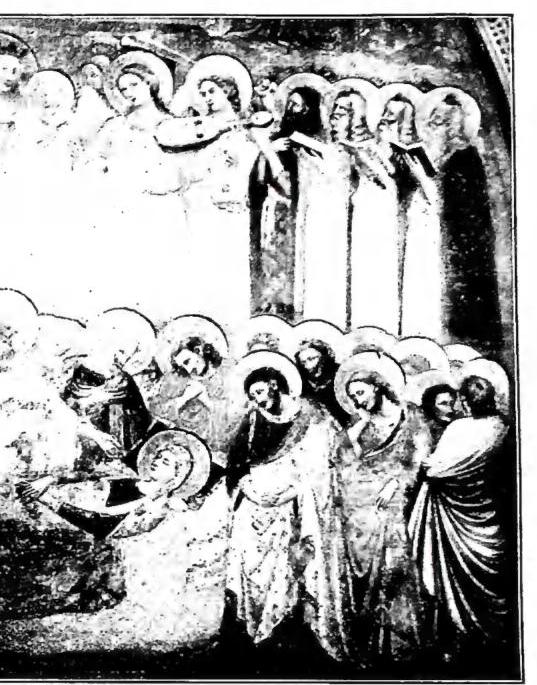
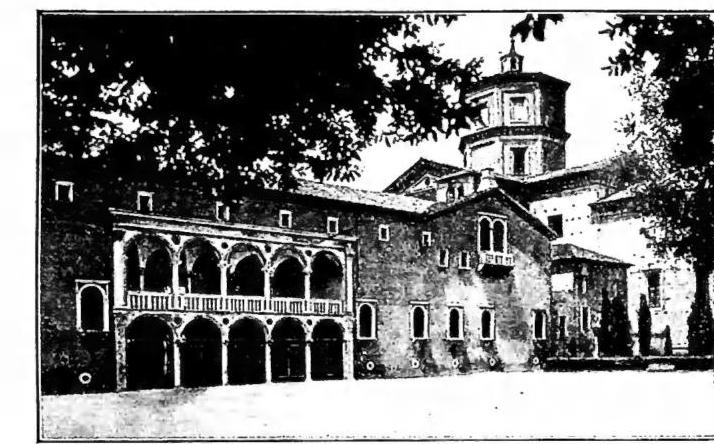
After the last splendors of the mosaics of Archbishop Geremia and the construction of the rural basilicas, R.’s great mission also came to an end in the artistic sphere. In the '300 and the '300, the religious orders, in their churches—whether newly erected or the result of transformations—provided some fine examples of Italian Gothic, as did the pictorial cycles of S. Francesco, S. Maria in Porto fuori, and S. Chiara (the first two having almost entirely disappeared); but the master builders came from elsewhere. It was the masters of color of the Rimini school, followers of Giotto, who held sway in Romagna. The fifteenth century, Venetian in character, left R. several simple and pleasing civic buildings, including the Palazzetto in Piazza maggiore, in which the granite columns of the destroyed Basilica « gotorum » were reused; their capitals bear the monogram of Teodorico. As Pietro Lombardi did, he worked for the city on the ensemble of the two columns in Piazza, with the blessing statue of S. Apollinare, and on the marble monument of Dante’s tomb. The sixteenth century, by contrast, left the imposing new monastic buildings of S. Maria in Porto in the city, with the new Basilica, the little garden loggia, and the truly admirable cloister. Equally grandiose are the cloister of S. Vitale and that of the urban Classense monastery, both full of elegance. In sculpture, Tullio Lombardi produced for R. his masterpiece, the recumbent statue of Guidarello Guidarelli. Through the munificence of Cardinal Pietro Aldobrandini, in the early years of the seventeenth century there arose, almost as an appendage to the ancient Ursiana, the chapel of the Most Blessed Sacrament, one of the finest in Romagna; Maderno provided its design, and Guido Reni oversaw its painted decoration. Already in the two preceding centuries, several Ravennate painters, good but not outstanding, had disseminated their works throughout the church of R.: Niccolò Rondinelli, from the fifteenth century, and Luca Longhi, from the sixteenth. The eighteenth century, by contrast, was terribly disastrous, because ancient churches were badly transformed, and too many things that might perhaps have been saved were condemned to the pickaxe. In compensation, the new Cathedral was built, and Camillo Morigia, an architect of no small merit, completed the imposing façade of S. Maria in Porto and created the present sepulchral chapel of Dante. The nineteenth century preserved nothing but destruction; the twentieth seems intent on transforming the face of the old city, while the works to consolidate the ancient monuments are a concern of citizens and government alike. Restoration work is carried out, though it is not always praiseworthy; the detachment and cleaning of the mosaic ensembles are proceeding, and this work is still continuing.
III. ILLUSTRIOUS FIGURES
R. has often welcomed celebrated men within its walls, but few of its sons rose above mediocrity, just as few attained fame and glory.Venanzio Fortunato, although a son of the Trevisan March, received his cultural and educational formation in R., and could almost be called Ravennate. In the 9th century, Andrea Agnello, the aforementioned author of the Liber Pontificalis (v.). Then Guidone, better known as the Anonymous or the Geographer of R. In the years around the Millennium, gigantic figures predominate: the three Ravennate Saints—Romualdo, Guido Strambiati, abbot of Pomposa, and Pietro Da-
(Alinari photograph)
miano. Among historians, Desiderio Spreti (15th century), Girolamo Rossi (16th century), Girolamo Fabri and Serafino Pasolini (17th century), Pier Paolo Ginanni and Camillo Spreti (18th century) deserve mention. Tomaso Rangoni, called the philologist, was a Ravennate who lived in Venice in the 17th century, as was the priest Francesco Negri, a well-known 17th-century traveler who, something remarkable for his time, explored northern Europe, advancing as far as the Arctic Circle. Among ecclesiastics, there also stand out Cardinal Cesare Rasponi, created by Alessandro VII, whose name is linked to the history of the Lateran Basilica; Mons. Francesco Ingoli (d. 1649), first secretary of the Congregation of Propaganda Fide, who had the College of S. Efrem established in R. for students of the Maronite nation destined for the priesthood; Mons. Ludovico Piavi, of the Friars Minor, Latin Patriarch of Jerusalem (d. 1903); and Fr. Genocchi (v.), the well-known missionary. Special mention is deserved by the archaeologist A. Zirardini (d. 1783), whose works are still precious today for the study of the monuments of Ravenna. The abbot Marini obtained from him a large part of his material for the « Papiri diplomatici ». In this connection, the name of Marco Fantuzzi should be joined to that of Zirardini; through his work Monumenti ravennati de' secoli di mezzo, in 6 volumes, he provided scholars with a mine of documents relating to R. Among the men of yesterday, Antonio Tarlazzi, canon and archiepiscopal archivist, deserves a special place in our remembrance: he continued Fantuzzi’s work, as he did the Memorie sagre of G. Fabri; likewise one of his successors, d. Girolamo Zattoni (d. 1905), a historian and critic of uncommon merit. A diligent researcher was Silvio Bernicoli, who made the treasures of his Municipal Historical Archive the subject of study in precious contributions to local history. Above all, two names stand out in our own day: Corrado Ricci (v.) and Santi Muratori, librarian of the Classense, who has illustrated R. in articles and studies conducted with absolute scholarly rigor. He made love for his city and the defense of its historical and artistic heritage the constant object of his entire life. Death overtook him on the evening of 30 December 1943, while the first bombs were causing damage to the city and its monuments.
And another name must be joined to that of R.: Giovanni Pascoli, who always considered himself a son of R. Indeed, his family had been listed among those of the city for centuries, and his father, Ruggero, was born in R. on 24 March 1815.
IV. PRESENT-DAY R
The city seems almost to offer nothing noteworthy. The immense plain surrounds II. The Corsini naviglio canal still links it with its sea, which for it has always been a source of life. The pine forest, celebrated by Dante and beloved by Byron, though much ravaged by the German and Allied devastation of the last war, is still its royal crown. The ruins caused by the bombardments are grave, but the city is rising from them energetically. It nevertheless remains the “sweet dead city,” and silence often reigns in its streets. It is the capital of one of the smallest provinces of Italy (1,863 sq. km., 294,782 inhabitants), while the territory of its municipality (61,777 sq. km., 87,000 inhabitants) is among the largest. Its walls still have the perimeter given them by the last Theoderician expansion, while on its outskirts those suburbs that already encircled it in antiquity are rising again.The National Museum contains precious objects: ancient and medieval fabrics, Byzantine ivories, ceramics, Roman and early Christian sculptures, among which the ancient screens of S. Vitale and S. Michele in Africisco are especially valuable. The coin collection is extremely rich, with all the coins minted by the mint of R. The Archiepiscopal Museum is smaller, but houses objects of exceptional importance: the ivory cathedra of Massimiano; a silver processional cross, perhaps from the ninth century; classiariae stelae; mosaics and screens from ancient Ursiana. A collection of liturgical fabrics is particularly valuable, including two chasubles (the older of which dates from around the year 1000); liturgical gloves with bosses from the fourteenth century; and several fragments found in 1949 in sarcophagi at Classe, including a veil for liturgical offerings, fragments of a girdle, and, intact, a succinctorium, the only one from antiquity known to date. These last fabrics should be assigned to the end of the seventh century or the beginning of the following one.
The archival material of great antiquity is extraordinarily valuable. The R. section of the State Archives brings together all the collections of the suppressed religious corporations, with an immense quantity of material, including approximately 8,000 parchments, the oldest dating from the eighth century. The Archiepiscopal Historical Archive, the “scrinarium” of the Church of Ravenna, in addition to the cadastres, diaccetti, and the 200 diversorum, contains approximately 13,000 parchments dating from the eighth century onward. Only five papyri remain: most of Ravenna’s papyrus archival heritage is now dispersed. The very large one of Pasquale I (819) is remembered, the oldest papal diploma preserved intact. The Chapter Archive likewise preserves a good number of ancient parchments and a codex with miniatures by Giulio Clovio, a missal of Cardinal Della Rovere (sixteenth century).
Among the Italian provincial libraries, the Classense of R. occupies a position of
primary importance, having begun as a Camaldolese monastic library. As a library open to the public, it was founded by the Cremonese abbot Pietro Canneti at the beginning of the eighteenth century. The fine main hall dates from this period, with carved wooden shelves and stucco and painted decoration. It became municipal in 1804 and was enlarged with the holdings of the suppressed religious libraries; thereafter its collection of books continued to grow, until reaching its present total of approximately 150,000 volumes. It also possesses 700 incunabula and precious codices, including a parchment manuscript from the eleventh century containing eleven comedies by Aristophanes, as well as a group of Italian and German fifteenth-century woodcuts which, in number and quality, is unique or virtually so. The bibliography of Ravenna may be considered complete in both ancient and modern works. The collection of Dante editions and publications is considerable, including a codex of the Divina Commedia from 1369. A great aid to scholars is the rich Ravenna card catalogue, compiled through the patient work of many years by the librarian S. Muratori.
The modern Oriani Library specializes in political subjects and contemporary history.
The Archiepiscopal Seminary gathers young men aspiring to the priesthood for the entire course of their studies, from the gymnasium through theology. The public schools, meanwhile, include all the institutions of secondary education. The Academy of Fine Arts brings together the artistic lyceum and the school of mosaic-making and possesses a good picture gallery, in whose rooms the statue of Guidarello and precious paintings are preserved, including the S. Romualdo by Guercino. Ca’ Matha, the only one among the institutions still in existence, continues the ancient Scholae Romanae. It is an ancient society of fishermen, one of the oldest associations in Europe, of which there is already record in a parchment of the Archiepiscopal Archive from 943.